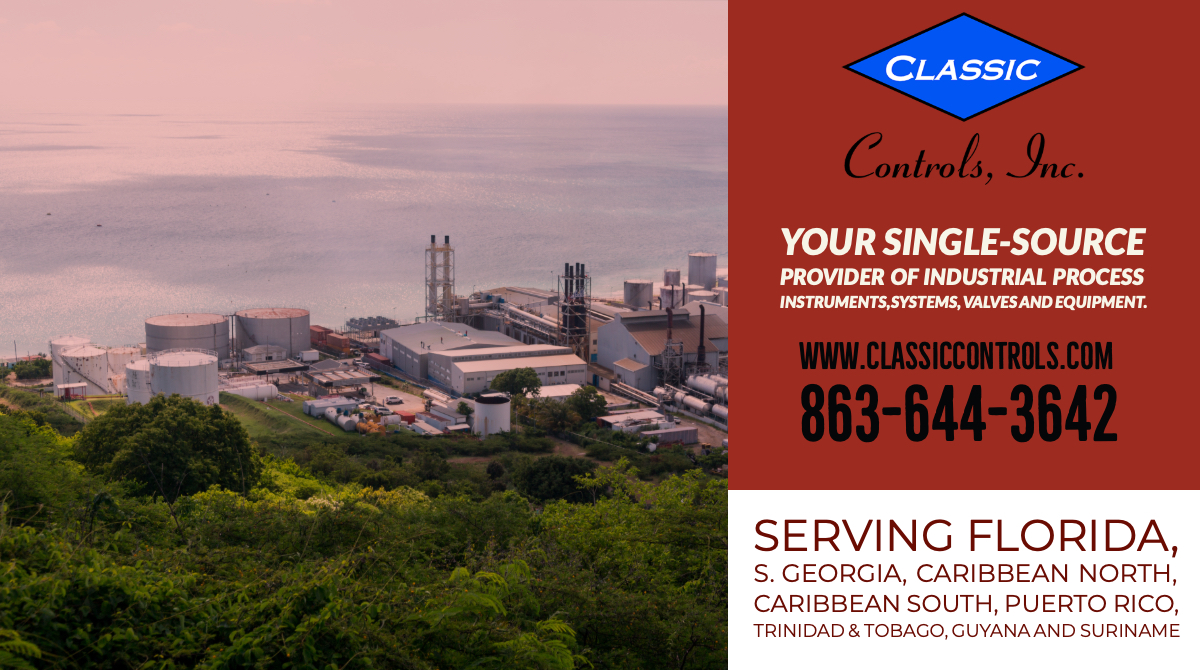
Classic Controls is a go-to provider of process control and automation solutions. Based in Lakeland, Florida, the company has expanded steadily, growing far beyond its local roots to support customers in Georgia, the broader Caribbean (North and South), Puerto Rico, Central America, Trinidad & Tobago, Guyana, and Suriname. Their wide coverage means they can quickly deliver equipment, handle on-site services, and provide timely technical support for various industrial applications.
From its earliest days, Classic Controls strove to address real-world challenges businesses face in industries like water treatment, food and beverage, chemical processing, pharmaceuticals, and power generation. While the company remains focused on Lakeland and Florida, it has developed a genuine international reach thanks to strong partnerships with manufacturers and long-term relationships with clients across various sectors.
One of Classic Controls' standout features is the variety of products it offers. Because industries rely on accurate data and precise control, instrumentation is at the heart of many processes. Classic Controls carries an extensive selection of measurement devices—including flow meters, pressure gauges, temperature sensors, and level transmitters—that can withstand challenging environments. They also supply cutting-edge automation systems and controllers that streamline complex operations, improve efficiency, and reduce human error.
In addition, the company provides high-performance valves and actuators designed to handle harsh conditions, whether the goal is managing extreme temperatures, pressures, or corrosive media. Many industries turn to Classic Controls for advanced analytical tools, such as pH monitors or dissolved oxygen analyzers, which help maintain quality, ensure regulatory compliance, and keep production on track. Filtration and steam specialties are another area of expertise, ensuring customers can support safe, clean, and energy-efficient facilities.
However, Classic Controls is about more than just supplying technology. A significant reason for their loyal following is the hands-on support they offer every step of the way. Their engineering team works alongside clients to understand specific operational requirements and then suggests tailored solutions to each unique situation. This can involve selecting the right instruments, sizing a system, or designing an automation framework that ties multiple processes together. Once everything is approved, their technicians can oversee installation and commissioning, helping minimize downtime and any start-up headaches.
Once systems are up and running, Classic Controls continues to provide training, calibration, and maintenance services. The goal is to help customers keep instrumentation in peak condition. Calibration can be performed on-site or in-house, depending on what works best for a particular operation. Training sessions and seminars empower teams to make the most of new technologies. These resources are also valuable for anyone who wants to stay informed about best practices and industry trends.
Over the years, as Classic Controls built a name in Florida and neighboring states, demand for their expertise naturally spread to the Caribbean, Central America, and beyond. Whether upgrading an existing control system in Georgia or improving water treatment processes in Puerto Rico, they bring the same dedication to every project. This expansion is primarily driven by positive referrals from satisfied customers who appreciate the combination of reliable products, knowledgeable staff, and a down-to-earth approach to problem-solving.
Looking to the future, Classic Controls understands that the modern industry is evolving quickly. Digital transformation, data analytics, and remote monitoring become more critical every year, and businesses need a solid partner who can implement these technologies effectively. By blending decades of practical experience with the latest innovations, Classic Controls stays at the forefront of process automation. They remain committed to providing personalized customer support that has always set them apart.
Whether you need a simple instrument replacement or a full-scale automation overhaul, Classic Controls' team is ready to provide guidance and ensure a smooth transition. Their commitment to quality, safety, and continual improvement has earned them a prominent position across Florida, Georgia, and the Caribbean. For companies seeking to boost efficiency, cut costs, or modernize aging systems, Classic Controls offers a trusted path forward—wherever your operations might be located.
+1 863-644-3642
https://classiccontrols.com