Showing posts with label South Georgia. Show all posts

Modernizing Industrial Automation: How Classic Controls is Leading Digital Transformation in the Florida, Southern Georgia, and the Caribbean Region

Modernizing Industrial Automation

Classic Controls, based in Lakeland, FL, is a recognized leader in delivering cutting-edge automation, control, and integration solutions across various industries. Serving sectors such as industrial, water and wastewater treatment, petrochemical, oil and gas, chemical, food processing, pulp and paper, and aerospace, Classic Controls provides tailored technologies to optimize processes and drive operational efficiency throughout Florida, Southern Georgia, and the Caribbean Region.

Expertise and Solutions:

Industrial Automation Solutions  

Classic Controls excels at implementing automation systems designed to streamline industrial processes. Their deep industry expertise allows them to reduce manual intervention, improving efficiency and productivity for various applications.  

Digital Transformation Integration  

With decades of experience, Classic Controls helps organizations embrace digital transformation by integrating advanced technologies into their existing systems. This modernization enhances performance, scalability, and operational outcomes, positioning industries for success in the digital age.

Connected Ecosystems  

Classic Controls designs and implements fully networked systems that enable seamless communication between devices, sensors, and control platforms. These connected ecosystems optimize industrial workflows, enhancing both productivity and reliability.

Operational Technology (OT) Integration  

Bridging the gap between IT and OT is essential for modern industrial environments, and Classic Controls specializes in this critical integration. Their solutions combine hardware and software technologies to allow companies to monitor, control, and optimize equipment and processes with real-time data and decision-making capabilities.

Cyber-Physical Systems (CPS)  

As pioneers in IoT and Industry 4.0 technologies, Classic Controls delivers advanced cyber-physical systems where digital controls and physical machinery work together. These systems ensure enhanced monitoring, precise control, and real-time responsiveness across industrial environments.

Industrial Internet of Things (IIoT) Integration  

Leveraging their expertise in IIoT, Classic Controls implements advanced sensors and connected devices to collect real-time data, providing industries with actionable insights that help optimize processes, improve safety, and enhance efficiency.

Smart Manufacturing Solutions  

Classic Controls leads smart manufacturing, offering intelligent systems that increase flexibility, improve product quality, and boost overall efficiency. Their solutions empower manufacturers to quickly meet the challenges of modern production environments.

Automation and Control Architecture  

Classic Controls designs scalable automation and control architectures, combining the latest technologies to deliver precise, efficient, and comprehensive solutions for process control. Their architectures support both small-scale and large-scale operations across multiple industries.

Intelligent Infrastructure  

Classic Controls creates intelligent infrastructure solutions through automation and data-driven analytics. These systems improve operational responsiveness, minimize downtime, and ensure processes are adaptive and resilient to changing demands.

Enterprise Connectivity  

Classic Controls emphasizes enterprise connectivity, integrating industrial processes with broader enterprise systems. This end-to-end integration provides greater visibility and enhances decision-making, leading to optimized operations and reduced costs.

A Trusted Partner for Innovation and Efficiency

With deep expertise in Industrial Automation, Digital Transformation, and IIoT Integration, Classic Controls remains a trusted partner for customers across the Southeast and Caribbean. Their tailored approach ensures seamless connectivity, process optimization, and operational efficiency, helping industries modernize, reduce costs, and improve productivity through cutting-edge technologies and innovative solutions.

Classic Controls
+1 863-644-3642
https://classiccontrols.com

The Evolving Role of Process Control Sales Engineering: Classic Controls Leading the Way

The Evolving Role of Process Control Sales Engineering: Classic Controls Leading the Way

Process control sales organizations are crucial in bridging the gap between manufacturers of industrial instrumentation and valves and the end-users in various industries. These organizations, like Classic Controls of Lakeland, FL, serve as technical experts and consultants, helping clients navigate the complex world of process control and automation.

The primary roles of these organizations include:
  1. Technical expertise: Sales engineers possess in-depth knowledge of process control instrumentation, industrial valves, and automation systems. They understand the intricacies of different industries and can recommend tailored solutions.
  2. Product selection and specification: They help clients choose the right equipment for their applications, considering process conditions, regulatory requirements, and budget constraints.
  3. System integration: Sales engineers often assist in integrating new equipment with existing systems, ensuring seamless operation and compatibility.
  4. Training and support: They train end-users on proper equipment installation, operation, and maintenance.
  5. Troubleshooting and problem-solving: When issues arise, these organizations offer valuable support in diagnosing and resolving problems.
  6. Industry updates: They inform clients about technological advancements and industry trends.
The consultative approach of sales engineers is critical because it ensures that clients receive solutions that truly meet their needs rather than just off-the-shelf products. This approach involves:
  1. Understanding the client's process and challenges
  2. Analyzing the specific application requirements
  3. Proposing customized solutions
  4. Providing ongoing support and optimization
Over the next decade, the role of process control sales organizations is likely to evolve in several ways:
  1. Increased focus on digital technologies: As Industry 4.0 and IIoT (Industrial Internet of Things) continue to advance, sales engineers must become experts in digital solutions, data analytics, and cloud-based systems.
  2. Sustainability and energy efficiency: With a growing emphasis on environmental responsibility, these organizations will play a key role in helping clients implement more sustainable and energy-efficient process control solutions.
  3. Cybersecurity expertise: As industrial systems become more connected, sales engineers must address cybersecurity concerns and offer secure solutions.
  4. Remote support and virtual reality: The use of remote diagnostics, augmented reality, and virtual reality for training and support will likely increase.
  5. Artificial intelligence and machine learning: Sales engineers must understand and implement AI-driven solutions for predictive maintenance and process optimization.
  6. Regulatory compliance: As regulations become more stringent, these organizations will play an increasingly important role in ensuring clients meet compliance requirements.
Classic Controls, based in Lakeland, FL, has built an outstanding reputation in Southern Georgia, Florida, the Caribbean, and Puerto Rico. Their success is attributed to several factors:
  1. Regional expertise: Classic Controls has a deep understanding of the unique challenges and requirements of industries in their service area, including water treatment, power generation, and chemical processing.
  2. Comprehensive product portfolio: They represent leading manufacturers in the industry and offer a wide range of high-quality instrumentation and valve solutions.
  3. Experienced team: Their sales engineers have extensive experience and technical knowledge, allowing them to provide expert guidance and support.
  4. Customer-centric approach: Classic Controls is known for its commitment to customer satisfaction, often going above and beyond to ensure client success.
  5. Strong relationships: They have built lasting partnerships with manufacturers and end-users, fostering trust and reliability.
  6. Local presence: With strategically located offices, they can quickly and efficiently support clients across their service area.
  7. Training and education: Classic Controls offers regular training sessions and workshops, helping clients stay up-to-date with the latest technologies and best practices.
As the process control industry continues to evolve, Classic Controls is well-positioned to adapt to new technologies and market demands, maintaining its status as a trusted partner for industrial clients in the region. Their consultative approach and technical expertise will remain valuable assets as they guide clients through the increasingly complex world of process control and automation.

Classic Controls
+1 863-644-3642
https://classiccontrols.com

The Future of Process Control Instrumentation and Industrial Valves: Embracing IIoT, Wireless Communications, and Artificial Intelligence

The Future of Process Control Instrumentation and Industrial Valves

Over the next five years, the process control instrumentation and industrial valve sectors will undergo significant transformations driven by the integration of Industrial Internet of Things (IIoT), wireless communications, and artificial intelligence (AI) technologies. These advancements will revolutionize how industries monitor, control, and optimize their processes, improving efficiency, reliability, and cost-effectiveness.

1. IIoT Integration:

Adopting IIoT technologies will enable seamless connectivity between process control instruments, industrial valves, and centralized control systems. Smart sensors and actuators equipped with embedded intelligence will facilitate real-time data collection, continuously monitoring process parameters such as pressure, temperature, flow, and level. This data-driven approach will enhance decision-making capabilities, enabling proactive maintenance and optimized process control.

2. Wireless Communications:

The proliferation of wireless communication protocols, such as Wi-Fi, Bluetooth, and LoRaWAN, will eliminate the need for extensive cabling in process control environments. Wireless-enabled instruments and valves will offer increased flexibility, scalability, and cost savings. These technologies will enable remote monitoring and control, allowing operators to access critical process information from anywhere, anytime. Wireless mesh networks ensure robust and reliable communication, even in challenging industrial environments.

3. Artificial Intelligence and Machine Learning:

Integrating AI and machine learning algorithms will revolutionize how process control instrumentation and industrial valves operate. Predictive maintenance powered by AI will analyze sensor data to identify potential equipment failures before they occur, minimizing downtime and reducing maintenance costs. Machine learning algorithms will continuously learn from process data, enabling self-tuning and self-optimizing control systems that adapt to changing process conditions in real time.

4. Cloud-Based Platforms:

Cloud-based platforms will facilitate storing, analyzing, and visualizing process data generated by IIoT-enabled instruments and valves. Cloud computing will provide scalable and secure infrastructure for data management, enabling seamless integration with enterprise systems and facilitating remote collaboration among teams. Cloud-based analytics will offer insights into process performance, identifying inefficiencies and opportunities for optimization.

5. Augmented Reality and Virtual Reality:

Augmented reality (AR) and virtual reality (VR) technologies will transform operators' interaction with process control instrumentation and industrial valves. AR-enabled devices will provide real-time guidance and overlays, assisting in installation, maintenance, and troubleshooting tasks. VR simulations will enable immersive training experiences, allowing operators to practice complex procedures in a safe and controlled environment.

6. Cybersecurity Enhancements:

Cybersecurity will be a critical concern as process control instrumentation and industrial valves become more connected and digitized. Robust security measures, including encryption, authentication, and secure communication protocols, will be implemented to protect against cyber threats. Blockchain technology may be leveraged to ensure data integrity and traceability throughout the supply chain.

Integrating IIoT, wireless communications, and AI technologies will transform the process control instrumentation and industrial valve sectors over the next five years. These advancements enable real-time monitoring, predictive maintenance, self-optimizing control, and enhanced operator experiences. Industries that embrace these technologies will gain a competitive edge, achieving higher efficiency, reduced downtime, and improved overall performance. As the adoption of these technologies accelerates, the future of process control instrumentation and industrial valves looks bright, promising a new era of intelligent and connected industrial systems.

Classic Controls
+1 863-644-3642
https://classiccontrols.com

Revolutionizing Process Management: The Role of Digitalization in Enhancing Industrial Valve and Instrumentation Operations

The Role of Digitalization in Enhancing Industrial Valve and Instrumentation Operations

Factory digitalization, or Industry 4.0 or the Fourth Industrial Revolution, is characterized by integrating digital technologies into manufacturing processes. Key technologies include:
  • Internet of Things (IoT): Sensors and devices interconnected over the internet, providing real-time data.
  • Big Data Analytics: Analyzing large volumes of data for insights to optimize processes.
  • Artificial Intelligence and Machine Learning: Intelligent systems that learn from data and improve decision-making.
  • Cloud Computing: Remote servers store and process data, providing scalability and flexibility.
  • Cyber-Physical Systems (CPS): Integration of physical processes with computer-based algorithms.
  • Additive Manufacturing: 3D printing technologies for creating components.

Impact on Industrial Valves

Industrial valves are critical for controlling the flow of liquids and gases in various industrial processes. Digitalization has led to the development of 'smart valves' with embedded sensors and actuators. These advancements allow for:
  • Real-time Monitoring: Enhanced capabilities for monitoring valve conditions, predicting maintenance needs, and avoiding unscheduled downtimes.
  • Automated Control: Valves can automatically adjust based on real-time data, optimizing flow and reducing human intervention.
  • Predictive Maintenance: AI algorithms analyze data to predict valve failures before they occur.
  • Energy Efficiency: Optimizing valve operations to reduce energy consumption in processes.

Changes in Process Control Instrumentation

Process control instrumentation has also undergone significant changes due to digitalization. Flow meters, pressure gauges, and temperature sensors are now smarter and more interconnected. The impacts include:
  • Enhanced Data Accuracy: Digital instruments provide more precise and reliable data.
  • Remote Monitoring and Control: Operators can monitor and adjust processes from remote locations, enhancing flexibility and safety.
  • Integration with Control Systems: Seamless integration with advanced control systems for more efficient process management.
  • Predictive Analytics: Use data analytics to foresee potential issues and optimize process parameters.

Challenges and Opportunities

While factory digitalization offers numerous benefits, it also presents challenges:
  • Cybersecurity: Increased digitalization heightens the risk of cyber attacks.
  • Skilled Workforce: There's a growing need for a workforce skilled in digital technologies.
  • Investment Costs: Initial investment in digital technologies can be high.
However, the opportunities are substantial:
  • Increased Efficiency and Productivity: Automation and data analytics lead to more efficient operations.
  • Enhanced Quality Control: Better monitoring and control improve product quality.
  • Sustainability: Digitalization can lead to more sustainable manufacturing practices.
Conclusion

Factory digitalization is reshaping the industrial landscape, including industrial valves and process control instrumentation. By embracing these changes, manufacturers can gain significant efficiency, quality, and competitiveness advantages. However, they must also navigate challenges such as cybersecurity and needing skilled personnel. The future of manufacturing lies in successfully integrating these digital technologies into everyday industrial practices.

Classic Controls
+1 863-644-3642
https://classiccontrols.com

Minimizing Risks in Critical Applications: The Irreplaceable Role of Electro-Mechanical Pressure and Temperature Switches

Electro-Mechanical Pressure and Temperature Switches

In an era of rapid technological advancements and a steady shift towards digitization, one might wonder why certain 'older' technologies, like electro-mechanical pressure and temperature switches, remain relevant in the process control industry. While chasing the latest trends is tempting, these traditional switches offer distinct advantages that prove they're far from obsolete.

  1. Unparalleled Robustness and Reliability: Electro-mechanical switches have been tried and tested across decades of industrial usage. They're known for their durability and ability to operate reliably even under challenging conditions, such as extreme temperatures or corrosive environments. Digital sensors, while continually improving, may sometimes be more susceptible to certain types of interference, malfunctions, or even cyber-attacks.
  2. Simplified Operation and Maintenance: The design of these switches is generally straightforward, making it easier for technicians, even with basic training, to understand, operate, and maintain them. In contrast, more sophisticated digital systems often require specialized knowledge, regular firmware updates, or specific software tools for diagnostics.
  3. Cost-Effectiveness: Electro-mechanical switches typically have a lower upfront cost compared to advanced digital counterparts. When factoring in the longevity and minimal maintenance expenses, their total cost of ownership often proves advantageous for many businesses, especially those with tight budget constraints.
  4. Direct Feedback Mechanisms: One of the essential features of these switches is the tactile feedback they provide. Operators can directly feel or hear a switch actuating, immediately confirming a process state. This direct feedback is sometimes missing in digital systems, where a sensor's state might only be viewable via a software interface.
  5. Reduced Complexity Equals Fewer Failure Points: By their very nature, electro-mechanical systems tend to be less complex than their digital counterparts. Fewer components and more straightforward operation mean fewer points where something could go wrong, leading to increased operational stability.
  6. Proven Track Record in Critical Applications: Many industries have processes where failure can lead to severe consequences, either in terms of safety or financial loss. In such critical applications, tried-and-tested electro-mechanical switches often become the default choice with their long-standing performance record.
  7. Immunity to Cyber Threats: In a world increasingly wary of cyber threats, electro-mechanical switches offer an inherent security advantage: they're immune to hacking. Digital sensors and systems, unless adequately secured, can be vulnerable to external threats, potentially leading to malfunctions or data breaches.
While the allure of digital technology and its associated benefits is undeniable, it's essential to recognize that newer isn't always better. Electro-mechanical pressure and temperature switches have carved a niche for themselves, showcasing that they're not just relics of the past but vital tools for the present and foreseeable future. Their sustained value lies in their simplicity, reliability, and proven track record, ensuring they'll continue to play a significant role in the process control industry for years.

Classic Controls
+1 863-644-3642
https://classiccontrols.com

Hygienic and Sanitary Pressure Transmitters in Food, Beverage, and Pharmaceutical Industries

Hygienic and Sanitary Pressure Transmitters

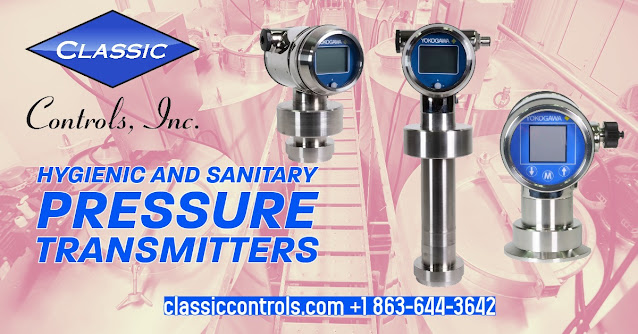
A hygienic and sanitary pressure transmitter is a specific pressure sensor designed for demanding food, beverage, and pharmaceutical uses. Given the critical nature of these sectors, these transmitters adhere to strict standards of hygiene, cleanliness, and sterility. Their central role is to measure pressure and level to ensure processes' safety, quality, and efficiency.

Constructed from stainless steel or other corrosion-resistant materials, these transmitters can withstand chemical exposure and high-temperature processes. Their materials align with industry-specific standards and certifications. The surface finish of the material is vital to prevent areas where residue or microbes could gather. Their distinctive smooth, flush design reduces the risk of crevices, dead legs, or other zones where contaminants might collect.

These pressure transmitters utilize a diaphragm or sensor that deflects under fluid pressure. Such deflection changes internal electrical properties, like those in a strain gauge or capacitive element. The transmitter converts this change into an interpretable electrical signal, usually in current or voltage form. External systems read this signal to display or regulate the measured pressure.

These transmitters aid in tank level measurement in the food and beverage sector. Positioned at a tank's base, they gauge the levels of liquids such as milk, juice, wine, or beer. As the tank fills, the hydrostatic pressure on the transmitter rises, corresponding to the depth of the liquid.

They also serve in process pressure monitoring to oversee pressure in pipes and vessels, ensuring safe and efficient operation. For example, they regulate the proper pressure during milk pasteurization for the best outcomes. They find use in bioreactor monitoring in the pharmaceutical industry, keeping the correct pressure in bioreactors for processes like cell cultivation and drug manufacturing. Any deviation could compromise the final product's quality.

Designed for clean-in-place (CIP) and sterilize-in-place (SIP) procedures, these transmitters can be cleaned and sterilized without removal. Many hygienic and sanitary pressure transmitters integrate digital communication methods, such as HART or Profibus, ensuring smooth integration with control systems for real-time data and diagnostics. Regular calibration is crucial for their consistent accuracy and dependability.

Hygienic and sanitary pressure transmitters are vital in the food, beverage, and pharmaceutical sectors. Their unique design and capabilities provide precise and consistent pressure readings, earning trust among industry experts. By maintaining optimal processing conditions, these instruments play a pivotal role in ensuring the safety and quality of final products.

Classic Controls
(863) 644-3642
https://classiccontrols.com
Globe, Rotary, and Butterfly Control Valves

Globe, Roary, and Butterfly Control Valves

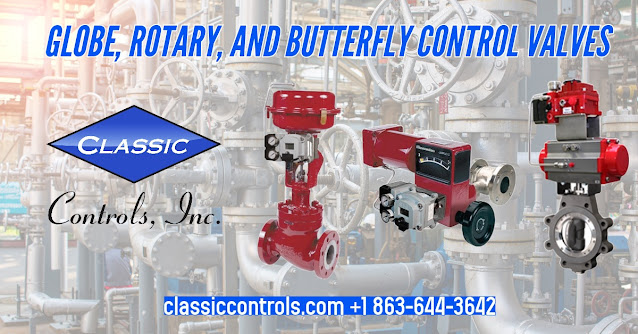
Control valves are crucial components in industrial processes, used to regulate the flow of fluids. Different types of control valves offer specific advantages and are suitable for particular applications. Here's a comparison of globe style control valves, rotary control valves, and butterfly control valves:

Globe Style Control Valves

Design and Operation:
These have a linear motion and use a movable disk-type element and a stationary ring seat in a spherical body. The disk can be moved away from the seat (to open) or towards the seat (to close) to regulate the flow.

Advantages:
  • Precise control: They are well known for their accurate throttling capabilities.
  • Good shut-off capability.
  • Wide rangeability (the range of flow rates over which the valve can effectively control).
Disadvantages:
  • Higher pressure drop compared to other types of valves.
  • Bulky design and requires more space.
Applications:
  • Suitable for most processes where precise control is needed.
  • Often used in extreme temperature and pressure applications.

Rotary Control Valves

Design and Operation:
These valves rotate a disk or ball, with or without a shaft, within the flow stream to control flow. Common examples include ball valves, v-notch ball valves, and eccentric disk valves.

Advantages:
  • Compact design.
  • Lower pressure drops compared to globe valves.
  • Quick response and faster actuation compared to globe valves.
  • Good rangeability.
Disadvantages:
  • Less precise control compared to globe valves in some applications.
  • Might not provide as tight shut-off as globe valves.
Applications:
  • Suitable for applications where quick actuation or less pressure drop is crucial.
  • Often used for on/off services or in applications where the media might cause obstruction in other types of valves.

Butterfly Control Valves

Design and Operation:
Consists of a circular disc or plate built onto a rod. When the rod is turned, the disc turns at a right angle to the flow, acting like a dam to stop or start the flow.

Advantages:
  • Extremely compact design.
  • Economical, especially for larger sizes.
  • Low pressure drop.
  • Suitable for slurry applications or services with suspended particles.
Disadvantages:
  • Not as precise as globe valves for control.
  • Might not offer a tight shut-off in certain designs.
  • Rangeability is often less than globe or some rotary valves.
Applications:
  • Used in cooling water systems, air/gas compressors, and industrial HVAC systems.
  • Suitable for applications where tight shut-off isn't critical and where space or cost is a concern.

In choosing the right control valve for a specific application, various factors need to be considered, including the nature of the media, the required flow rate, the allowable pressure drop, the need for tight shut-off, and the degree of control precision. Each type of valve has its own niche in industrial applications, and the selection often depends on trade-offs among these factors.

Classic Controls
(863) 644-3642

From South Georgia and Florida, to the Caribbean and Beyond: How Classic Controls Leads in Automation, Industrial Valves and Process Instrumentation

From Florida to the Caribbean: How Classic Controls Leads in Automation, Industrial Valves and Instrumentation

Headquartered in Lakeland, Florida, Classic Controls has established a remarkable reputation in process control instrumentation and industrial valves. The company has strategically partnered with various industries, including water treatment, pharmaceutical, chemical, oil and gas, power generation, and food processing. Serving an expansive geographic area encompassing Southern Georgia, Florida, Puerto Rico, the Caribbean, Trinidad & Tobago, Guyana, and Suriname, Classic Controls is known for its expertise, reliability, and quality service.

Classic Controls has demonstrated its unmatched proficiency by designing and implementing systems that optimize processes, ensuring efficient and smooth operations. Their specialization includes specifying and applying cutting-edge instrumentation and industrial valves that facilitate automation, control, and safety in industrial environments. With an experienced team of skilled professionals, Classic Controls provides state-of-the-art solutions to meet the specific needs of its clients.

Classic Controls understands the critical role of reliable process control instrumentation and industrial valves in water treatment. They apply their vast knowledge and expertise to develop sophisticated systems that ensure water treatment plants' safe, efficient, and reliable operation. By focusing on the precision of water flow and temperature control, Classic Controls delivers clean and safe water across the region.

Classic Controls delivers systems that guarantee rigorous industry quality and safety requirements within the pharmaceutical industry. Implementing robust process control instrumentation ensures the accuracy, repeatability, and consistency required in the drug manufacturing process, playing a significant role in safeguarding public health.

Classic Controls' solutions are instrumental in maintaining operational efficiency, reducing downtime, and ensuring safety when working with chemical, oil and gas, and power generation companies. Their advanced process control systems mitigate risks associated with these industries, providing peace of mind for operators and stakeholders alike.

In the food processing industry, Classic Controls' expertise facilitates precise control over the various steps of the production process, from raw material handling to packaging. This precision, coupled with their stringent quality controls, enables companies to ensure the consistent production of safe, high-quality food products.

Classic Controls' influence extends beyond Florida and Southern Georgia to the Caribbean, where their cutting-edge solutions are integral to the operation of numerous industries. Despite the unique challenges posed by the region's climate and infrastructure, Classic Controls has proved its versatility and adaptability, delivering reliable solutions that enhance productivity and safety.

In conclusion, Classic Controls' dedication to delivering top-tier process control instrumentation and industrial valves has cemented its position as a trusted partner to various industries. Their commitment to quality, safety, and reliability, combined with their in-depth industry knowledge and technical expertise, enables them to provide exceptional solutions to businesses across Southern Georgia, Florida, and the Caribbean. Whether in water treatment, pharmaceuticals, chemical processing, oil and gas, power generation, or food processing, Classic Controls stands as a pillar of excellence in industrial automation and process control.


A Look Down the Road at Industrial Valve Automation

A Look Down the Road at Industrial Valve Automation

Industrial valve automation is a vital component of the broader industrial automation field, constantly redefined by technological advancements and digitization. This area is witnessing significant changes due to a combination of trends that include digital transformation, the Industrial Internet of Things (IIoT), machine learning, artificial intelligence, advanced materials science, and regulatory changes in major industrial sectors like oil and gas, power generation, chemical, mining, and water treatment. Let's delve into the future direction of industrial valve automation.


  1. IIoT and Connectivity: Industrial Internet of Things (IIoT) refers to the application of IoT technologies in industrial settings. IIoT can help improve valve performance, maintenance, and operation by delivering real-time data and remote monitoring capabilities. Advanced sensors connected to valves can provide information such as temperature, pressure, flow rate, and position status. This data can then be sent to centralized systems or cloud-based platforms for analysis, enhancing predictive maintenance and reducing unexpected failures or shutdowns.
  2. Artificial Intelligence (AI) and Machine Learning (ML): AI and ML will soon play a critical role in transforming industrial valve automation. AI algorithms can analyze valve data to optimize performance, predict maintenance needs, identify potential failures before they occur, significantly reduce downtime and maintenance costs, improve safety, and increase overall efficiency.
  3. Advanced Material Science: Ongoing research in advanced materials, including composites and specialized alloys, produces more durable, efficient, and versatile valves. These new materials can withstand harsh industrial environments, prolong valve lifespans, reduce maintenance requirements, and enhance operational performance.
  4. 3D Printing: Also known as additive manufacturing, 3D printing offers new valve design and production possibilities, handy for producing custom or low-volume valves, where traditional manufacturing methods might be prohibitively expensive or time-consuming.
  5. Smart Valves: The concept of smart valves integrates sophisticated sensors, advanced materials, and wireless technology. These valves can self-diagnose issues and communicate their status in real time, providing operators with valuable insights and helping reduce unexpected failures.
  6. Automation and Robotics: Robotic automation is crucial to manufacturing and maintaining valves. This trend not only increases efficiency and productivity but also reduces human errors and increases safety by reducing the need for humans to work in hazardous environments.
  7. Regulatory Changes: Growing environmental concerns and stricter safety standards are compelling industries to adopt advanced, more efficient, and safer valve technologies, including low-emission valves and technologies that help minimize leakage and wastage.
  8. Cybersecurity: As valve systems become more digital and connected, the importance of cybersecurity increases. Protecting these systems from potential threats that could disrupt operations or compromise safety is vital.


Digital transformation and advanced technologies will primarily drive the future of industrial valve automation, making it smarter, more efficient, and more connected. However, it is also essential to consider the potential challenges these technologies may bring, such as increased complexity, the need for skilled personnel, and cybersecurity risks. As technology evolves, companies must adapt and implement strategies to leverage these advancements while managing these risks effectively.


Classic Controls, Inc.
https://classiccontrols.com
+1 863-644-3642

Industrial Control Valve Primer

Industrial Control Valve Primer

There are several industrial control valves, each with unique characteristics and uses. Some common types of control valves include:


Globe valves: Globe valves are typically used for regulating flow in pipelines and are known for their ability to handle high-pressure systems. They consist of a disk that moves up and down to block or allow flow through the valve. Industrial globe valves are mechanical devices that are used to regulate the flow of liquids or gases in a pipe. They consist of a cylindrical body with a disk-shaped element, called the plug or disc, that moves up and down to open and close the valve. The disk is connected to a stem, which is operated by a handwheel, lever or pneumatic or electric actuator. When the stem is turned, it raises or lowers the disk, allowing for the flow of fluid through the valve. Globe valves are typically used in industrial settings, where precise control over the flow of fluids is important. They are known for their durability and reliability and are often used in applications such as steam systems, water treatment plants, and chemical processing facilities.


Butterfly valves: Butterfly valves are used for controlling the flow of fluids in pipelines. They consist of a disk that rotates to block or allow flow through the valve. They are known for their low cost and ease of installation. Butterfly valves are a type of industrial valve that are typically used to regulate the flow of fluids, such as gases, liquids, and slurries, in a pipe. They are called butterfly valves because the mechanism that controls the flow of the fluid is a disc that is mounted on a shaft and rotates like a butterfly's wings.


Some of the key characteristics of industrial butterfly valves include:

  • They are relatively compact and lightweight compared to other types of valves, which makes them easy to install and handle.
  • They are able to handle a wide range of temperatures and pressures, making them suitable for use in many different industrial applications.
  • Butterfly valves are often used in applications where a tight shutoff is required, as they can provide a very tight seal when closed.
  • They are typically used in applications where the fluid being controlled is either highly viscous or abrasive, as the design of the valve allows for low-friction operation and reduces the wear on the valve's components.
  • Butterfly valves are available in a wide range of sizes and materials, which allows them to be tailored to the specific requirements of a particular application.


Diaphragm valves: Diaphragm valves are used for controlling the flow of fluids in pipelines. They consist of a flexible diaphragm that moves to block or allow flow through the valve. They are often used in applications where the fluid being controlled is corrosive or dirty. Industrial diaphragm valves are valves that use a flexible membrane to control the flow of liquids or gases. The membrane is typically made of rubber or another flexible material and is positioned between the valve body and the valve seat. When the valve is open, the membrane flexes to allow the flow of fluid, and when the valve is closed, the membrane seals against the valve seat to stop the flow. Diaphragm valves are commonly used in industrial piping systems for a variety of applications, such as controlling the flow of chemicals, water, steam, and other liquids and gases. They are often used in situations where the fluid being controlled is corrosive or abrasive, as the flexible membrane helps to prevent damage to the valve body.


Plug valves: Plug valves are used for controlling the flow of fluids in pipelines. They consist of a plug that rotates to block or allow flow through the valve. They are known for their ability to handle high-pressure systems and are often used in applications where the fluid being controlled is viscous. Industrial plug valves are a type of quarter-turn valve that is used in various industrial applications to control the flow of liquids and gases. They are named for the plug-shaped component that is used to open and close the valve. Some of the key characteristics of industrial plug valves include:

  • Quarter-turn operation: As mentioned, industrial plug valves are quarter-turn valves, which means they can be opened and closed by rotating the valve handle or stem by 90 degrees. This allows for quick and easy operation of the valve, and is particularly useful in applications where the flow needs to be quickly shut off.
  • Plug-shaped component: The core component of an industrial plug valve is the plug, which is a cylindrical piece with a hole through the center. When the plug is rotated to align the hole with the inlet and outlet ports, the valve is open and allows flow. When the plug is rotated so that the hole is perpendicular to the inlet and outlet ports, the valve is closed and blocks flow.
  • Various materials and sizes: Industrial plug valves are available in a range of materials, including metal alloys, plastic, and other materials, depending on the specific application and media being controlled. They are also available in a range of sizes to accommodate different flow rates and pressure ratings.
  • Multiple sealing options: Industrial plug valves can be equipped with a variety of sealing options, such as soft seats, metal seats, or a combination of both. This allows for better control of the flow and pressure, and can prevent leaks in the system.
  • Low-maintenance design: Industrial plug valves are known for their low-maintenance design, which makes them a popular choice for many industrial applications. They have few moving parts and can be easily disassembled and cleaned, reducing downtime and maintenance costs.

Each type of control valve has its own unique advantages and disadvantages, and the best type of valve for a particular application will depend on the specific requirements of the system. Discuss your control valve requirements with professional, skilled application engineers. Classic Controls is available to assist in the application and specification of any valve application for any industrial or commercial process. Call them at 863-644-3642 or visit their website at https://classiccontrols.com.

Quarter Turn vs. Linear Industrial Valves

Linear valve
Linear control valve (Masoneilan)
Different types of valves are designed and applied for different roles in the process control. Linear valves and quarter-turn valves are two different types of valves utilized throughout industry to regulate and control fluid flow. Their design and construction reflect the intent of the valves application, with each being suited for a different class of use.

All valves operate by providing control of the position of an internal structure that impedes fluid passage to some degree. Generally, fluid flow at the valve can be characterized as one of three conditions, unrestricted (valve fully open), stopped (valve fully closed), and throttled (valve partially open). Process operational requirements will dictate whether just two (fully open and fully closed) or all three of those conditions will be needed. Many aspects of the fluid, the process, and the surrounding environment come into play when making an appropriate valve selection. Not always an easy task.
solenoid valve
Solenoid valves are
a type of linear valve.
(ASCO)

Linear valves are generally characterized by their straight line motion that is used to position the valve plug, disc, diaphragm or other flow controlling element. The shape, size, and arrangement of the linear valve trim is generally intended to empower the operator with a range of flow through the valve. Through its positioning, the linear valve is able to regulate fluid flow at a slower, but more accurate rate. The valves can move a disk or a plug into an orifice, or push a flexible material, such as a diaphragm, into the flow passage. Gate valves and globe valves are common examples of linear motion valves. A solenoid valve also acts as a specialized type of linear valve. Linear valves are best applied as flow controllers, and are often suited for frequent operation and repositioning.

Quarter turn valve
Ball valves are examples
of quarter turn valves.
(QTR)
Quarter turn valves traverse from fully open to fully closed by a 90 degree rotation of a shaft connected to the controlling element. Their comparatively simple operation allows for a design that is rugged and compact. One distinction of the quarter turn valves is their ability to quickly reposition from open to closed positions. Torque requirements to operate the valves are generally low to moderate. Ball and butterfly valves are examples of quarter turn valves.

Depending on the specific scenario, linear valves and quarter-turn valves are optimal choices for particular process environments. The accuracy of the linear valve and its ability to move in a linear fashion as opposed to a quarter-turn comes coupled with easy maintenance and decreased likelihood of cavitation. Both valve types enjoy widespread use and should generally not be viewed as competing designs for the same application. Each has a range of applications where it excels.

Contact Classic Controls for any industrial valve requirement by visiting https://classiccontrols.com or by calling 863-644-3642.

Drying Compressed Air In Hazardous Atmospheres

Compressed Air DryerIn many industries, the atmosphere, though safe to breath, may be unsafe for an electrical spark. These areas often have pneumatically operated equipment for safety. And that equipment needs a source of clean dry air or as it is called in the industry, Instrument Grade Air. Plants typically have a centralized instrument grade air line that delivers air to the instruments that need it. However, oftentimes the instrument grade air is of inferior quality and contaminated with water. This air will benefit from a point of use drying system that guarantees instrument grade air. Traditional drying systems using PSA (Pressure Swing Adsorption) or refrigerant require expensive modifications to operate within hazardous areas. Air dryers made from hollow fiber membranes can dry compressed air without the use of electricity and are therefore safe for hazardous environments.

Hazardous locations have or could potentially have high concentrations of flammable gases, vapors, combustible dusts or ignitable fibers and flyings. Refineries, chemical processing plants, mines and grain mills are examples of industries with hazardous atmospheres. Even a small spark can lead to a horrific explosion dangerous to equipment and workers in the area.

Read the rest of the Parker Balston white paper in the embedded document below, or download your PDF version of "Drying Compressed Air In Hazardous Atmospheres" here.

For more information, visit https://classiccontrols.com or call 863-644-3642.


Classic Controls Coverage Area and Territory

Classic Controls is a total solutions, single-source provider of industrial process instruments serving Florida, South Georgia, Caribbean North, Caribbean South, Puerto Rico, Trinidad & Tobago, Guyana and Suriname.

Listing by country or island:

Anguilla, Antigua & Barbuda, Aruba, Bahamas, Barbados, Bermuda, Bonaire, British Virgin Islands, Cayman Islands, Curaçao, Dominica, Dominican Republic, Grenada, Guadeloupe, Guyana, Haiti, Jamaica, Martinique, Montserrat, Puerto Rico, Saba, St. Barthélemy, St. Eustatius, St. Kitts & Nevis, St. Lucia, St. Maarten, St. Martin, St. Vincent & the Grenadines, Suriname, Trinidad & Tobago, Turks & Caicos Islands, US Virgin Islands.


Setting Limit Switches on AUMA SA Multi-Turn Actuators and SQ Part-Turn Actuators

AUMA SA Multi-Turn Actuator
Type SA multi-turn actuators and SQ part-turn actuators are the core products of the AUMA product portfolio.

AUMA SA electric multi-turn actuators are used for the automation of gate valves or globe valves.

AUMA SQ electric part-turn actuators are used where an automatic, electrically operated movement at a swing angle of less than 360 ° has to be implemented as it is the case for valves like butterfly and ball valves.

Below is a video that demonstrates how to set the limit switches for both SA and SQ.

This video is intended as a supplement to the operating instruction and/or manuals available from your local AUMA Representative.

Wireless Remote Asset Monitoring & Control

SignalFire GatewaySignalFire’s unique patent-pending two-way mesh technology provides the power and stability needed for reliable data transfer over long node-to-node distances. They couple an innovative message-forwarding architecture with low-cost, high-power ISM-band radios, creating a simple, affordable system that’s easy to deploy. Their technology is ideal for applications calling for many assets widely dispersed (up to 4 miles point-to-point), such as flow, level, pressure, and temperature, and can control devices such as pumps, valves, fans, and lighting.

For more information on SignalFire, visit https://classiccontrols.com or call 863-644-3642.

Industrial Process Pressure Transmitters

industrial pressure transmitter or differential pressure transmitter
One of many variants of industrial pressure transmitters.
Image courtesy Yokogawa USA
The measurement and control of fluid pressure is ubiquitous throughout many industrial processes. Measurements of pressure, directly and indirectly, provide real time information about what is happening in places that cannot be seen, such as inside a pipe, tank, or machine. The very nature of “process” suggests movement and change, the control of which is necessary to produce a consistent desirable outcome. Industrial pressure transmitters employ specific technologies and physical principals to derive a measurement of process pressure, then deliver or transmit, the measured value to a controller or recording device.

Fluid pressure tells a process operator much about what is currently happening. The pressure variable can be used to determine, among many industrial process elements:
  • Degree to which the process is conforming to a recipe or specification
  • Whether machinery is performing within its specified operation range
  • If conditions of the process remain within the bounds established for safety
  • A quantity measurement of flow, mass, or volume
Global industrial processes have widely varying physical arrangements, operating environments, and measurement requirements. Manufacturers of industrial pressure transmitters have responded with an immense array of transmitter technologies, arrangements, and configurations. When selecting the best suited pressure transmitter for your application, consult a sales engineer and consider some of the following:
  • Signal requirements – Type, distance, possible sources of interference
  • Device environment – Hazards, extreme conditions of temperature or corrosion
  • Accuracy and stability of measurement
  • Response time to changes in the process condition
  • Ratings and certifications required for the device
  • Configuration, arrangement, and mounting aspects of the transmitter device
Explore the differing technologies and how they can be best applied to implement or improve your process. Experienced sales engineers are a useful sounding board for discussing your needs. Share you process measurement challenges with them and leverage your own knowledge and experience into an effective solution.

Asset Condition Monitoring for Major Equipment

turbine blades
Asset and equipment monitoring promotes the maximizing
of productivity by reducing downtime.
Minimizing machine or system downtime, for whatever cause, is a common productivity and financial goal of industrial processing of all types. Lost production time can never be recouped, and unplanned equipment outages can cost millions. There is real benefit to be had from monitoring operational aspects of machinery and systems in real time.

Asset condition monitoring, as the name implies, is the process of continually monitoring a machine or piece of equipment with the intent to alert operators to anomalies in machine function. Data gathered can also be used to define a normal operating envelope and show trends that may indicate a need for service. The goal, ultimately, is to repair, adjust or maintain prior to and avoiding outright failure. Key indicators of failing equipment can be changing values in vibration, noise or temperature measurements. Monitoring these and other variables, some derived at very localized and specific points, provides key indicators of the condition of the machine. By evaluating trends in the data, intelligent systems can provide health information about the equipment and assist in the early detection of possible faults or failures.

Implementation of asset condition monitoring is benefiting manufacturing plants and process industries such as chemical, petrochemical, pulp and paper, power generation, wind turbine, and oil and gas. Not only can it save money from protecting against unplanned outages, but condition monitoring also improves productivity, quality and profitability.

GE's Bently Nevada 3500 Monitoring System provides continuous, online monitoring suitable for machinery protection and asset condition monitoring applications. It is the company's most capable and flexible system, with a traditional rack-based design. The useful features of the system are numerous, and it delivers advantages not provided in other systems. Share your major asset monitoring challenges and plans with a systems specialist, and leverage your own knowledge and experience with their product application expertise to implement an effective solution.


Lightning Protection Techniques

lightning strike on dark night
Facilities of many types need protection from the
harmful impact of lightning strikes.
The forces of nature often prove to be resistant to a full understanding by the likes of humanity. Lightning simultaneously frightens and fascinates us, and it seems to be less predictable in its touchdown points than we would like it to be. Lightning strikes constitute extreme releases of energy. A direct hit to your facility or equipment has a high probability of rendering it unusable. The pathways of the destructive energy can be diffuse and unpredictable.

Prevention, by diverting the energy away from where it will do harm, is generally considered to be the best protective path for industrial and commercial facilities. In a previous post, we shared a comparison of several lightning protection techniques. The report is included below for review.

Dehn Inc. has been providing lightning protection and related equipment since 1910. The company provides solutions in the field of surge protection, lightning protection/earthing and safety equipment for many industries including, water wastewater plants, buildings and systems, industrial plants, energy supply, oil and gas industry, security systems, chemical & pharmaceutical industry, transportation systems. Their success in the field today is based upon decades of experience designing and producing protective installations and gear for facilities of many types and in many locations.

Share your lightning protection challenge with system specialists, and leverage your own knowledge and experience with their application expertise to develop an effective lightning protection plan.


Magnetic Flow Meters: Principles and Applications

magnetic flow meter, magmeter, or flowmeter
Magnetic flowmeters are well suited for flow measurement
with conductive fluids.
Image courtesy Yokogawa
Fluid process control operations rely on the operator's ability to accurately determine qualities and quantities of liquid or gaseous materials. In terms of appraising and working with fluids (such as liquids, steam, and gases) the flow meter is a staple tool, with the simple goal of expressing the delivery of a subject fluid in a quantified manner. Measurement of media flow velocity can be used, along with other inputs, to determine volumetric or mass flow. The magnetic flow meter, also called a magmeter, is one of several technologies used to measure fluid flow.

In general, magnetic flow meters are sturdy, reliable devices able to withstand hazardous environments while returning accurate measurements to operators of a wide variety of processes. The magnetic flow meter has no moving parts. The operational principle of the device is powered by Faraday’s Law, a fundamental scientific principle stating that a voltage will be induced across any conductor moving at a right angle through a magnetic field, with the voltage being proportional to the velocity of the conductor. The principle allows for an inherently hard-to-measure quality of a substance to be expressed via the magmeter. In a magmeter application, the meter produces the magnetic field referred to in Faraday’s Law. The conductor is the fluid. The actual measurement of a magnetic flow meter is the induced voltage corresponding to fluid velocity. This can be used to determine volumetric flow and mass flow when combined with other measurements.

The magnetic flow meter technology is not impacted by temperature, pressure, or density of the subject fluid. It is however, necessary to fill the entire cross section of the pipe in order to derive useful volumetric flow measurements. Faraday’s Law relies on conductivity, so the fluid being measured has to be electrically conductive. Many hydrocarbons are not sufficiently conductive for a flow measurement using this method, nor are gases. On the other hand, water and aqueous solutions tend to exhibit sufficient conductivity to apply magmeter technology.

Magmeters apply Faraday’s law by using two charged magnetic coils; fluid passes through the magnetic field produced by the coils. A precise measurement of the voltage generated in the fluid will be proportional to fluid velocity. The relationship between voltage and flow is theoretically a linear expression, yet some outside factors may present barriers and complications in the interaction of the instrument with the subject fluid. These complications include a higher amount of voltage in the liquid being processed, and coupling issues between the signal circuit, power source, and/or connective leads of both an inductive and capacitive nature.

In addition to salient factors such as price, accuracy, ease of use, and the size-scale of the flow meter in relation to the fluid system, there are multiple reasons why magmeters are the unit of choice for certain applications. They are resistant to corrosion, and can provide accurate measurement of dirty fluids – making them suitable for wastewater measurement. As mentioned, there are no moving parts in a magmeter, keeping maintenance to a minimum. Power requirements are also low. Instruments are available in a wide range of configurations, sizes, and construction materials to accommodate various process installation requirements.

As with all process measurement instruments, proper selection, configuration, and installation are the real keys to a successful project. Share your flow measurement challenges of all types with a process measurement specialist, combining your own process knowledge and experience with their product application expertise to develop an effective solution.