Showing posts with label process instrumentation. Show all posts

Expanding Horizons: Classic Controls Strengthens Presence in Emerging Markets

Classic Controls Expands to Central America

Classic Controls, headquartered in Lakeland, Florida, proudly announces an exciting expansion of its sales and support coverage for process control instrumentation and industrial valves. This growth now includes seven new countries in Central America: Belize, Guatemala, Honduras, El Salvador, Nicaragua, Costa Rica, and Panama. By widening our reach, we strengthen our commitment to delivering robust solutions, reliable service, and expert guidance to customers who operate and maintain critical industrial processes.

We build on decades of success in Florida, Georgia, Puerto Rico, and the Northern and Southern Caribbean. Our existing coverage also spans Trinidad & Tobago, Suriname, and Guyana, where we have forged strong relationships with clients who rely on our high-performance instrumentation and valves. This customer-focused expansion allows us to serve more industries and support a broader range of applications, from oil and gas operations to food and beverage manufacturing.

At Classic Controls, we believe in proactive, on-site assistance and personalized recommendations. Our seasoned engineers work alongside customers to assess their requirements and propose solutions that match their operational goals. In each new country, our local sales and technical teams stand ready to respond quickly to requests for information, troubleshooting, or equipment selection. We devote resources to training customers on proper instrumentation usage, maintenance practices, and system optimization, which helps them increase efficiency and minimize downtime.

Our expanded presence in Central America underscores our value in building long-term partnerships. We collaborate with well-known manufacturers who prioritize innovation, quality, and performance in their product lines. By leveraging these relationships, we provide a comprehensive portfolio that includes sensors, control valves, actuators, flow meters, level measurement devices, and software solutions. These technologies optimize production processes and maximize operational efficiency in various industries.

We also recognize the importance of cultural understanding and clear communication. Our multilingual staff members facilitate smooth interactions and promptly respond to customer inquiries. They address regional regulations and standards to ensure every project proceeds without unnecessary delays. Customers benefit from Classic Controls’ continuous investment in training as our team keeps pace with emerging technology trends and industry developments.

We invite prospective partners and current clients throughout our newly added region to connect with Classic Controls for top-tier products, reliable service, and unparalleled technical expertise. Our sales and support teams consistently deliver tailored solutions that help industrial operations thrive, even under demanding conditions. Customers gain a trusted ally with a proven track record of success in process control instrumentation and industrial valve applications by choosing Classic Controls.

This expansion reflects our unwavering promise to meet our customers' evolving needs and maintain the high standards that have defined Classic Controls for many years. We appreciate the trust and loyalty our clients place in us, and we look forward to forging new bonds and strengthening existing ones in Central America. Contact us today to learn how we can enhance your operations with advanced equipment and dependable support.

Classic Controls
+1 863-644-3642
https://classiccontrols.com

Revolutionizing Process Management: The Role of Digitalization in Enhancing Industrial Valve and Instrumentation Operations

The Role of Digitalization in Enhancing Industrial Valve and Instrumentation Operations

Factory digitalization, or Industry 4.0 or the Fourth Industrial Revolution, is characterized by integrating digital technologies into manufacturing processes. Key technologies include:
  • Internet of Things (IoT): Sensors and devices interconnected over the internet, providing real-time data.
  • Big Data Analytics: Analyzing large volumes of data for insights to optimize processes.
  • Artificial Intelligence and Machine Learning: Intelligent systems that learn from data and improve decision-making.
  • Cloud Computing: Remote servers store and process data, providing scalability and flexibility.
  • Cyber-Physical Systems (CPS): Integration of physical processes with computer-based algorithms.
  • Additive Manufacturing: 3D printing technologies for creating components.

Impact on Industrial Valves

Industrial valves are critical for controlling the flow of liquids and gases in various industrial processes. Digitalization has led to the development of 'smart valves' with embedded sensors and actuators. These advancements allow for:
  • Real-time Monitoring: Enhanced capabilities for monitoring valve conditions, predicting maintenance needs, and avoiding unscheduled downtimes.
  • Automated Control: Valves can automatically adjust based on real-time data, optimizing flow and reducing human intervention.
  • Predictive Maintenance: AI algorithms analyze data to predict valve failures before they occur.
  • Energy Efficiency: Optimizing valve operations to reduce energy consumption in processes.

Changes in Process Control Instrumentation

Process control instrumentation has also undergone significant changes due to digitalization. Flow meters, pressure gauges, and temperature sensors are now smarter and more interconnected. The impacts include:
  • Enhanced Data Accuracy: Digital instruments provide more precise and reliable data.
  • Remote Monitoring and Control: Operators can monitor and adjust processes from remote locations, enhancing flexibility and safety.
  • Integration with Control Systems: Seamless integration with advanced control systems for more efficient process management.
  • Predictive Analytics: Use data analytics to foresee potential issues and optimize process parameters.

Challenges and Opportunities

While factory digitalization offers numerous benefits, it also presents challenges:
  • Cybersecurity: Increased digitalization heightens the risk of cyber attacks.
  • Skilled Workforce: There's a growing need for a workforce skilled in digital technologies.
  • Investment Costs: Initial investment in digital technologies can be high.
However, the opportunities are substantial:
  • Increased Efficiency and Productivity: Automation and data analytics lead to more efficient operations.
  • Enhanced Quality Control: Better monitoring and control improve product quality.
  • Sustainability: Digitalization can lead to more sustainable manufacturing practices.
Conclusion

Factory digitalization is reshaping the industrial landscape, including industrial valves and process control instrumentation. By embracing these changes, manufacturers can gain significant efficiency, quality, and competitiveness advantages. However, they must also navigate challenges such as cybersecurity and needing skilled personnel. The future of manufacturing lies in successfully integrating these digital technologies into everyday industrial practices.

Classic Controls
+1 863-644-3642
https://classiccontrols.com

Hygienic and Sanitary Pressure Transmitters in Food, Beverage, and Pharmaceutical Industries

Hygienic and Sanitary Pressure Transmitters

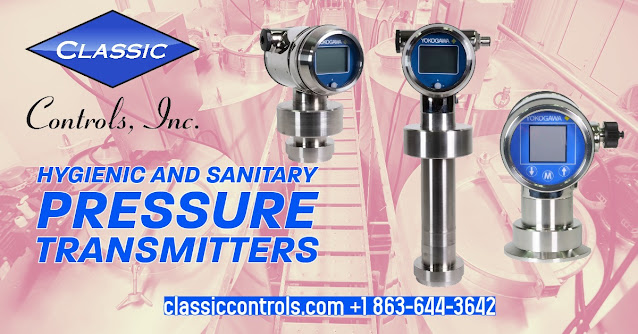
A hygienic and sanitary pressure transmitter is a specific pressure sensor designed for demanding food, beverage, and pharmaceutical uses. Given the critical nature of these sectors, these transmitters adhere to strict standards of hygiene, cleanliness, and sterility. Their central role is to measure pressure and level to ensure processes' safety, quality, and efficiency.

Constructed from stainless steel or other corrosion-resistant materials, these transmitters can withstand chemical exposure and high-temperature processes. Their materials align with industry-specific standards and certifications. The surface finish of the material is vital to prevent areas where residue or microbes could gather. Their distinctive smooth, flush design reduces the risk of crevices, dead legs, or other zones where contaminants might collect.

These pressure transmitters utilize a diaphragm or sensor that deflects under fluid pressure. Such deflection changes internal electrical properties, like those in a strain gauge or capacitive element. The transmitter converts this change into an interpretable electrical signal, usually in current or voltage form. External systems read this signal to display or regulate the measured pressure.

These transmitters aid in tank level measurement in the food and beverage sector. Positioned at a tank's base, they gauge the levels of liquids such as milk, juice, wine, or beer. As the tank fills, the hydrostatic pressure on the transmitter rises, corresponding to the depth of the liquid.

They also serve in process pressure monitoring to oversee pressure in pipes and vessels, ensuring safe and efficient operation. For example, they regulate the proper pressure during milk pasteurization for the best outcomes. They find use in bioreactor monitoring in the pharmaceutical industry, keeping the correct pressure in bioreactors for processes like cell cultivation and drug manufacturing. Any deviation could compromise the final product's quality.

Designed for clean-in-place (CIP) and sterilize-in-place (SIP) procedures, these transmitters can be cleaned and sterilized without removal. Many hygienic and sanitary pressure transmitters integrate digital communication methods, such as HART or Profibus, ensuring smooth integration with control systems for real-time data and diagnostics. Regular calibration is crucial for their consistent accuracy and dependability.

Hygienic and sanitary pressure transmitters are vital in the food, beverage, and pharmaceutical sectors. Their unique design and capabilities provide precise and consistent pressure readings, earning trust among industry experts. By maintaining optimal processing conditions, these instruments play a pivotal role in ensuring the safety and quality of final products.

Classic Controls
(863) 644-3642
https://classiccontrols.com

From South Georgia and Florida, to the Caribbean and Beyond: How Classic Controls Leads in Automation, Industrial Valves and Process Instrumentation

From Florida to the Caribbean: How Classic Controls Leads in Automation, Industrial Valves and Instrumentation

Headquartered in Lakeland, Florida, Classic Controls has established a remarkable reputation in process control instrumentation and industrial valves. The company has strategically partnered with various industries, including water treatment, pharmaceutical, chemical, oil and gas, power generation, and food processing. Serving an expansive geographic area encompassing Southern Georgia, Florida, Puerto Rico, the Caribbean, Trinidad & Tobago, Guyana, and Suriname, Classic Controls is known for its expertise, reliability, and quality service.

Classic Controls has demonstrated its unmatched proficiency by designing and implementing systems that optimize processes, ensuring efficient and smooth operations. Their specialization includes specifying and applying cutting-edge instrumentation and industrial valves that facilitate automation, control, and safety in industrial environments. With an experienced team of skilled professionals, Classic Controls provides state-of-the-art solutions to meet the specific needs of its clients.

Classic Controls understands the critical role of reliable process control instrumentation and industrial valves in water treatment. They apply their vast knowledge and expertise to develop sophisticated systems that ensure water treatment plants' safe, efficient, and reliable operation. By focusing on the precision of water flow and temperature control, Classic Controls delivers clean and safe water across the region.

Classic Controls delivers systems that guarantee rigorous industry quality and safety requirements within the pharmaceutical industry. Implementing robust process control instrumentation ensures the accuracy, repeatability, and consistency required in the drug manufacturing process, playing a significant role in safeguarding public health.

Classic Controls' solutions are instrumental in maintaining operational efficiency, reducing downtime, and ensuring safety when working with chemical, oil and gas, and power generation companies. Their advanced process control systems mitigate risks associated with these industries, providing peace of mind for operators and stakeholders alike.

In the food processing industry, Classic Controls' expertise facilitates precise control over the various steps of the production process, from raw material handling to packaging. This precision, coupled with their stringent quality controls, enables companies to ensure the consistent production of safe, high-quality food products.

Classic Controls' influence extends beyond Florida and Southern Georgia to the Caribbean, where their cutting-edge solutions are integral to the operation of numerous industries. Despite the unique challenges posed by the region's climate and infrastructure, Classic Controls has proved its versatility and adaptability, delivering reliable solutions that enhance productivity and safety.

In conclusion, Classic Controls' dedication to delivering top-tier process control instrumentation and industrial valves has cemented its position as a trusted partner to various industries. Their commitment to quality, safety, and reliability, combined with their in-depth industry knowledge and technical expertise, enables them to provide exceptional solutions to businesses across Southern Georgia, Florida, and the Caribbean. Whether in water treatment, pharmaceuticals, chemical processing, oil and gas, power generation, or food processing, Classic Controls stands as a pillar of excellence in industrial automation and process control.


Classic Controls: Top-Quality Valves, Instruments, and Controls with Exceptional Support in Florida & Southern GA, Caribbean, Puerto Rico, Trinidad & Tobago, Guyana, and Suriname

Classic Controls, Inc.

Florida & Southern Georgia, The Caribbean, Puerto Rico, Trinidad & Tobago, Guyana and Suriname host a variety of thriving industries, including tourism, agriculture, pharmaceuticals, aerospace and aviation, marine and maritime, renewable energy, offshore oil & gas, and refining. Classic Controls, Inc., a leading supplier of high-quality process instrumentation and industrial valves, plays a vital role in supporting and enhancing the efficiency and safety of these industries.

Tourism is a major driving force in Florida & Southern Georgia, The Caribbean, Puerto Rico, Trinidad & Tobago, Guyana and Suriname, attracting millions of visitors with their beautiful beaches, natural wonders, and cultural attractions. Classic Controls provides essential process control and safety systems for water treatment plants, ensuring clean water supply and wastewater management for hotels, resorts, and other tourist facilities.

Agriculture is another significant industry in these regions. Florida produces citrus fruits, vegetables, and sugar cane. The Caribbean is known for tropical fruit, sugar, and coffee production. Puerto Rico hosts a diverse agricultural sector, including coffee, sugarcane, and tropical fruits. Classic Controls, Inc. offers various process instrumentation and valves to help farmers and agribusinesses monitor, control, and optimize irrigation systems, water management, and crop processing facilities.

The pharmaceutical industry is a critical sector in Puerto Rico, with many major multinational companies operating manufacturing plants on the island. Classic Controls, Inc. provides robust process control solutions, instrumentation, and industrial valves for pharmaceutical manufacturing facilities, ensuring they meet stringent quality and safety standards.

Aerospace and aviation are vital industries in Florida, with NASA's Kennedy Space Center and several private aerospace companies based in the region. Classic Controls, Inc. supplies essential fuel, hydraulic, and pneumatic systems components, ensuring the safe and efficient operation of aircraft and spacecraft.

The marine and maritime industry is paramount to Florida, Puerto Rico, and the Caribbean, with numerous ports, shipyards, and marinas. Classic Controls, Inc. delivers high-quality valves and instrumentation for shipbuilding, repair, and maintenance, as well as for port facilities and offshore oil and gas platforms.

The offshore oil and gas industry and refining are significant economic contributors in some parts of the Caribbean region. In the southern Caribbean, Trinidad and Tobago boasts a well-established offshore oil and gas industry. The country has been extracting oil and gas from offshore fields for many years, making it the leading hydrocarbon producer in the Caribbean. Although not technically part of the Caribbean, Guyana, located on the northeastern coast of South America, has recently emerged as a significant player in the offshore oil industry. Classic Controls, Inc. provides top-quality process instrumentation and industrial valves that enable the safe and efficient operation of offshore drilling rigs, production platforms, and refineries. Their products help companies in these sectors maintain strict safety and environmental standards, reduce operational risks, and optimize production processes.

Renewable energy, particularly solar and wind power, is increasingly gaining momentum in Florida, Puerto Rico, and the Caribbean as a sustainable and eco-friendly alternative to fossil fuels. Classic Controls, Inc. provides cutting-edge process control systems and valves for solar power plants, wind farms, and other renewable energy projects, ensuring optimal performance and reliability.

Classic Controls' Sales Engineers are an invaluable resource for their clients. With their extensive knowledge and expertise in various engineering fields, they offer tailored engineering services and application assistance. They work closely with clients to understand their unique needs, providing customized solutions that improve efficiency, reduce costs, and enhance safety across the diverse industries in Florida, Puerto Rico, and the Caribbean region. Classic Controls, Inc. remains a preferred partner for high-quality process instrumentation and industrial valves in the area by focusing on customer satisfaction and maintaining solid relationships.

Classic Controls, Inc.
+1 863-644-3642

Simplifying Industrial Controls: The Benefits of Electromechanical Pressure and Temperature Switches

Simplifying Industrial Controls: The Benefits of Electromechanical Pressure and Temperature Switches

Sometimes in industrial control, a simple contact closure is your best solution.


Process control instrumentation measures, controls, and monitors various chemical, pharmaceutical, and manufacturing processes. The accurate and reliable measurement of pressure and temperature is crucial for maintaining the quality of products and ensuring the safety of workers and equipment. Electromechanical pressure and temperature switches are process control instrumentation's most commonly used sensors. Despite the emergence of new sensor technologies, there will always be a need for electromechanical pressure and temperature switches in process control instrumentation.

Electromechanical pressure and temperature switches have several advantages over other types of sensors. One of the most significant advantages is their simplicity. These switches are relatively simple and have few moving parts, which makes them more reliable and less prone to failure. This simplicity also makes them easy to maintain and repair, saving time and money in the long run.

Another advantage of electromechanical pressure and temperature switches is their durability. These switches withstand harsh environments, such as high temperatures, corrosive chemicals, and high pressure, making them suitable for various industries and applications.

Electromechanical pressure and temperature switches are also cost-effective compared to other types of sensors. They are relatively inexpensive to manufacture and purchase at a lower cost than different types of sensors, making them an ideal choice for industries that require many sensors, such as refineries, paper mills, chemical plants, and water treatment facilities.

While many different types of sensors are available for process control instrumentation, each has advantages and limitations. For example, electronic pressure sensors are highly accurate and provide real-time data. Still, they can be expensive and prone to failure in environments with high electrical noise, shock, vibration, or extreme ambient temperatures.

Electromechanical pressure and temperature switches have several advantages over other sensors, including their simplicity, durability, and cost-effectiveness. While new sensor technologies are emerging, these switches will always be necessary for process control instrumentation. They are reliable, easy to maintain, and suitable for various industries and applications—electromechanical pressure and temperature switches are valuable components in process instrumentation.

Process Instrumentation, System Integration and Valve Automation in Florida, Southern Georgia, The Caribbean, Puerto Rico, Trinidad & Tobago, Guyana, and Suriname

Process Instrumentation, System Integration and Control Valves in Florida, Southern Georgia, The Caribbean, Puerto Rico, Trinidad & Tobago, Guyana, and Suriname

Classic Controls provides process instrumentation, system integration, and valve automation to customers in Energy, Food & Beverage, Oil & Gas, Water & Wastewater, Mining, Chemical, Aviation & Aerospace, and HVAC industries in Florida, Southern Georgia, Caribbean North, Caribbean South, Puerto Rico, Trinidad & Tobago, Guyana, and Suriname. We provide customers in these regions with personalized order management, on-site field support, comprehensive training, and expert engineering services.

Your project will go from the design phase through the prototype and into production much more quickly with the help of Classic Control's team of expert application engineers. Classic Controls is an extension of your design team and navigates issues with system interface and product selection providing you more time to focus on other priority areas. Thanks to our specialized knowledge centers and industry experts, we have helped thousands of customers find solutions for their most challenging applications. Classic Controls Sales Engineers include professionals with advanced engineering degrees and deep expertise in applying controls, valve automation, instrumentation, filtration, and process equipment.

Classic Controls
https://classiccontrols.com
+1 863-644-3642

Yokogawa TDLS8000 In-Situ Gas Analyzer

Yokogawa’s TDLS8000 houses all of the industry’s leading features in one robust device. The platform design is for in situ measurements which negate the need for sample extraction and conditioning. The non-contacting sensor allows for a variety of process types including corrosive, abrasive and condensing.

Features:
  • SIL2 TruePeak combined with smart laser Technology
  • Intuitive touchscreen HMI
  • HART and Modbus TCP communications standard
  • 8-stage auto-gain adapts to difficult applications
  • Fully field repairable with 50 days of data and spectra storage
  • Compact design for one-man installation without sacrificing ruggedness
  • Area classification Zone2/Div2 or Zone1/Div1
https://classiccontrols.com
863-644-3642

Thermal Mass Flowmeters


Thermal dispersion mass flow meters provide an accurate means of mass flow measurement with no moving parts and little or no encroachment on the media flow path. There are a number of different configurations to be found among various manufacturers, but all function in basically the same manner.

Two sensors are exposed to the heat transferring effect of the flowing media. When the media composition is known, the mass flow can be calculated using the meter reading and the pipe cross sectional area. One of the flow meter sensors is heated, the other is allowed to follow the media temperature as a reference. The heat dispersion from the heated sensor is measured and used to calculate mass flow.

Some positive attributes of thermal dispersion flow meters:
  • In-line and insertion configurations available to accommodate very small to large pipe sizes
  • Rugged Construction
  • No moving parts
  • Measure liquid or gas in a wide range of applications
  • Measurement not adversely impacted by changes in pressure or temperature
  • Wide range of process connections 
  • In-line versions provide unobstructed flow path
  • Wide turndown suitable for extended flow range
  • Flow rate and totalized flow
  • 4-20 mA output interfaces easily with other instruments and equipment
Share all your process measurement challenges and requirements with product application specialists, combining your process knowledge with their product application expertise to develop effective solutions.

Digital Bar Graph Process Displays Still Have a Place in Your Panel

bargraph digital analog indicators for industrial control
Analog process value indicators are available in a wide
variety of form factors
Courtesy Ametek - Dixson
Analog indicators provide a graphic display of a process value. The value can be a setpoint for a particular operation, or the value returned from a sensor or transmitter. In the current digitally focused environment, we sometimes devalue analog displays. They do, however, have some attributes that set them apart from digital displays. Let's look at bar graph displays.

The ability of an analog display, such as a bar graph, to display useful information depends heavily on its graphical scale. The scale length and resolution should allow significant change in the process value to be displayed in a manner that is readily discernible to an operator. Bar graph displays are composed of illuminated segments, so any significant change in the process value should be sufficient to change the illuminated state of one or more segments.

The scale length and range of the display should extend across the whole of the process, and slightly beyond. An indicating range that far exceeds any possible process value can compromise the display resolution and fail to maximize the use of the instrument. For example, an operation with a maximum process value of 100 should not be paired with an indicating scale that extends to 2500. In this case, the entire range of possible process values indicated will only use four percent of the available indicating scale. A scale range extending to 150 would be more appropriate and deliver better performance.

Analog indicators, especially bar graphs, can provide rapid assessment of the state of a process value. As an illustration, it may not be necessary for an operator to know process temperature with resolution to a tenth of a degree. The key requirement may be to answer the question, "Is it too hot?". Analog displays excel at providing rapid answers to those types of decision-making questions. An onboard digital display of real time process value provides additional information about current process state.

Analog bar graph displays have a proven track record of accuracy and reliability over decades of field use. Modern units include programmable auxiliary functions and take advantage of their microprocessor based design to enable adaptation and setup for almost any application. More information is included in a data sheet below, or your can share your process indication requirements and challenges with instrumentation specialists. The combination of your own process knowledge and experience with their product application expertise will yield an effective solution.


Frequency Matters For Radar Level Measurement Applications

radar continuous level measurement instrument transmitter 80 GHz
VEGAPULS 64 80 GHz Radar level measurement transmitter,
shown in one of twelve mounting forms
Courtesy VEGA
Level measurement in tanks and vessels of all types and sizes is a common component of liquid processing operations. For continuous monitoring of liquid level, radar based instruments and transmitters are a newer and faster growing technology. Their ability to perform well under a range of conditions that can prove challenging to other technologies, coupled with their non-contact measuring attribute, make radar level transmitters an advantageous choice for many applications.

Radar based instruments operate within specific frequency ranges. The different operating frequencies can have an impact on instrument cost, size, configuration, and application suitability.

Greg Tischler, Product Manager - Radar at VEGA Americas, a leader in level measurement instrumentation, authored a white paper detailing the application advantages of the more recently deployed 80 GHz radar level instruments. The bulk of the article is excerpted below, or you can read the entire white paper.

The excerpt.....

Focus

This is the alpha benefit of 80 GHz radar; the one that makes the others possible. In every process, signal focus is crucial to accurate level measurement, and these new instruments emit the most focused signals on the market.
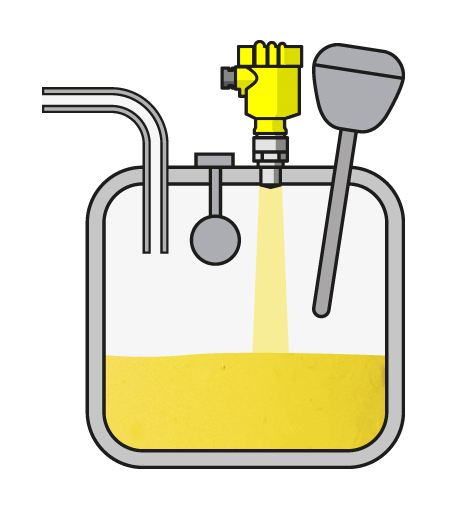
Plant operators have struggled with unfocused radar for decades. The wide beam angle of 26 GHz sensors (and 6 GHz sensors before them) made it difficult for radar signals to miss agitators, heating coils and other vessel internals. The reflections from these installations distorted the echo curve and users were forced to make adjustments to monitor the true liquid level. The new high-transmission models have narrower beams that miss vessel installations—it’s as if they aren’t even there. That is welcome news in chemical and food production, where obtrusive internals are the norm and space is at a premium.
Superior focus makes for accurate measurement without adjustment, but it also opens the door for two other major benefits.
Small process fittings make 80 GHz sensors effective on small tanks.
Small process fittings make 80 GHz
sensors effective on small tanks.
Courtesy VEGA

Size

Because their focus is amped up, 80 GHz sensors have small antennas. The new VEGAPULS 64, for example, has the world’s smallest antenna and doesn’t require a large horn to focus its beam at the measured material. The instrument’s small size makes a huge impact, particularly as it applies to retrofitting. Plants can now integrate the most advanced radar devices into their process without shelling out thousands for modifications to their vessels. Smaller instruments, however, aren’t just good for old vessels; they can also help manufacturers stay nimble and market-responsive.
There’s a trend in the pharmaceutical and chemical industries toward batch production. Batching allows operators to produce seasonal and low-volume products with less financial investment. Small batches are produced in small vessels, where conventional wisdom says using radar is impossible due to small process connections. Thanks to the compact design of 80 GHz radar sensors, that is no longer true, and operators no longer have to sacrifice accurate measurement in the name of space. 

Resolution

Imagine looking at the picture on a standard definition television next to that of an HD TV. The high definition picture would be clearer, sharper, and more detailed due to enhanced resolution. Users will see a similar difference switching from low-frequency to high-frequency radar sensors.
When the level of liquid in a vessel gets low enough, 26 GHz radar reads the echo from the material and the echo from the tank bottom as one echo. This tells the user the vessel is empty when it isn’t and presents a natural handicap to process efficiency. 80 GHz devices measure liquid down to the last millimeter, giving users accurate data they can use to optimize their processes. Greater resolution is particularly important for shipbuilders, who count on precise level in large ballast tanks.
Thanks to Mr. Tischler of VEGA Americas for authoring the white paper excerpted in this article. Share your level measurement challenges with product application specialists, combining your own process knowledge with their product application expertise to develop effective solutions.

The Focus of 80 GHz Radar Level Instruments Applied to Bulk Solids

radar level transmitter 80 GHz flange mount
VegaPuls 69 - 80 GHz radar level transmitter for bulk solids
Courtesy VEGA
Level measurement of  bulk solids presents a range of challenges to process designers and operators. One instrument manufacturer, VEGA, has produced a video demonstrating a distinct advantage of utilizing 80 GHz radar level transmitters instead of those with lower operating frequencies. The demonstration shows actual instruments in use, along with displays of the actual output from the device. You should find it useful.

VEGA manufactures a wide range of instruments for measuring level, interface, density, and pressure for process control applications. Share your process measurement challenges with product application specialists, and combine your process knowledge with their product expertise to develop effective solutions.


Process Gas Chromatograph - Practical Implementation of Parallel Chromatography

process gas chromatograph Yokogawa GC8000
Process Gas Chromatograph
Yokogawa GC8000
Gas chromatography is a common analysis tool employed in many areas of the process control industry, including oil and gas, pharmaceutical, chemical, and others. Yokogawa Corporation of America developed instrumentation to provide top tier GC performance with their GC8000 Process Gas Chromatograph for use in oil and gas, and other industrial applications.

In addition to the ruggedness and reliability for which Yokogawa gas chromatographs are well known, the GC8000 brings a number of innovations and improvements to the company’s process gas chromatography product offering.

> Color touchscreen HMI for easy operation

> Advanced predictive diagnostics and software functions monitor key performance indicators during each analysis to verify analyzer is operating within proper tolerances.

> Parallel chromatography is made practical through the use of the GC Modules provided as part of the GC8000. Virtual GCs can be set up inside a single GC with GC Modules to measure multiple streams simultaneously.

The graphics below expand on this overview of the GC8000 Process Gas Chromatograph, the culmination of Yokogawa’s 55 years of experience in the field. For more detailed information, or to discuss your application specifics, contact a product specialist.


A Step Forward in Non-contact Radar Liquid Level Measurement

80 GHz radar level measurement device for industrial process control
VEGAPULS 64 80 GHz Radar Liquid Level Sensor
Employing non-contact level measurement in a process control operation has many potential benefits. Radar level measurement has gained acceptance as an accurate and reliable method of liquid level measurement. The process measurement instrumentation manufacturers have continually made strides in the evolution of their product offerings, providing more effective lower cost solutions.

VEGA, a global leader in the manufacture of level and pressure instrumentation for the process industry, has introduced a new radar liquid level sensor. The VEGAPULS 64 operates at 80 GHz, a substantially higher frequency than previous models. The higher radar frequency, along with some other improvements, deliver operational benefits.
Graphic of tank with internal coil and stirring devices showing radar level sensor beam
Tight beam focus accommodates
vessel internal fixtures
Courtesy VEGA

  • Measurement is unaffected by condensation or buildup on the antenna
  • High measurement certainty with product deposits on vessel walls
  • System is quickly available for operation after cleaning cycles
  • Tight focusing of the radar beam on the liquid surface provides easier setup and commissioning with complex vessel internal fixtures.
The radar level sensor is available with a number of connection fitting sizes, extending down to 3/4", which enable retrofitting of this improved technology to smaller vessels without extensive modification. There is also an encapsulated antenna variant that is suitable for hygienic or chemical applications.

There is more to learn about the advances in radar level sensors. Reach out to product specialists for more information. Share your level measurement challenges with the product specialists, then combine your process expertise with their product knowledge to produce effective solutions.
radar level sensor with encapsulated antenna for hygienic or chemical applications
VEGAPULS 64 Encapsulated Version

Selecting the Right Flow Meter Technology

Vortex Flow Meter - Yokogawa Corporation
Vortex Flow Meter
Courtesy Yokogawa Corp.
Magnetic Flow Meter - Yokogawa Corporation
Magnetic Flow Meter
Courtesy Yokogawa Corp.
Many industrial process control operations require fluid flow measurement as an essential element in the process design. Accurate flow measurement can be obtained with the proper application and installation of a flow meter as part of the fluid transfer system.

Industrial flow meters employ differing technologies to directly or indirectly measure fluid flow rates. Among the many available technologies for fluid flow measurement, vortex flow meters, magnetic flow meters, Coriolis flow meters, and rotameter flow meters are among some of the most common found in industry.

Coriolis Flow Meter - Yokogawa Corp.
Coriolis Flow Meter
Courtesy Yokogawa Corp.
Rotameter Flow Meters - Yokogawa Corporation
Rotameter Flow Meters
Courtesy Yokogawa Corp.
Each of the separate technologies have attributes which can make them more suitable to certain applications. Selecting the most appropriate flow measurement technology for an application is one of the initial and crucial steps to designing a well functioning fluid measurement system.

Selection criteria, such as fluid temperature, pressure, and velocity will be part of the selection process. Additional considerations include whether the fluid may be abrasive, corrosive, clean or dirty. The state of the fluid, liquid or gas, must also be considered.

The table below provides quick general guidance on which technologies to consider, based upon the factors outlined above. This will help you better focus further product selection research efforts.

Industrial Flow Meter Selection Table - Yokogawa Corporation
Flow Meter Technology Selection Table
Courtesy Yokogawa Corporation of America

Selecting the right device is not always an easy task, especially since it may be something that you do infrequently. Manufacturers often have knowledgeable local representatives that are experienced in this field and more than willing to contribute their expertise to your selection process.

Time Saving Process Instrumentation Selection Tool From Yokogawa

Yokogawa Corporation of America, an industry recognized source for innovative process measurement and control products, has made available an easy to use product selection tool for those navigating through the company's extensive product offering. The Product Finder is a great time saver that enables a user to quickly locate product and technical information on Yokogawa products that meet the user's selected criteria.

Let's step through a quick example. You will see how this quick and easy to use tool saves time by navigating quickly to the website pages detailing products meeting your requirements.

The Product Finder is accessible through a number of links throughout Yokogawa's network of representatives. Clicking the link lands you on the start page of the Product Finder. For this example, I am going to search for a flow meter with the following characteristics:


  • Mass flow measurement 
  • Non-conductive liquid
  • Accuracy of 1%
  • Flow measurement device must have an integral transmitter
  • Tri-clamp connections


Above, I declared my location as United States. The next step, shown below, is to select "Flow" as the measurement parameter. You will see in the drop down menu that there are many measurement elements that can be selected, with Yokogawa products for each.


My selection of "Flow" returns a list of all the company's flow measurement devices, of which there are many (this cropped screenshot, shown below, only shows four, but there were many more) . This is where the selector really helps you. Instead of examining several or many different models, the user can focus the search by adding more product characteristics. You can see the list of prompting questions on the left side of the page. Answering these will narrow the search results to the show only the products meeting all the criteria specified by the user.


The next image (below) shows selections of all  my sample product attributes entered on the left column. Note that there is now only a single product that matches all of my sample criteria. The whole process took less than two minutes. By clicking on the "View More Details" button below the product image, I gain access to all of the available technical, support, and product data for my selected flow measurement device.


The process instrumentation specialists at Classic Controls are available to provide additional help in meeting your measurement challenges. Combine their product knowledge and expertise with your process know-how for the best solutions.