Showing posts with label Puerto Rico. Show all posts

The Top 5 Process Control Instruments That Demand the Most Maintenance

Top 5 Process Control Instruments That Demand the Most Maintenance

Process Industry Insights

And Why You Need A Reliable, Knowledgable, Local Source

A practical look at where field service hours really go in US process plants.

Anyone who has spent time in a refinery, chemical plant, paper mill, or pharmaceutical facility in the United States knows that not all process control instruments are created equal when it comes to upkeep. Some you install and forget about for years. Others seem to keep a technician on speed dial. If you are planning a maintenance budget, stocking a spare parts room, or trying to figure out why your reliability numbers look the way they do, it helps to know which instruments are the usual suspects.

Here are the five process control instruments that typically demand the most field service across US process industries.

1. Control Valves

Control valves sit at the top of almost every maintenance manager's headache list, and for good reason. They are the only major instrument in a loop with serious moving parts exposed to the process. Packing wears out and starts to leak. Plugs and seats erode when fluid velocities are high or when abrasive slurries are involved. Cavitation chews through trim in pressure-reducing service. Actuators lose air, positioners drift, and instrument air systems deliver dirty or wet air that shortens the life of every pneumatic component downstream.

In the average US refinery or chemical plant, control valves account for a disproportionate share of turnaround work, outage hours, and emergency call-outs. Severe service valves in applications like coker feed, caustic regeneration, or ethylene cracking can require full trim replacement every couple of years. Even standard valves need routine stroking, diagnostic testing, and packing adjustments to stay within acceptable performance.

2. pH and ORP Analyzers

If you ask a seasoned instrument technician which sensor has ruined the most weekends, the answer is almost always pH. The sensing element is essentially a thin glass membrane, and the reference electrode depends on a liquid junction that wants to clog, coat, or dry out. In wastewater treatment plants, paper mills, and food and beverage facilities, pH probes often need cleaning weekly and outright replacement every six to twelve months.

Anything in the process stream that fouls the glass or poisons the reference — oils, proteins, sulfides, suspended solids — accelerates the failure. Buffer calibration must be performed frequently to keep readings accurate, and that alone burns significant technician hours across a large facility. ORP sensors share the same weaknesses and tend to fail in the same ways.

3. Process Analyzers

Gas chromatographs, continuous emissions monitoring systems, oxygen analyzers, and moisture analyzers are in a maintenance class of their own. They are essentially miniature laboratories sitting outside in Gulf Coast humidity or Midwestern winters, and they need attention to match.

Carrier gas bottles have to be swapped, chromatography columns age and need replacement, sample conditioning systems plug with particulates or condensate, and calibration gas cylinders run dry on their own schedule. An analyzer house with a dozen instruments can easily justify a full-time dedicated technician. For plants subject to EPA reporting requirements, downtime on a CEMS is not just inconvenient — it carries direct compliance consequences, which is why these systems generate so many after-hours calls.

4. Flow Meters

Flow measurement is a broad category, and the maintenance burden depends heavily on the technology. Differential pressure flow meters using orifice plates are the workhorses of older US facilities, and their impulse lines love to plug, freeze in winter, and fill with crud. The orifice plate itself wears and rounds off, especially in gas service with entrained liquids or in abrasive slurry lines.

Magnetic flow meters are generally reliable but suffer when electrodes coat in dirty water, wastewater, or pulp stock applications. Coriolis meters are the most maintenance-light option of the bunch but still require occasional zeroing, and their sensor tubes can erode in the wrong service. Turbine meters have bearings that simply wear out. Across a typical chemical or oil and gas site, flow meters of various types consume a steady stream of technician time.

5. Level Instruments

Level measurement rounds out the top five. Displacers and floats have moving parts that stick or corrode. Differential pressure level transmitters rely on impulse lines and diaphragm seals that fail in hot, viscous, or crystallizing service. Radar gauges are increasingly popular because they have no moving parts, but they still struggle with heavy foam, turbulent surfaces, agitator blades, and internal coatings on the antenna.

Ultrasonic level sensors have similar beam-path problems and need clear sight lines to the liquid. In tank farms, boilers, separators, and reactors, level is often the single most operationally critical measurement in the loop, so when a level instrument drifts, everyone notices quickly — and the field service call goes out immediately.

The Common Thread

The instruments that demand the most maintenance all share one characteristic: they are in direct, intimate contact with the process. Valves move the fluid, analyzers sample it, flow meters sit in the line, pH probes soak in it, and level sensors see whatever the tank throws at them. The more the process touches the instrument, the more the process wears it out. Plants planning a reliability program across a US process facility can save real money by focusing predictive maintenance, spare parts investment, and technician training exactly where those interactions are most punishing.

Partner Spotlight

How Classic Controls Can Help

For plants across Florida, Southern Georgia, the Caribbean, Puerto Rico, and Central America, Classic Controls in Lakeland, FL has become a trusted partner for navigating exactly these maintenance challenges. Their team of application engineers and field service technicians understands that choosing the right instrument is only the beginning — what really keeps a facility running is matching the technology to the service, training the people who will live with it, and having expert help when something goes sideways in the middle of a production run.

Classic Controls personnel are ready to assist at every stage:

  • Product SelectionRight Instrument, Right Service
  • TrainingOperations & Maintenance Teams
  • On-Site ServiceCommissioning & Repair

They help plants select the right control valves, analyzers, flow meters, level instruments, and pH systems for the specific service conditions involved, so the instrument installed is the one most likely to survive the application. Their trainers work directly with maintenance and operations teams to build the in-house skill needed to calibrate, troubleshoot, and care for these instruments day to day. And when issues do come up in the field, their on-site service team is available to handle commissioning, repair, and emergency callouts across the region.

If you are looking to reduce unplanned downtime on the instruments profiled above, bringing Classic Controls into the conversation early — before the next turnaround, not during the next outage — is one of the most practical steps a Florida or Southeastern US facility can take.

Innovation Without Borders: Classic Controls’ Engineering Expertise Spans Florida to Central America

Classic Controls’ Engineering Expertise Spans Florida to Central America

Classic Controls never treats a valve, transmitter, or supervisory server as an isolated part number. Every project that crosses the company’s desks—whether it involves a ruggedized butterfly valve for a phosphate mine outside Bartow or a complete hyper-automation upgrade for a pharmaceutical campus in Puerto Rico—starts with a conversation led by one of the firm’s Sales Engineers. Those engineers form the heart of Classic Controls, and for thirty-five years, they have built their reputation on the conviction that deep engineering knowledge, coupled with an unflagging curiosity about each customer’s process, unlocks far more value than any catalog alone could promise.

Walk through a citrus juicing plant in central Florida, and you will likely bump into a Classic Controls engineer elbow-deep in data, tracing how a pressure fluctuation at an evaporator translates into subtle changes in sugar concentration downstream. Because many team members hold engineering degrees and have logged decades of commissioning everything from safety-integrity-level loops to cryogenic vents, they recognize the minor disturbances that can ripple into a plant-wide headache. Rather than prescribe a quick-fix regulator, they map the entire control narrative and design a solution that fits into the customer’s digitalization roadmap. Taking that path ensures the asset does not become a stranded analog island once the facility pivots to full IIoT connectivity.

The same philosophy travels with them across state lines and international borders. Georgia’s venerable textile mills have raced to modernize as reshoring and sustainability targets push loom speeds higher and shrink water and energy footprints. Classic Controls engineers stand shoulder to shoulder with mill managers, decoding the interplay among dye-bath temperature, liquor ratio, and closed-loop effluent treatment. They speak the language of Industry 4.0 but translate it into practical actions, such as selecting corrosion-resistant control valves that survive caustic scours while still streaming diagnostic parameters into the plant historian. Pulp and paper plants from the Okefenokee region wrestle daily with sticky steam economies, pitch fouling, and volatile commodity cycles. Classic Controls travels those hardwood backroads with flow transmitters rugged enough to read black-liquor density yet smart enough to issue a predictive maintenance alert before plug-nozzle wear drags the evaporator train below target solids. The engineers weave that data into secure digital transformation frameworks that mill IT teams already audit, proving that reliability and cybersecurity can stride together instead of pulling in opposite directions.

In the Caribbean, hurricanes and salt air test every piece of metal. Refiners in St. Croix and power stations in Puerto Rico invite Classic Controls because the Sales Engineers anticipate those corrosive realities during specification—not after failure. They know which exotic alloys survive brackish spray, which positioners keep their calibration after a week without grid power, and which PLC input cards tolerate blistering heat and a line full of rain-soaked dust. Their background lets them reframe “digital transformation” from a buzzword into the tangible benefit of remote diagnostics that keep technicians off flooded roads.

When a gold mine in Central America needed to raise throughput without violating stringent water usage caps, Classic Controls brought in instrumentation that captured real-time density and flow, but the engineers did not stop there. They wrote edge code that scrubs raw sensor data, flagged process drifts before they bit into recovery rates, and streamed the insights to a cloud analytics engine that the mine’s staff already used for haul-truck optimization. The result joined brown-field equipment with a future-ready IIoT backbone, yielding a productivity jump that paid for itself before the first tropical wet season ended.

Oil and gas producers along the Gulf Coast appreciate similar rigor. Classic Controls Sales Engineers assist the operators as they retrofit control rooms for cybersecurity compliance and layer zero-trust architectures over legacy DCS networks. They know the difference between a policy that sounds good in an audit and one that still lets an emergency shutdown valve stroke in 200 milliseconds. That intimate understanding of cyber risk and fluid dynamics gives plant managers confidence that a migration to modern, object-oriented SCADA will proceed without jeopardizing process safety.

Across every territory, the engineers measure their success not by the purchase order size but by the phone calls they do not receive after start-up. When an agro-industrial customer in northern Florida installed smart positioners that broadcast stem friction and seal wear, the early alerts allowed maintenance crews to schedule rebuilds during planned downtime instead of scrambling at 2 a.m. The avoided scrap batches and overtime hours became a living testament to the value of pairing digital transformation with people who understand the physics of the data.

Classic Controls also nurtures a culture of continuous learning.  Their knowledge feeds the company’s blog posts, lunch-and-learn sessions, and conference papers, ensuring customers across food & beverage, water treatment, and advanced manufacturing all tap into the same reservoir of up-to-date expertise.

In a market crowded with distributors who merely move boxes, Classic Controls stands apart because its Sales Engineers move ideas, insights, and measurable results. They collapse the distance between concept and commissioning, anchoring every recommendation in the twin realities of process constraints and the client’s strategic push toward digitalization, IoT connectivity, and the broader horizons of Industry 4.0 and 5.0. After thirty-five years, the equation remains simple: when seasoned engineers lead the sales conversation, customers in Florida, Georgia, the Caribbean, Puerto Rico, and Central America receive solutions that outperform specifications and outlast trends.

Classic Controls
+1 863-644-3642
https://classiccontrols.com

Classic Controls: Your Trusted Partner for Process Automation Across Florida, Georgia, Central America and the Caribbean

Trusted Partner for Process Automation Across Florida, Georgia, Central America and the Caribbean

Classic Controls is a go-to provider of process control and automation solutions. Based in Lakeland, Florida, the company has expanded steadily, growing far beyond its local roots to support customers in Georgia, the broader Caribbean (North and South), Puerto Rico, Central America, Trinidad & Tobago, Guyana, and Suriname. Their wide coverage means they can quickly deliver equipment, handle on-site services, and provide timely technical support for various industrial applications.

From its earliest days, Classic Controls strove to address real-world challenges businesses face in industries like water treatment, food and beverage, chemical processing, pharmaceuticals, and power generation. While the company remains focused on Lakeland and Florida, it has developed a genuine international reach thanks to strong partnerships with manufacturers and long-term relationships with clients across various sectors. 

One of Classic Controls' standout features is the variety of products it offers. Because industries rely on accurate data and precise control, instrumentation is at the heart of many processes. Classic Controls carries an extensive selection of measurement devices—including flow meters, pressure gauges, temperature sensors, and level transmitters—that can withstand challenging environments. They also supply cutting-edge automation systems and controllers that streamline complex operations, improve efficiency, and reduce human error. 

In addition, the company provides high-performance valves and actuators designed to handle harsh conditions, whether the goal is managing extreme temperatures, pressures, or corrosive media. Many industries turn to Classic Controls for advanced analytical tools, such as pH monitors or dissolved oxygen analyzers, which help maintain quality, ensure regulatory compliance, and keep production on track. Filtration and steam specialties are another area of expertise, ensuring customers can support safe, clean, and energy-efficient facilities.

However, Classic Controls is about more than just supplying technology. A significant reason for their loyal following is the hands-on support they offer every step of the way. Their engineering team works alongside clients to understand specific operational requirements and then suggests tailored solutions to each unique situation. This can involve selecting the right instruments, sizing a system, or designing an automation framework that ties multiple processes together. Once everything is approved, their technicians can oversee installation and commissioning, helping minimize downtime and any start-up headaches.

Once systems are up and running, Classic Controls continues to provide training, calibration, and maintenance services. The goal is to help customers keep instrumentation in peak condition. Calibration can be performed on-site or in-house, depending on what works best for a particular operation. Training sessions and seminars empower teams to make the most of new technologies. These resources are also valuable for anyone who wants to stay informed about best practices and industry trends.

Over the years, as Classic Controls built a name in Florida and neighboring states, demand for their expertise naturally spread to the Caribbean, Central America, and beyond. Whether upgrading an existing control system in Georgia or improving water treatment processes in Puerto Rico, they bring the same dedication to every project. This expansion is primarily driven by positive referrals from satisfied customers who appreciate the combination of reliable products, knowledgeable staff, and a down-to-earth approach to problem-solving.

Looking to the future, Classic Controls understands that the modern industry is evolving quickly. Digital transformation, data analytics, and remote monitoring become more critical every year, and businesses need a solid partner who can implement these technologies effectively. By blending decades of practical experience with the latest innovations, Classic Controls stays at the forefront of process automation. They remain committed to providing personalized customer support that has always set them apart.

Whether you need a simple instrument replacement or a full-scale automation overhaul, Classic Controls' team is ready to provide guidance and ensure a smooth transition. Their commitment to quality, safety, and continual improvement has earned them a prominent position across Florida, Georgia, and the Caribbean. For companies seeking to boost efficiency, cut costs, or modernize aging systems, Classic Controls offers a trusted path forward—wherever your operations might be located.

Classic Controls
+1 863-644-3642
https://classiccontrols.com

Comparing Industrial Butterfly Valves: Rubber Lined, High Performance, and Offset Designs

Comparing Industrial Butterfly Valves: Rubber Lined, High Performance, and Offset Designs

Butterfly valves play a vital role in industrial fluid control systems, efficiently regulating flow across a wide range of applications. Rubber-Lined (General-Purpose) Butterfly Valves—and High-Performance Butterfly Valves (including Double and Triple Offset designs) stand out due to their unique designs and specific uses. Understanding the differences in valve style, construction, and application is crucial for selecting the most suitable valve for a given industrial need.

Rubber-Lined (General-Purpose) Butterfly Valves feature a straightforward, robust design ideal for low-pressure and low-temperature environments. In these valves, the stem is centered in the middle of the disc and seat, meaning the disc remains in constant contact with the seat throughout its operation. The valves consist of a disc mounted on a rotating shaft within a rubber-lined body, where the rubber lining acts as both the seat and the seal, ensuring tight shut-off when the disc closes. While this design offers simplicity and cost-effectiveness, it can lead to increased wear under higher pressures and temperatures due to the constant contact between the disc and seat. Industries such as HVAC, water treatment, and general manufacturing frequently employ rubber-lined butterfly valves due to their reliability and economical nature, especially in applications involving non-corrosive fluids at low pressures and temperatures.

In contrast, High-Performance Butterfly Valves are engineered for more demanding applications involving higher pressures and temperatures. These valves often incorporate advanced materials like stainless steel or specialized alloys for the disc and seat, enabling them to handle steam, gases, and corrosive chemicals. High-performance designs include Double Offset and Triple Offset Butterfly Valves, each offering enhanced capabilities for specific industrial needs.

Double Offset Butterfly Valves incorporate two distinct offsets: one from the centerline of the pipe and the second from the centerline of the seat cone. This design minimizes rubbing between the disc and seat during operation, reducing wear and enhancing seal longevity. The reduced friction allows these valves to operate effectively in higher pressure and temperature conditions than zero offset valves. Industries requiring reliable performance and extended service life under challenging conditions often utilize double offset designs.

Triple Offset Butterfly Valves add a third offset by designing the sealing components with a conical profile. This feature ensures that the disc contacts the seat only at the final point of closure, virtually eliminating wear and providing a torque-seated, zero-leakage valve. Constructed with metal-to-metal sealing surfaces, triple offset valves can withstand extreme temperatures and pressures. Industries such as petrochemical, power generation, and refining favor these valves for critical applications where safety and reliability are paramount.

Comparing these valves reveals key differences in design and operational capabilities. Rubber-lined valves, with their concentric design and elastomeric lining, offer simplicity and cost-effectiveness for general-purpose use but are limited to lower pressure and temperature applications. High-Performance Butterfly Valves, including double and triple offset designs, enhance performance for moderate to high-pressure systems thanks to their offset stems and improved sealing mechanisms.

Selecting the appropriate butterfly valve hinges on the application's specific requirements, including the type of fluid, pressure, temperature, and the necessity for tight shut-off. Rubber-lined butterfly valves present economical and effective solutions for general-purpose needs involving non-corrosive fluids at low pressures and temperatures. Conversely, High-Performance Butterfly Valves with double and triple offset designs are better suited for challenging environments where reliability and longevity are essential under higher pressures and temperatures.

Understanding the nuances of each valve type ensures optimal performance, safety, and cost-effectiveness in industrial fluid control systems. Engineers and operators can make informed decisions that enhance system efficiency and reliability by carefully considering valve style, construction, and application requirements.

Classic Controls  
+1 863-644-3642  

Modernizing Industrial Automation: How Classic Controls is Leading Digital Transformation in the Florida, Southern Georgia, and the Caribbean Region

Modernizing Industrial Automation

Classic Controls, based in Lakeland, FL, is a recognized leader in delivering cutting-edge automation, control, and integration solutions across various industries. Serving sectors such as industrial, water and wastewater treatment, petrochemical, oil and gas, chemical, food processing, pulp and paper, and aerospace, Classic Controls provides tailored technologies to optimize processes and drive operational efficiency throughout Florida, Southern Georgia, and the Caribbean Region.

Expertise and Solutions:

Industrial Automation Solutions  

Classic Controls excels at implementing automation systems designed to streamline industrial processes. Their deep industry expertise allows them to reduce manual intervention, improving efficiency and productivity for various applications.  

Digital Transformation Integration  

With decades of experience, Classic Controls helps organizations embrace digital transformation by integrating advanced technologies into their existing systems. This modernization enhances performance, scalability, and operational outcomes, positioning industries for success in the digital age.

Connected Ecosystems  

Classic Controls designs and implements fully networked systems that enable seamless communication between devices, sensors, and control platforms. These connected ecosystems optimize industrial workflows, enhancing both productivity and reliability.

Operational Technology (OT) Integration  

Bridging the gap between IT and OT is essential for modern industrial environments, and Classic Controls specializes in this critical integration. Their solutions combine hardware and software technologies to allow companies to monitor, control, and optimize equipment and processes with real-time data and decision-making capabilities.

Cyber-Physical Systems (CPS)  

As pioneers in IoT and Industry 4.0 technologies, Classic Controls delivers advanced cyber-physical systems where digital controls and physical machinery work together. These systems ensure enhanced monitoring, precise control, and real-time responsiveness across industrial environments.

Industrial Internet of Things (IIoT) Integration  

Leveraging their expertise in IIoT, Classic Controls implements advanced sensors and connected devices to collect real-time data, providing industries with actionable insights that help optimize processes, improve safety, and enhance efficiency.

Smart Manufacturing Solutions  

Classic Controls leads smart manufacturing, offering intelligent systems that increase flexibility, improve product quality, and boost overall efficiency. Their solutions empower manufacturers to quickly meet the challenges of modern production environments.

Automation and Control Architecture  

Classic Controls designs scalable automation and control architectures, combining the latest technologies to deliver precise, efficient, and comprehensive solutions for process control. Their architectures support both small-scale and large-scale operations across multiple industries.

Intelligent Infrastructure  

Classic Controls creates intelligent infrastructure solutions through automation and data-driven analytics. These systems improve operational responsiveness, minimize downtime, and ensure processes are adaptive and resilient to changing demands.

Enterprise Connectivity  

Classic Controls emphasizes enterprise connectivity, integrating industrial processes with broader enterprise systems. This end-to-end integration provides greater visibility and enhances decision-making, leading to optimized operations and reduced costs.

A Trusted Partner for Innovation and Efficiency

With deep expertise in Industrial Automation, Digital Transformation, and IIoT Integration, Classic Controls remains a trusted partner for customers across the Southeast and Caribbean. Their tailored approach ensures seamless connectivity, process optimization, and operational efficiency, helping industries modernize, reduce costs, and improve productivity through cutting-edge technologies and innovative solutions.

Classic Controls
+1 863-644-3642
https://classiccontrols.com

Maximizing Market Penetration: The Need for Skilled Sales Engineers in the Caribbean's Industrial Sector

Maximizing Market Penetration

In the highly specialized field of industrial valves and controls, manufacturers face unique challenges in expanding their market reach, particularly in diverse and geographically dispersed regions like the Caribbean. Partnering with a technically skilled and account-knowledgeable sales engineering agency to cover the entire Caribbean, including key markets such as Puerto Rico, Trinidad & Tobago, Guyana, and Suriname, cannot be overstated. 

Expertise in Local Market Needs


The Caribbean region presents a unique blend of industrial needs driven by sectors such as oil and gas, petrochemicals, power generation, and infrastructure development. Each country within the region has its specific industrial demands, regulatory requirements, and operational challenges. A sales engineering agency with deep technical expertise and localized knowledge can effectively bridge the gap between these market demands and the manufacturer’s product offerings. 

For example, in Trinidad and Tobago, a major player in the oil and gas industry, the need for high-performance, corrosion-resistant valves that can withstand harsh environments is critical. In contrast, countries like Guyana, experiencing rapid growth due to recent oil discoveries, require solutions supporting exploration and new infrastructure development. An agency with technical acumen can guide manufacturers in tailoring their products to meet these diverse needs, ensuring relevance and competitiveness in each market.

Enhancing Customer Relationships


A sales engineering agency that combines technical knowledge with account management skills is invaluable in cultivating and maintaining strong customer relationships. Industrial clients in the Caribbean often require more than just products; they need solutions to complex operational challenges. A technically proficient sales team can engage with these clients at a deeper level, understanding their specific problems and proposing tailored solutions that add real value. 

For instance, in Puerto Rico, where the power generation and manufacturing sectors are significant, clients may require customized valve and control solutions that enhance efficiency and reliability in the face of frequent natural disasters. A knowledgeable sales engineering agency can provide these solutions and offer ongoing support and training, building trust and loyalty with customers.

Navigating Regulatory and Logistical Challenges


The Caribbean region has various regulatory environments, logistical challenges, and import/export complexities. A sales engineering agency with in-depth knowledge of these factors can help manufacturers navigate these hurdles effectively. For example, understanding the certification requirements in Suriname or the importation regulations in Trinidad & Tobago can be the difference between a successful project and costly delays. 

Additionally, logistical challenges such as transportation, warehousing, and distribution across the islands require careful planning and execution. An agency with experience in these areas can ensure that products are delivered on time and within budget, enhancing the manufacturer’s reputation and reliability in the region.

Expanding Market Reach


Finally, a technically skilled and account-knowledgeable sales engineering agency can significantly expand a manufacturer’s market reach in the Caribbean. By leveraging their expertise and local presence, they can identify new opportunities, engage with key stakeholders, and drive growth in markets that may have previously been inaccessible.

For an industrial valve and control manufacturer, partnering with a sales engineering agency with technical expertise and a deep understanding of the Caribbean market is crucial for success. This partnership ensures that the manufacturer’s products are well-represented and effectively sold and positions them as a trusted and reliable solution provider in this diverse and dynamic region.

Classic Controls
+1 863-644-3642
https://classiccontrols.com

The Evolving Role of Process Control Sales Engineering: Classic Controls Leading the Way

The Evolving Role of Process Control Sales Engineering: Classic Controls Leading the Way

Process control sales organizations are crucial in bridging the gap between manufacturers of industrial instrumentation and valves and the end-users in various industries. These organizations, like Classic Controls of Lakeland, FL, serve as technical experts and consultants, helping clients navigate the complex world of process control and automation.

The primary roles of these organizations include:
  1. Technical expertise: Sales engineers possess in-depth knowledge of process control instrumentation, industrial valves, and automation systems. They understand the intricacies of different industries and can recommend tailored solutions.
  2. Product selection and specification: They help clients choose the right equipment for their applications, considering process conditions, regulatory requirements, and budget constraints.
  3. System integration: Sales engineers often assist in integrating new equipment with existing systems, ensuring seamless operation and compatibility.
  4. Training and support: They train end-users on proper equipment installation, operation, and maintenance.
  5. Troubleshooting and problem-solving: When issues arise, these organizations offer valuable support in diagnosing and resolving problems.
  6. Industry updates: They inform clients about technological advancements and industry trends.
The consultative approach of sales engineers is critical because it ensures that clients receive solutions that truly meet their needs rather than just off-the-shelf products. This approach involves:
  1. Understanding the client's process and challenges
  2. Analyzing the specific application requirements
  3. Proposing customized solutions
  4. Providing ongoing support and optimization
Over the next decade, the role of process control sales organizations is likely to evolve in several ways:
  1. Increased focus on digital technologies: As Industry 4.0 and IIoT (Industrial Internet of Things) continue to advance, sales engineers must become experts in digital solutions, data analytics, and cloud-based systems.
  2. Sustainability and energy efficiency: With a growing emphasis on environmental responsibility, these organizations will play a key role in helping clients implement more sustainable and energy-efficient process control solutions.
  3. Cybersecurity expertise: As industrial systems become more connected, sales engineers must address cybersecurity concerns and offer secure solutions.
  4. Remote support and virtual reality: The use of remote diagnostics, augmented reality, and virtual reality for training and support will likely increase.
  5. Artificial intelligence and machine learning: Sales engineers must understand and implement AI-driven solutions for predictive maintenance and process optimization.
  6. Regulatory compliance: As regulations become more stringent, these organizations will play an increasingly important role in ensuring clients meet compliance requirements.
Classic Controls, based in Lakeland, FL, has built an outstanding reputation in Southern Georgia, Florida, the Caribbean, and Puerto Rico. Their success is attributed to several factors:
  1. Regional expertise: Classic Controls has a deep understanding of the unique challenges and requirements of industries in their service area, including water treatment, power generation, and chemical processing.
  2. Comprehensive product portfolio: They represent leading manufacturers in the industry and offer a wide range of high-quality instrumentation and valve solutions.
  3. Experienced team: Their sales engineers have extensive experience and technical knowledge, allowing them to provide expert guidance and support.
  4. Customer-centric approach: Classic Controls is known for its commitment to customer satisfaction, often going above and beyond to ensure client success.
  5. Strong relationships: They have built lasting partnerships with manufacturers and end-users, fostering trust and reliability.
  6. Local presence: With strategically located offices, they can quickly and efficiently support clients across their service area.
  7. Training and education: Classic Controls offers regular training sessions and workshops, helping clients stay up-to-date with the latest technologies and best practices.
As the process control industry continues to evolve, Classic Controls is well-positioned to adapt to new technologies and market demands, maintaining its status as a trusted partner for industrial clients in the region. Their consultative approach and technical expertise will remain valuable assets as they guide clients through the increasingly complex world of process control and automation.

Classic Controls
+1 863-644-3642
https://classiccontrols.com

Baker Hughes: A Leader in Industrial Flow and Pressure Control Solutions

Baker Hughes: A Leader in Industrial Flow and Pressure Control Solutions

Baker Hughes, a global energy technology company, offers a diverse range of products and services for the oil and gas industry. Four of its many product lines stand out for their contributions to flow and pressure control: Masoneilan, Consolidated, Mooney, and Becker. Each product line serves specific markets and applications, providing innovative solutions for various industrial needs.

Masoneilan: Precision Control Valves

Masoneilan is renowned for its high-quality control valves and associated equipment. The product line includes:
  • Globe valves
  • Rotary valves
  • Butterfly valves
  • Severe service valves
  • Digital valve positioners
  • Smart valve controllers

These products are widely used in industries such as:
  • Oil and gas production and refining
  • Power generation
  • Chemical and petrochemical processing
  • Pulp and paper manufacturing
  • Food and beverage production

Masoneilan valves provide precision control in challenging process conditions, including high-pressure, high-temperature, and corrosive environments. The digital valve positioners and smart controllers enhance valve performance and enable predictive maintenance, reducing downtime and improving overall process efficiency.

Consolidated: Pressure Relief and Safety Valves

The Consolidated product line focuses on pressure relief and safety valve solutions, offering:

  • Spring-loaded safety valves
  • Pilot-operated safety valves
  • Power-actuated relief valves

These products are crucial for ensuring safety and compliance in various industries, including:
  • Oil and gas refineries
  • Power plants (nuclear, fossil, and renewable)
  • Chemical processing facilities
  • Pharmaceutical manufacturing
  • Marine and offshore applications

Consolidated valves protect equipment and personnel by relieving excess pressure in systems and preventing catastrophic failures. The product line's reputation for reliability and performance makes it a preferred choice for critical safety applications across multiple industries.

Mooney: Regulators and Control Valves

Mooney specializes in regulators and control valves for natural gas applications, offering:

  • Pressure-reducing regulators
  • Back pressure regulators
  • Overpressure protection devices
  • Slam-shut valves
  • Control valves for gas service

The Mooney product line primarily serves the following markets:
  • Natural gas transmission and distribution
  • Gas processing facilities
  • Power generation plants using natural gas
  • Industrial gas users

Mooney regulators and valves are known for their accuracy and reliability in controlling gas pressure and flow. They play a crucial role in maintaining safe and efficient operations in natural gas infrastructure, from wellhead to end-user applications.

Becker: Control and Automation Solutions

The Becker product line focuses on control and automation solutions for the natural gas industry, offering:

  • Control valves
  • Actuators
  • Valve positioning systems

Becker products are primarily used in:
  • Natural gas transmission pipelines
  • Gas storage facilities
  • Compressor stations
  • City gate stations
  • Large industrial gas users

Becker's solutions optimize gas flow control, improve operational efficiency, and enhance system monitoring and data acquisition. Integrating smart technologies and advanced control algorithms allows for precise management of gas infrastructure, reducing waste and improving overall system performance.

Classic Controls of Lakeland, Florida: Engineering and Application Support for Masoneilan, Consolidated, Mooney, and Becker


Classic Controls, based in Lakeland, Florida, stands as a premier provider of engineering and application support for Baker Hughes' esteemed product lines—Masoneilan, Consolidated, Mooney, and Becker. With a dedicated focus on delivering exceptional service, Classic Controls ensures that customers in Florida, The Caribbean, and Puerto Rico receive top-tier support and solutions tailored to their specific needs.

Comprehensive Engineering Support

Classic Controls offers extensive engineering support, helping clients select and integrate the right Baker Hughes products for their unique applications. Their team of seasoned engineers provides:

  • Technical Consultation: Expert advice on product selection and system design to optimize performance and reliability.
  • Custom Solutions: Tailored engineering solutions to meet the specific requirements of diverse industrial processes.
  • Installation and Commissioning: Assistance with the installation and commissioning of Baker Hughes products to ensure seamless integration and operation.

Application Support

Beyond engineering, Classic Controls excels in offering comprehensive application support for Masoneilan, Consolidated, Mooney, and Becker products:

  • Product Training: In-depth training programs for customer teams, ensuring they are well-versed in the operation and maintenance of the equipment.
  • Maintenance Services: Ongoing support and maintenance services to maximize the lifespan and efficiency of the products.
  • Troubleshooting and Repair: Rapid response and effective solutions for any issues that arise, minimizing downtime and maintaining productivity.

Regional Expertise

Serving a broad geographic area, Classic Controls is well-versed in the unique demands of customers in Florida, The Caribbean, and Puerto Rico. Their regional expertise ensures that they can:
  • Adapt Solutions to Local Conditions: Providing products and services that are suited to the specific environmental and regulatory conditions of the region.
  • Quick Response Times: Leveraging their strategic location to offer prompt and efficient support to customers across the region.
  • Strong Regional Partnerships: Building and maintaining strong relationships with local industries to better understand and meet their needs.

Classic Controls
+1 863-644-3642
https://classiccontrols.com

Partnering for Success: Classic Controls and Process Industries in the Caribbean Region

Classic Controls and Process Industries in the Caribbean Region

The Caribbean, Puerto Rico, Trinidad & Tobago, Guyana, and Suriname host diverse major process industries that drive their economies and contribute to global supply chains. These industries include oil and gas, petrochemicals, mining, power generation, and manufacturing. As these sectors continue to grow and evolve, they require reliable, high-quality industrial valves and instrumentation to ensure efficient and safe operations.

Classic Controls, Inc. has established itself as a premier provider of premium products and exceptional sales, service, and engineering support for industrial valves and instrumentation in this region. With a commitment to excellence and a deep understanding of the unique challenges faced by process industries in the Caribbean and surrounding countries, Classic Controls offers tailored solutions to meet the specific needs of each client.

Classic Controls supplies cutting-edge valves and instrumentation in the oil and gas sector that withstand the harsh conditions and high pressures associated with upstream, midstream, and downstream operations. The company's products enable precise control, reliable monitoring, and adequate safety measures, ensuring the smooth functioning of drilling rigs, refineries, and pipelines across the region.

The petrochemical industry, particularly in Trinidad & Tobago, relies on Classic Controls for its extensive range of valves and instrumentation designed to handle the complex processes of producing chemicals, plastics, and fertilizers. The company's expertise in this field allows petrochemical plants to optimize operations, minimize downtime, and maintain the highest quality and safety standards.

Mining operations in Guyana and Suriname benefit from Classic Controls' rugged and dependable valves and instrumentation, which can withstand the abrasive and corrosive conditions often encountered in mineral extraction and processing. The company's products help mining facilities achieve efficient material handling, precise process control, and compliance with environmental regulations.

Classic Controls provides advanced valves and instrumentation in the power generation sector that ensure power plants' reliable and efficient operation across the Caribbean and Puerto Rico. The company's solutions enable precise control of steam, water, and fuel flow, contributing to the stable and continuous supply of electricity to households and businesses in the region.

Manufacturing industries like food and beverage processing, pharmaceuticals, and textiles rely on Classic Controls for their valve and instrumentation needs. The company offers a wide range of products that meet stringent hygiene and safety standards, enabling manufacturers to maintain product quality, optimize production processes, and comply with industry regulations.

Classic Controls' unwavering commitment to customer satisfaction sets It apart. The company's knowledgeable sales team works closely with clients to understand their unique requirements and recommend the most suitable solutions. Classic Controls' skilled engineers provide expert technical support, assisting with installation, troubleshooting, and maintenance to minimize downtime and ensure optimal performance.

Moreover, Classic Controls maintains a well-stocked inventory of valves and instrumentation, enabling prompt delivery and reducing lead times for clients in the region. The company's extensive network of suppliers and partners allows it to source the best products at competitive prices, passing on the benefits to its customers.

As the process industries in the Caribbean, Puerto Rico, Trinidad & Tobago, Guyana, and Suriname continue to expand and evolve, Classic Controls remains at the forefront, providing the premium products and outstanding support that these industries need to thrive. With its commitment to quality, expertise, and customer satisfaction, Classic Controls has become the region's go-to partner for industrial valves and instrumentation.

Classic Controls
+1 863-644-3642
https://classiccontrols.com


The Future of Process Control Instrumentation and Industrial Valves: Embracing IIoT, Wireless Communications, and Artificial Intelligence

The Future of Process Control Instrumentation and Industrial Valves

Over the next five years, the process control instrumentation and industrial valve sectors will undergo significant transformations driven by the integration of Industrial Internet of Things (IIoT), wireless communications, and artificial intelligence (AI) technologies. These advancements will revolutionize how industries monitor, control, and optimize their processes, improving efficiency, reliability, and cost-effectiveness.

1. IIoT Integration:

Adopting IIoT technologies will enable seamless connectivity between process control instruments, industrial valves, and centralized control systems. Smart sensors and actuators equipped with embedded intelligence will facilitate real-time data collection, continuously monitoring process parameters such as pressure, temperature, flow, and level. This data-driven approach will enhance decision-making capabilities, enabling proactive maintenance and optimized process control.

2. Wireless Communications:

The proliferation of wireless communication protocols, such as Wi-Fi, Bluetooth, and LoRaWAN, will eliminate the need for extensive cabling in process control environments. Wireless-enabled instruments and valves will offer increased flexibility, scalability, and cost savings. These technologies will enable remote monitoring and control, allowing operators to access critical process information from anywhere, anytime. Wireless mesh networks ensure robust and reliable communication, even in challenging industrial environments.

3. Artificial Intelligence and Machine Learning:

Integrating AI and machine learning algorithms will revolutionize how process control instrumentation and industrial valves operate. Predictive maintenance powered by AI will analyze sensor data to identify potential equipment failures before they occur, minimizing downtime and reducing maintenance costs. Machine learning algorithms will continuously learn from process data, enabling self-tuning and self-optimizing control systems that adapt to changing process conditions in real time.

4. Cloud-Based Platforms:

Cloud-based platforms will facilitate storing, analyzing, and visualizing process data generated by IIoT-enabled instruments and valves. Cloud computing will provide scalable and secure infrastructure for data management, enabling seamless integration with enterprise systems and facilitating remote collaboration among teams. Cloud-based analytics will offer insights into process performance, identifying inefficiencies and opportunities for optimization.

5. Augmented Reality and Virtual Reality:

Augmented reality (AR) and virtual reality (VR) technologies will transform operators' interaction with process control instrumentation and industrial valves. AR-enabled devices will provide real-time guidance and overlays, assisting in installation, maintenance, and troubleshooting tasks. VR simulations will enable immersive training experiences, allowing operators to practice complex procedures in a safe and controlled environment.

6. Cybersecurity Enhancements:

Cybersecurity will be a critical concern as process control instrumentation and industrial valves become more connected and digitized. Robust security measures, including encryption, authentication, and secure communication protocols, will be implemented to protect against cyber threats. Blockchain technology may be leveraged to ensure data integrity and traceability throughout the supply chain.

Integrating IIoT, wireless communications, and AI technologies will transform the process control instrumentation and industrial valve sectors over the next five years. These advancements enable real-time monitoring, predictive maintenance, self-optimizing control, and enhanced operator experiences. Industries that embrace these technologies will gain a competitive edge, achieving higher efficiency, reduced downtime, and improved overall performance. As the adoption of these technologies accelerates, the future of process control instrumentation and industrial valves looks bright, promising a new era of intelligent and connected industrial systems.

Classic Controls
+1 863-644-3642
https://classiccontrols.com

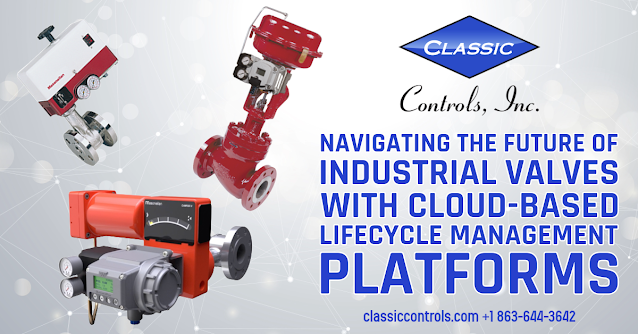
Navigating the Future of Industrial Valves with Cloud-Based Lifecycle Management Platforms

Navigating the Future of Industrial Valves with Cloud-Based Lifecycle Management Platforms

Cloud-based industrial valve lifecycle management (VLM) systems significantly advance the maintenance and operation of industrial valves. These digital platforms offer an integrated solution for tracking, managing, and optimizing valve performance and maintenance throughout their entire lifecycle. By leveraging cloud technology, these systems ensure real-time data accessibility, advanced analytics, and remote monitoring capabilities, transforming the traditional approach to valve management.

The application of cloud-based VLM systems spans various industries, including oil and gas, power generation, chemical manufacturing, and water treatment. In these sectors, valves are critical in controlling the flow and pressure of various mediums, such as oil, gas, water, and chemicals. Effective valve management ensures operational efficiency, safety, and regulatory compliance. Cloud-based VLM systems enable organizations to achieve these objectives by providing a comprehensive overview of valve status, history, and performance across multiple facilities.

The use of cloud-based VLM systems brings numerous benefits to end users. First and foremost, these systems offer enhanced data visibility and analytics. Users can track the health and performance of each valve in real time, receive predictive maintenance alerts, and identify trends that may indicate potential issues. This level of insight helps make informed decisions, prevent unscheduled downtime, and extend valves' lifespan. Furthermore, cloud-based systems facilitate better inventory management and procurement processes by maintaining accurate records of valve specifications, maintenance history, and replacement parts.

Another significant advantage is the ability to access the system remotely. Maintenance personnel and decision-makers can view valve data and analytics from anywhere, anytime, using a web browser or mobile device. This remote accessibility is particularly beneficial for companies operating in multiple locations or harsh environments, as it reduces the need for on-site inspections and travel, thereby saving time and reducing operational costs.

Baker Hughes, a leading provider of energy technology services and solutions, offers an exemplary program in this domain known as VLM Cloud. This innovative platform exemplifies the potential of cloud-based valve lifecycle management. VLM Cloud by Baker Hughes integrates all aspects of valve management into a unified digital environment. It monitors and analyzes valve performance and includes features for documentation management, workflow automation, and compliance tracking.

The program stands out for its user-friendly interface and customizable dashboards, allowing users to tailor the system to their needs and priorities. VLM Cloud supports various valve types and brands, making it a versatile solution for multiple industries. Additionally, Baker Hughes leverages its deep domain expertise to provide advanced analytics and insights, helping users predict failures before they occur and optimize maintenance schedules based on actual valve conditions rather than fixed intervals.

Cloud-based industrial valve lifecycle management systems, particularly the VLM Cloud offered by Baker Hughes, provide substantial value to end users. They enhance operational efficiency, safety, and compliance while reducing costs and extending valves' service lives. As industries continue to embrace digital transformation, the adoption of such systems is set to rise, revolutionizing how companies manage their valve assets.

Classic Controls
+1 863-644-3642
https://classiccontrols.com

Unveiling the Technology and Advantages of Yokogawa's DTSX Distributed Fiber Optic Temperature Sensor

DTSX Distributed Fiber Optic Temperature Sensor

In industrial monitoring and control, the emergence of Distributed Fiber Optic Temperature Sensors (DTSX) marks a significant technological leap, and Yokogawa stands at the forefront of this innovation. The DTSX system harnesses the power of Raman scattering, a principle rooted in the interaction of light and matter, to offer precise temperature measurements across vast distances. 

At the core of Yokogawa's DTSX technology lies the sophisticated use of fiber optics as a medium for temperature sensing. Unlike traditional sensors that measure temperature at specific points, the DTSX system transforms the entire length of an optical fiber into a continuous temperature sensor. This transformation occurs through the exploitation of the Raman scatter principle. When a laser pulse travels through the optical fiber, it interacts with the fiber molecules, causing light scattering. This scattered light, consisting of both Stokes and anti-Stokes components, carries critical information about the temperature along the fiber's path.

Yokogawa's engineers have mastered the art of decoding this information. By analyzing the intensity ratio of the Raman scatter components, the DTSX system accurately determines temperature changes with remarkable precision. This capability allows for real-time monitoring over lengths of up to 50 kilometers, a feat unattainable by conventional sensors.

The DTSX's design integrates seamlessly with existing fiber optic infrastructure, making it a cost-effective solution for wide-scale temperature monitoring. This compatibility reduces installation costs and minimizes the need for extensive cabling, a common hurdle in large-scale industrial setups.

One of the standout features of the DTSX system is its spatial resolution. The ability to pinpoint temperature variations within a meter offers unparalleled accuracy in detecting hotspots or potential faults. This precision proves invaluable in industries such as power transmission, where early detection of overheating can prevent catastrophic failures and ensure uninterrupted power supply.

Moreover, the DTSX system boasts an impressive response time. In situations where rapid temperature changes can have dire consequences, such as in chemical processing plants, the DTSX's swift detection and reporting capabilities allow for timely interventions, thus averting potential hazards.

The versatility of the DTSX system extends to its application in diverse environments. Whether monitoring pipeline integrity in the harsh conditions of oil and gas fields or ensuring optimal conditions in delicate greenhouse operations, the DTSX adapts effortlessly. Its robust design withstands extreme temperatures and environmental conditions, ensuring reliable performance in even the most challenging scenarios.

In addition to its technical prowess, the DTSX system offers significant environmental benefits. By enabling efficient monitoring and control, it aids in reducing energy consumption and minimizing waste, contributing to more sustainable industrial practices.

Yokogawa's DTSX Distributed Fiber Optic Temperature Sensor stands as a testament to the power of innovation in industrial monitoring. Combining the principles of Raman scattering with advanced fiber optic technology provides a precise, reliable, versatile, and environmentally friendly solution. As industries continue to evolve towards more innovative and efficient operations, the DTSX is poised to play a pivotal role in shaping the future of temperature monitoring.

To learn more about the Yokogawa's DTSX, contact Classic Controls Corp. Call +1 863-644-3642.

Revolutionizing Process Management: The Role of Digitalization in Enhancing Industrial Valve and Instrumentation Operations

The Role of Digitalization in Enhancing Industrial Valve and Instrumentation Operations

Factory digitalization, or Industry 4.0 or the Fourth Industrial Revolution, is characterized by integrating digital technologies into manufacturing processes. Key technologies include:
  • Internet of Things (IoT): Sensors and devices interconnected over the internet, providing real-time data.
  • Big Data Analytics: Analyzing large volumes of data for insights to optimize processes.
  • Artificial Intelligence and Machine Learning: Intelligent systems that learn from data and improve decision-making.
  • Cloud Computing: Remote servers store and process data, providing scalability and flexibility.
  • Cyber-Physical Systems (CPS): Integration of physical processes with computer-based algorithms.
  • Additive Manufacturing: 3D printing technologies for creating components.

Impact on Industrial Valves

Industrial valves are critical for controlling the flow of liquids and gases in various industrial processes. Digitalization has led to the development of 'smart valves' with embedded sensors and actuators. These advancements allow for:
  • Real-time Monitoring: Enhanced capabilities for monitoring valve conditions, predicting maintenance needs, and avoiding unscheduled downtimes.
  • Automated Control: Valves can automatically adjust based on real-time data, optimizing flow and reducing human intervention.
  • Predictive Maintenance: AI algorithms analyze data to predict valve failures before they occur.
  • Energy Efficiency: Optimizing valve operations to reduce energy consumption in processes.

Changes in Process Control Instrumentation

Process control instrumentation has also undergone significant changes due to digitalization. Flow meters, pressure gauges, and temperature sensors are now smarter and more interconnected. The impacts include:
  • Enhanced Data Accuracy: Digital instruments provide more precise and reliable data.
  • Remote Monitoring and Control: Operators can monitor and adjust processes from remote locations, enhancing flexibility and safety.
  • Integration with Control Systems: Seamless integration with advanced control systems for more efficient process management.
  • Predictive Analytics: Use data analytics to foresee potential issues and optimize process parameters.

Challenges and Opportunities

While factory digitalization offers numerous benefits, it also presents challenges:
  • Cybersecurity: Increased digitalization heightens the risk of cyber attacks.
  • Skilled Workforce: There's a growing need for a workforce skilled in digital technologies.
  • Investment Costs: Initial investment in digital technologies can be high.
However, the opportunities are substantial:
  • Increased Efficiency and Productivity: Automation and data analytics lead to more efficient operations.
  • Enhanced Quality Control: Better monitoring and control improve product quality.
  • Sustainability: Digitalization can lead to more sustainable manufacturing practices.
Conclusion

Factory digitalization is reshaping the industrial landscape, including industrial valves and process control instrumentation. By embracing these changes, manufacturers can gain significant efficiency, quality, and competitiveness advantages. However, they must also navigate challenges such as cybersecurity and needing skilled personnel. The future of manufacturing lies in successfully integrating these digital technologies into everyday industrial practices.

Classic Controls
+1 863-644-3642
https://classiccontrols.com

Hygienic and Sanitary Pressure Transmitters in Food, Beverage, and Pharmaceutical Industries

Hygienic and Sanitary Pressure Transmitters

A hygienic and sanitary pressure transmitter is a specific pressure sensor designed for demanding food, beverage, and pharmaceutical uses. Given the critical nature of these sectors, these transmitters adhere to strict standards of hygiene, cleanliness, and sterility. Their central role is to measure pressure and level to ensure processes' safety, quality, and efficiency.

Constructed from stainless steel or other corrosion-resistant materials, these transmitters can withstand chemical exposure and high-temperature processes. Their materials align with industry-specific standards and certifications. The surface finish of the material is vital to prevent areas where residue or microbes could gather. Their distinctive smooth, flush design reduces the risk of crevices, dead legs, or other zones where contaminants might collect.

These pressure transmitters utilize a diaphragm or sensor that deflects under fluid pressure. Such deflection changes internal electrical properties, like those in a strain gauge or capacitive element. The transmitter converts this change into an interpretable electrical signal, usually in current or voltage form. External systems read this signal to display or regulate the measured pressure.

These transmitters aid in tank level measurement in the food and beverage sector. Positioned at a tank's base, they gauge the levels of liquids such as milk, juice, wine, or beer. As the tank fills, the hydrostatic pressure on the transmitter rises, corresponding to the depth of the liquid.

They also serve in process pressure monitoring to oversee pressure in pipes and vessels, ensuring safe and efficient operation. For example, they regulate the proper pressure during milk pasteurization for the best outcomes. They find use in bioreactor monitoring in the pharmaceutical industry, keeping the correct pressure in bioreactors for processes like cell cultivation and drug manufacturing. Any deviation could compromise the final product's quality.

Designed for clean-in-place (CIP) and sterilize-in-place (SIP) procedures, these transmitters can be cleaned and sterilized without removal. Many hygienic and sanitary pressure transmitters integrate digital communication methods, such as HART or Profibus, ensuring smooth integration with control systems for real-time data and diagnostics. Regular calibration is crucial for their consistent accuracy and dependability.

Hygienic and sanitary pressure transmitters are vital in the food, beverage, and pharmaceutical sectors. Their unique design and capabilities provide precise and consistent pressure readings, earning trust among industry experts. By maintaining optimal processing conditions, these instruments play a pivotal role in ensuring the safety and quality of final products.

Classic Controls
(863) 644-3642
https://classiccontrols.com

Globe, Rotary, and Butterfly Control Valves

Globe, Roary, and Butterfly Control Valves

Control valves are crucial components in industrial processes, used to regulate the flow of fluids. Different types of control valves offer specific advantages and are suitable for particular applications. Here's a comparison of globe style control valves, rotary control valves, and butterfly control valves:

Globe Style Control Valves

Design and Operation:
These have a linear motion and use a movable disk-type element and a stationary ring seat in a spherical body. The disk can be moved away from the seat (to open) or towards the seat (to close) to regulate the flow.

Advantages:
  • Precise control: They are well known for their accurate throttling capabilities.
  • Good shut-off capability.
  • Wide rangeability (the range of flow rates over which the valve can effectively control).
Disadvantages:
  • Higher pressure drop compared to other types of valves.
  • Bulky design and requires more space.
Applications:
  • Suitable for most processes where precise control is needed.
  • Often used in extreme temperature and pressure applications.

Rotary Control Valves

Design and Operation:
These valves rotate a disk or ball, with or without a shaft, within the flow stream to control flow. Common examples include ball valves, v-notch ball valves, and eccentric disk valves.

Advantages:
  • Compact design.
  • Lower pressure drops compared to globe valves.
  • Quick response and faster actuation compared to globe valves.
  • Good rangeability.
Disadvantages:
  • Less precise control compared to globe valves in some applications.
  • Might not provide as tight shut-off as globe valves.
Applications:
  • Suitable for applications where quick actuation or less pressure drop is crucial.
  • Often used for on/off services or in applications where the media might cause obstruction in other types of valves.

Butterfly Control Valves

Design and Operation:
Consists of a circular disc or plate built onto a rod. When the rod is turned, the disc turns at a right angle to the flow, acting like a dam to stop or start the flow.

Advantages:
  • Extremely compact design.
  • Economical, especially for larger sizes.
  • Low pressure drop.
  • Suitable for slurry applications or services with suspended particles.
Disadvantages:
  • Not as precise as globe valves for control.
  • Might not offer a tight shut-off in certain designs.
  • Rangeability is often less than globe or some rotary valves.
Applications:
  • Used in cooling water systems, air/gas compressors, and industrial HVAC systems.
  • Suitable for applications where tight shut-off isn't critical and where space or cost is a concern.

In choosing the right control valve for a specific application, various factors need to be considered, including the nature of the media, the required flow rate, the allowable pressure drop, the need for tight shut-off, and the degree of control precision. Each type of valve has its own niche in industrial applications, and the selection often depends on trade-offs among these factors.

Classic Controls
(863) 644-3642

From South Georgia and Florida, to the Caribbean and Beyond: How Classic Controls Leads in Automation, Industrial Valves and Process Instrumentation

From Florida to the Caribbean: How Classic Controls Leads in Automation, Industrial Valves and Instrumentation

Headquartered in Lakeland, Florida, Classic Controls has established a remarkable reputation in process control instrumentation and industrial valves. The company has strategically partnered with various industries, including water treatment, pharmaceutical, chemical, oil and gas, power generation, and food processing. Serving an expansive geographic area encompassing Southern Georgia, Florida, Puerto Rico, the Caribbean, Trinidad & Tobago, Guyana, and Suriname, Classic Controls is known for its expertise, reliability, and quality service.

Classic Controls has demonstrated its unmatched proficiency by designing and implementing systems that optimize processes, ensuring efficient and smooth operations. Their specialization includes specifying and applying cutting-edge instrumentation and industrial valves that facilitate automation, control, and safety in industrial environments. With an experienced team of skilled professionals, Classic Controls provides state-of-the-art solutions to meet the specific needs of its clients.

Classic Controls understands the critical role of reliable process control instrumentation and industrial valves in water treatment. They apply their vast knowledge and expertise to develop sophisticated systems that ensure water treatment plants' safe, efficient, and reliable operation. By focusing on the precision of water flow and temperature control, Classic Controls delivers clean and safe water across the region.

Classic Controls delivers systems that guarantee rigorous industry quality and safety requirements within the pharmaceutical industry. Implementing robust process control instrumentation ensures the accuracy, repeatability, and consistency required in the drug manufacturing process, playing a significant role in safeguarding public health.

Classic Controls' solutions are instrumental in maintaining operational efficiency, reducing downtime, and ensuring safety when working with chemical, oil and gas, and power generation companies. Their advanced process control systems mitigate risks associated with these industries, providing peace of mind for operators and stakeholders alike.

In the food processing industry, Classic Controls' expertise facilitates precise control over the various steps of the production process, from raw material handling to packaging. This precision, coupled with their stringent quality controls, enables companies to ensure the consistent production of safe, high-quality food products.

Classic Controls' influence extends beyond Florida and Southern Georgia to the Caribbean, where their cutting-edge solutions are integral to the operation of numerous industries. Despite the unique challenges posed by the region's climate and infrastructure, Classic Controls has proved its versatility and adaptability, delivering reliable solutions that enhance productivity and safety.

In conclusion, Classic Controls' dedication to delivering top-tier process control instrumentation and industrial valves has cemented its position as a trusted partner to various industries. Their commitment to quality, safety, and reliability, combined with their in-depth industry knowledge and technical expertise, enables them to provide exceptional solutions to businesses across Southern Georgia, Florida, and the Caribbean. Whether in water treatment, pharmaceuticals, chemical processing, oil and gas, power generation, or food processing, Classic Controls stands as a pillar of excellence in industrial automation and process control.


Empowering the Greater Caribbean Market with Premier Industrial Solutions and Unmatched Service

Empowering the Greater Caribbean Market with Premier Industrial Solutions and Unmatched Service

Classic Controls, based in Lakeland, Florida, is an industrial leader in providing unrivaled control solutions to diverse industries. It's the company's unique blend of industry expertise, superior product range, global outreach, and steadfast commitment to customer service that makes it ideally suited to serve the power generation, pharmaceutical, and water and wastewater industries of Puerto Rico, the Caribbean, Trinidad & Tobago, Suriname, and Guyana.

Understanding of the Caribbean and Greater Caribbean Market

With its strategic location in Florida, Classic Controls has developed an extensive understanding of the Caribbean market, given its geographical proximity and long-standing trade relationships. The region has a thriving industrial sector, including power generation, pharmaceutical, and water and wastewater industries, which require reliable, efficient, and durable process control solutions. Classic Controls caters to these needs by providing standard and custom solutions designed to withstand the region's unique climatic conditions and meet the region's specific regulatory standards.

Relevance of Associations and Memberships

Classic Controls' active involvement and membership in various industry associations are pivotal in its Caribbean operations. The company's affiliations with The Caribbean Water and Wastewater Association (CWWA), CARILEC (Caribbean Electric Utility Services Corporation), The Energy Chamber of Trinidad & Tobago, and the Suriname Energy, Oil & Gas Summit provide invaluable insights into the unique needs of these markets.

CWWA is a regional non-governmental organization dedicated to developing the water and wastewater sector in the Caribbean. By actively participating in this association, Classic Controls stays abreast of the latest developments, challenges, and opportunities within the region's water and wastewater industry. This enables them to provide tailored solutions that enhance water quality, improve infrastructure resilience, and promote sustainable practices.

Membership with CARILEC provides Classic Controls with an in-depth understanding of the Caribbean's power generation landscape. As an alliance of electric utilities, suppliers, manufacturers, and other stakeholders, CARILEC promotes knowledge sharing, collaboration, and innovation within the sector. This engagement empowers Classic Controls to stay ahead of industry trends, understand regional energy policies, and deliver solutions that optimize efficiency and sustainability.

As a member of The Energy Chamber of Trinidad & Tobago, Classic Controls gets an insider's perspective on the country's dynamic energy sector. The chamber is a critical link to key industry players, regulatory authorities, and decision-makers, enabling Classic Controls to align its solutions with the country's energy strategies and standards.

Participation in the Suriname Energy, Oil & Gas Summit helps Classic Controls to tap into the emerging energy market in Suriname. As Suriname undergoes a significant transformation in its energy sector, Classic Controls can leverage insights gleaned from the summit to deliver solutions that cater to the evolving needs of this market.

Classic Controls' profound understanding of the Caribbean market and insights from its involvement with industry associations equip the company with the knowledge and tools to deliver exceptional process control solutions. These engagements enable Classic Controls to align its products and services with the region's industrial needs, fostering enduring relationships with its clients while contributing positively to its industrial growth.