Showing posts with label ultrasonic flow meter. Show all posts

Clamp-on Ultrasonic Flow Measurement

Clamp-on ultrasonic flow measurement

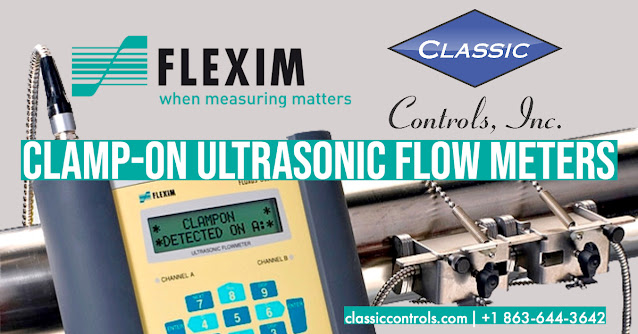
Clamp-on ultrasonic flow measurement is a non-invasive technique to measure the flow rate of liquids, gases, and steam in pipes without cutting into the line or interrupting the flow. In this method, ultrasonic transducers clamp onto the outside of the tube, and they emit and receive ultrasonic waves that travel through the pipe wall and into the flowing fluid.

The ultrasonic flow meter works based on the principle of the Doppler effect, which states that the frequency of a wave changes when the source and receiver move relative to each other. The ultrasonic transducers emit high-frequency sound waves that travel through the pipe wall and into the fluid flowing inside the pipe. These waves reflect to the transducers when they encounter particles in the fluid, such as bubbles or solid particles.

When the fluid is moving, the frequency of the sound waves changes slightly due to the Doppler effect. The speed and direction of the fluid flow are determined by measuring the frequency shift of the reflected waves. The ultrasonic flow meter uses this information to calculate the velocity of the fluid and, ultimately, the flow rate.

Clamp-on ultrasonic flow meters are versatile and used in various applications, including liquid flow measurement in water treatment, wastewater treatment, and chemical processing. They also measure gas flow rates in pipelines and are often in the oil and gas industry for custody transfer applications.

One of the benefits of clamp-on ultrasonic flow measurement is that it is non-intrusive and does not require any cutting or drilling into the pipe, making installation more accessible and less disruptive to ongoing operations. Additionally, the lack of moving parts in the flow meter reduces the need for maintenance and calibration.

FLEXIM is a company that specializes in designing and manufacturing a variety of non-intrusive ultrasonic flowmeters for both liquid and gas. They offer different types of flowmeters, including the permanent FLUXUS, which is available in a wide range of models and configurations, such as Mass and Thermal Energy Measurement Systems. Additionally, they have the F601 portable flowmeter and the FLUXUS H20 family of portable flowmeters designed explicitly for municipal applications.


Classic Controls, Inc.
+1 863-644-3642

FLEXIM’s Thermal Energy Meters Support Your Efforts Towards More Energy Efficient Buildings and Facilities

FLEXIM’s Thermal Energy Meters

Reducing energy consumption and costs is a significant priority for all industries. Energy efficiency usage has never been more critical than now, whether to meet energy regulations and standards or to improve the company's carbon footprint and bottom line. 

ISO 50001 or EMAS Energy Management Systems are the most powerful organizational tools for achieving efficiency. However, implementing and maintaining an energy management system can be challenging to obtain accurate energy consumption data. 


To improve efficiency, it is necessary first to assess the current situation. Measurement entails data points to learn about the energy flows from the boilers, chillers, and air handlers that serve the system's consumers. 

Installing data acquisition tools can become a massive and even overwhelming task given the various types of energy flows in heating and cooling systems, compressed air lines, steam supply, and high-temperature heat transfer oils. Each has its own set of characteristics and requirements when it comes to metering systems. 


The ultrasonic, non-invasive transit time principle FLEXIM is the ideal solution for all of these tasks. This measuring principle is a one-size-fits-all solution because it applies to liquids, gases, and steam and can handle temperatures ranging from -40°F to 465°F and even higher.


Classic Controls
https://classiccontrols.com
+1 863-644-3642

The Flexim FLUXUS F/G721 Ultrasonic Clamp-on Flow Measurement for Liquids and Gases


New hardware design and improved, powerful digital signal processing gives the Flexim FLUXUS F/G721 superiority over other non-intrusive ultrasonic flowmeters in terms of accuracy, reliability and versatility.

Markets:
  • Oil & Gas
  • Chemical Industries
  • Water & Wastewater
  • Pharmaceutical
  • Food & beverage
  • Semiconductor
For more information contact:
Classic Controls
https://classiccontrols.com
863-644-3642

Ultrasonic, Transit-time Flowmeters

Ultrasonic flowmeters measure fluid velocity by passing high-frequency sound waves along the fluid flow path. Fluid motion influences the propagation of these sound waves, which may then be measured to infer fluid velocity.

Transit-time flowmeters, sometimes called counter propagation flowmeters, are an alternative to Doppler ultrasonic flowmeters. A transit-time ultrasonic flowmeter uses a pair of opposed sensors to measure the time difference between a sound pulse traveling with the fluid flow versus a sound pulse traveling against the fluid flow. Since the motion of fluid tends to carry a sound wave along, the sound pulse transmitted downstream will make the journey faster than a sound pulse transmitted upstream:


The rate of volumetric flow through a transit-time flowmeter is a simple function of the upstream and downstream propagation times:
Where:

Q = Calculated volumetric flow rate
k = Constant of proportionality
tup = Time for sound pulse to travel from downstream location to upstream location (upstream, against the flow)
tdown = Time for sound pulse to travel from upstream location to downstream location (downstream, with the flow)

An interesting characteristic of transit-time velocity measurement is that the ratio of transit time difference over transit time product remains constant with changes in the speed of sound through the fluid. When this equation is cast into terms of path length (L), fluid velocity (v), and sound velocity (c), the equation simplifies to Q=2kv/L, proving that the transit-time flowmeter is linear just like the Doppler flowmeter, with the advantage of being immune to changes in the fluid’s speed of sound. Changes in bulk modulus resulting from changes in fluid composition, or changes in density resulting from compositional, temperature, or pressure variations therefore have little effect on a transit-time flowmeter’s accuracy.


Reprinted from "Lessons In Industrial Instrumentation" by Tony R. Kuphaldt – under the terms and conditions of the Creative Commons Attribution 4.0 International Public License.

Non-invasive, Clamp-on Flowmeters for Boiler Feed Water, Fuel Oil, and Natural Gas Feeds in Power Plants

Clamp-on Flowmeters in Power Plants
Natural gas fired plants burn the gas to heat boiler feed water up and convert it to steam for subsequent electricity generation. It is critical for the safety and performance of the power plant to monitoring and control the flow of boiler water feed lines.

FLEXIM, a manufacturer of clamp-on transit-time ultrasonic flowmeters, offers it's high temperature clamp-on WaveInjector mounting fixture as a very accurate and reliable device that accurately measures flow, even at pipe wall temperature of 400 °C / 750 °F. Since the measurement system is completely non-invasive, there is no concern about the pressurization levels within the pipe. Furthermore, Flexim's component design doesn’t cause any pressure drop and eliminates the need for process shut-downs for installation or service. Flexim also offers a unique integrated technology they call "HybridTrek mode" which can detect steam entrainment in the feed water flows – a clear cause for decreased plant performance.

Another area where non-invasive, clamp-on flowmeters are advantageous on fuel oil or feed gas supply. Flexim "Flexus" meters are also ideal to measure and monitor the flow of fuel oil or gas to the boilers to achieve the optimum efficiency.

Flexim flowmeter
Ultrasonic flowmeter for harsh environments.
(Flexim)
Historically, fuel oil feed lines are either monitored by the use of orifice plates and differential pressure or positive displacement meters, both of which require hours of maintenance due to wear and tear by the abrasive and partially clogging medium. A non-invasive ultrasonic clamp-on flow meter technology offers a much better solution. No pipe cutting or welding, zero contact with the process medium, matched and paired transducers, sophisticated high-speed flow calculations and very rugged stainless steel construction make the Flexim flowmeter an excellent choice, even in this harsh
environment.

For gas feed lines, FLEXIM developed a special transducer technology called Lamb wave transducers to offer the most accurate clamp-on flow measurement possible. The clamp-on measurement system is independent from pipe dimensions, material and wall thickness.  There are no upper pressure limits and even on very low pressure lines, the flow meter is capable of carrying out a bi-directional flow measurement over a wide turndown range. By factoring in pressure and temperature (as well as the individual gas composition if needed), the FLUXUS gas flow meter outputs normalized flow rates.

For more information on applying non-invasive ultrasonic clamp-on flow meters in power plants, contact Classic Controls by visiting https://classiccontrols.com or by calling 863-644-3642.


Application of Non-Invasive Flow Meter Technology to Extreme Temperature Lines

WaveInjector ultrasonic flow meter
One configuration of Flexim WaveInjector, allowing
non-invasive flow measurement at extreme temperatures.
Image courtesy Flexim Americas Corp.
The development of condensate in super heater and re-heater drains can lead to trouble in combined cycle and cogeneration plants with heat recovery steam generators (HRSGs). The need to reliably detect and measure condensate in these drain lines has emerged as an area needing attention.

The Problem

Heat recovery steam generators were never designed for cyclic service. The move toward renewable energy resources (such as wind and photovoltaic), in tandem with the ability of the combined cycle plant to start-up and stop quickly, is expanding the role of the combined cycle plant as a backup source of power. With frequent starts/stops condensate management can be challenging. Draining the condensate is critically important for the safe and reliable operation of the boiler. While the problem of condensate drainage has been around for years, the problem is greater now in installations with a higher frequency of cycling. The importance of finding a good solution for detecting condensate in the HRSG drain lines is growing.

Boiler manufacturers address this situation through the use of condensate pots, level instruments, site glasses, and valves. None of these technologies provide a satisfactory combination of reliability, economy, and efficiency. Knowing when steam converts to water is difficult with this approach. Plus, over cautious systems sometimes release steam instead of condensate, wasting energy. A more reliable and consistent way to sense the presence of water in drain lines had to be found.

The Solution

By designing specialized mounting and tooling, modifying their sensing diagnostics, putting in hundreds of hours of field testing, and investing hundreds of hours improving their firmware for water detection, the manufacturer Flexim developed an ultrasonic flow meter that elegantly and reliably solves the HRSG drain line problem.

These clamp-on sensors work by measuring the transit-time difference of an ultrasonic signal, at varying flow velocities, through the process media. Ultrasonic, clamp-on flow meters have no moving parts, are not affected by density, and are mounted directly to the pipe in a non-invasive fashion.

The most challenging aspects of this application are the exposure of the sensing units to high temperature and the thick-walled pipes with small diameters commonly used for drains. To handle the high temperatures, specialized mounting and tooling were developed for the sensor allowing for pipe temperatures up to 750 deg. F. To overcome the small diameter / thick pipe issue, Flexim engineers reconfigured the sensor’s firmware to change from measuring flow rate, and instead measure noise (decibels) as an innovative way to distinguish steam from water.

Flexim’s unique ability to measure the presence of liquid in condensate drain pipes is a revolutionary development. This valuable solution helps customers run longer and safer, minimizing downtime. Share your measurement challenges with process measurement specialists, leveraging your own knowledge and experience with their product application expertise to develop an effective solution.

Flow Measurement in Subsurface Pipes


Ultrasonic flow measurement, properly configured, can be the preferred solution for flow measurement in water and wastewater pipes, especially those in subsurface locations. Demands for increased monitoring of system flow at numerous points throughout a network or system create a need to install flow measurement instrumentation on existing pipes that are unlikely to have built-in accommodations for the needed sensors.

Ultrasonic flow measurement transducers are mounted on the exterior of existing piping and require no pipe cutting or service interuption to install. The rugged transducers are suitable for subsurface installation and provide long term uninterupted operation. Ultrasonic flow measurement functions over a wide range of flow, providing accurate data during normal, peak, and off-peak hours. The data derived from the measurements can also be used for leak detection. Data output from the instrument can be used locally or transferred by a number of methods to remote monitoring stations for system wide analysis.

The video provides some additional application advantages of ultrasonic flow measurement for subsurface pipe applications. Share your flow measurement challenges of all types with process measurement specialists. Leverage your own knowledge and experience with their product application expertise to develop effective solutions.

Flexim Wins Recognition for Innovative Flow Measurement

ultrasonic flow meter
Flexim F704 Ultrasonic Flow Meter
Image courtesy Flexim Americas
Flow Control Magazine, which targets solutions for fluid movement, measurement and containment, handed out its annual Innovation Awards recently. Among those receiving honorable mention was Flexim Americas Corporation, for the Fluxus Cryo that provides noninvasive measurement of cryogenic fluids. Special design adaptations prevent ice build up on the measurement apparatus that that can plague other technologies.

Ultrasonic flow measurement offers some distinct advantages over other available methods, with high accuracy, no intrusion into the media, and no moving parts. While the award was specifically for a cryogenic application, Flexim ultrasonic flow measurement instruments are available for an extensive array of applications.

For more information, share your flow measurement requirements and challenges with process instrumentation experts, leveraging your own process knowledge and experience with their product application expertise to develop effective solutions.

Transit Time Differential Ultrasonic Flow Measurement - How It Works

industrial process ultrasonic flow meter
Ultrasonic flow meter, transducer and control unit
Courtesy Flexim
The measure of flow is a pervasive task in fluid process control. There are several differing technologies employed for measuring fluid flow, each with its own set of performance and application attributes that might make it the advantageous choice for a particular operation.

Ultrasonic flow measurement uses several methods for determining the average velocity of a fluid. One of those methods employs the difference in the transit times of ultrasonic pulses travelling with the flow direction and against the flow direction. The flow velocity of the media will offset the transit times between the flow and counterflow measurements. The measured difference in transit times can be used to determine average flow velocity and, with additional processing, mass flow.

Ultrasonic flow meters are accurate and provide repeatable results, making them suitable for custody transfer operations, as well as many other process control applications. Little maintenance is required and the units have no moving parts. Measurement instruments are available with in-line or clamp-on mounting, providing a high level of installation and application flexibility.

The short video below provides a clear explanation of how transit time difference measurement works. Share your flow measurement challenges and requirements with a product application expert, combining your process knowledge with their product expertise to develop effective solutions.


Accurate Measurement of Low Flow In Compressed Air Systems

Industrial air compressor located outdoors
Air compressors can incur significant operating costs.
Minimizing system leaks reaps savings.
Plant operators are well aware of the cost associated with continuous delivery of  compressed air, a useful medium utilized as an energy source. Large or multiple compressors consume considerable amounts of electric power maintaining system pressure and flow requirements. With extensive piping and countless fittings, there are many potential points of leakage. Scheduling of various production operations can vary the demand for compressed air significantly. Getting control of your compressed air system and reducing operating cost is a noble goal. One of the primary tools needed to manage energy costs will be accurate and reliable flow measurement equipment. Here are some characteristics of flow measurement instrumentation that should prove advantageous:
Portable ultrasonic flow meter with clamp on transducer
Portable Ultrasonic Flow Measurement Instrument
Flexim

  • Non-invasive measurement from the outer pipe wall that does not add potential leak sources or pressure drop.
  • Availability in fixed or portable configuration.
  • Highly accurate, with paired temperature compensated traceable calibrated transducers
  • Installed without disturbance to piping.
  • Bidirectional measurement
  • Rugged instrument design suitable for any kind of industrial environment
Ultrasonic flow measurement technology can provide all of these characteristics, providing
information that enables the operator to make fact based decisions about system design, management, and maintenance. Learn more about how ultrasonic flow meters specifically configured for compressed air system application can help you start reducing your operating cost and developing a higher level of control over your compressed air system. Share your process challenges with a product specialist and work together to build the best solution.