Baker Hughes: A Leader in Industrial Flow and Pressure Control Solutions

Baker Hughes: A Leader in Industrial Flow and Pressure Control Solutions

Baker Hughes, a global energy technology company, offers a diverse range of products and services for the oil and gas industry. Four of its many product lines stand out for their contributions to flow and pressure control: Masoneilan, Consolidated, Mooney, and Becker. Each product line serves specific markets and applications, providing innovative solutions for various industrial needs.

Masoneilan: Precision Control Valves

Masoneilan is renowned for its high-quality control valves and associated equipment. The product line includes:
  • Globe valves
  • Rotary valves
  • Butterfly valves
  • Severe service valves
  • Digital valve positioners
  • Smart valve controllers

These products are widely used in industries such as:
  • Oil and gas production and refining
  • Power generation
  • Chemical and petrochemical processing
  • Pulp and paper manufacturing
  • Food and beverage production

Masoneilan valves provide precision control in challenging process conditions, including high-pressure, high-temperature, and corrosive environments. The digital valve positioners and smart controllers enhance valve performance and enable predictive maintenance, reducing downtime and improving overall process efficiency.

Consolidated: Pressure Relief and Safety Valves

The Consolidated product line focuses on pressure relief and safety valve solutions, offering:

  • Spring-loaded safety valves
  • Pilot-operated safety valves
  • Power-actuated relief valves

These products are crucial for ensuring safety and compliance in various industries, including:
  • Oil and gas refineries
  • Power plants (nuclear, fossil, and renewable)
  • Chemical processing facilities
  • Pharmaceutical manufacturing
  • Marine and offshore applications

Consolidated valves protect equipment and personnel by relieving excess pressure in systems and preventing catastrophic failures. The product line's reputation for reliability and performance makes it a preferred choice for critical safety applications across multiple industries.

Mooney: Regulators and Control Valves

Mooney specializes in regulators and control valves for natural gas applications, offering:

  • Pressure-reducing regulators
  • Back pressure regulators
  • Overpressure protection devices
  • Slam-shut valves
  • Control valves for gas service

The Mooney product line primarily serves the following markets:
  • Natural gas transmission and distribution
  • Gas processing facilities
  • Power generation plants using natural gas
  • Industrial gas users

Mooney regulators and valves are known for their accuracy and reliability in controlling gas pressure and flow. They play a crucial role in maintaining safe and efficient operations in natural gas infrastructure, from wellhead to end-user applications.

Becker: Control and Automation Solutions

The Becker product line focuses on control and automation solutions for the natural gas industry, offering:

  • Control valves
  • Actuators
  • Valve positioning systems

Becker products are primarily used in:
  • Natural gas transmission pipelines
  • Gas storage facilities
  • Compressor stations
  • City gate stations
  • Large industrial gas users

Becker's solutions optimize gas flow control, improve operational efficiency, and enhance system monitoring and data acquisition. Integrating smart technologies and advanced control algorithms allows for precise management of gas infrastructure, reducing waste and improving overall system performance.

Classic Controls of Lakeland, Florida: Engineering and Application Support for Masoneilan, Consolidated, Mooney, and Becker


Classic Controls, based in Lakeland, Florida, stands as a premier provider of engineering and application support for Baker Hughes' esteemed product lines—Masoneilan, Consolidated, Mooney, and Becker. With a dedicated focus on delivering exceptional service, Classic Controls ensures that customers in Florida, The Caribbean, and Puerto Rico receive top-tier support and solutions tailored to their specific needs.

Comprehensive Engineering Support

Classic Controls offers extensive engineering support, helping clients select and integrate the right Baker Hughes products for their unique applications. Their team of seasoned engineers provides:

  • Technical Consultation: Expert advice on product selection and system design to optimize performance and reliability.
  • Custom Solutions: Tailored engineering solutions to meet the specific requirements of diverse industrial processes.
  • Installation and Commissioning: Assistance with the installation and commissioning of Baker Hughes products to ensure seamless integration and operation.

Application Support

Beyond engineering, Classic Controls excels in offering comprehensive application support for Masoneilan, Consolidated, Mooney, and Becker products:

  • Product Training: In-depth training programs for customer teams, ensuring they are well-versed in the operation and maintenance of the equipment.
  • Maintenance Services: Ongoing support and maintenance services to maximize the lifespan and efficiency of the products.
  • Troubleshooting and Repair: Rapid response and effective solutions for any issues that arise, minimizing downtime and maintaining productivity.

Regional Expertise

Serving a broad geographic area, Classic Controls is well-versed in the unique demands of customers in Florida, The Caribbean, and Puerto Rico. Their regional expertise ensures that they can:
  • Adapt Solutions to Local Conditions: Providing products and services that are suited to the specific environmental and regulatory conditions of the region.
  • Quick Response Times: Leveraging their strategic location to offer prompt and efficient support to customers across the region.
  • Strong Regional Partnerships: Building and maintaining strong relationships with local industries to better understand and meet their needs.

Classic Controls
+1 863-644-3642
https://classiccontrols.com

Partnering for Success: Classic Controls and Process Industries in the Caribbean Region

Classic Controls and Process Industries in the Caribbean Region

The Caribbean, Puerto Rico, Trinidad & Tobago, Guyana, and Suriname host diverse major process industries that drive their economies and contribute to global supply chains. These industries include oil and gas, petrochemicals, mining, power generation, and manufacturing. As these sectors continue to grow and evolve, they require reliable, high-quality industrial valves and instrumentation to ensure efficient and safe operations.

Classic Controls, Inc. has established itself as a premier provider of premium products and exceptional sales, service, and engineering support for industrial valves and instrumentation in this region. With a commitment to excellence and a deep understanding of the unique challenges faced by process industries in the Caribbean and surrounding countries, Classic Controls offers tailored solutions to meet the specific needs of each client.

Classic Controls supplies cutting-edge valves and instrumentation in the oil and gas sector that withstand the harsh conditions and high pressures associated with upstream, midstream, and downstream operations. The company's products enable precise control, reliable monitoring, and adequate safety measures, ensuring the smooth functioning of drilling rigs, refineries, and pipelines across the region.

The petrochemical industry, particularly in Trinidad & Tobago, relies on Classic Controls for its extensive range of valves and instrumentation designed to handle the complex processes of producing chemicals, plastics, and fertilizers. The company's expertise in this field allows petrochemical plants to optimize operations, minimize downtime, and maintain the highest quality and safety standards.

Mining operations in Guyana and Suriname benefit from Classic Controls' rugged and dependable valves and instrumentation, which can withstand the abrasive and corrosive conditions often encountered in mineral extraction and processing. The company's products help mining facilities achieve efficient material handling, precise process control, and compliance with environmental regulations.

Classic Controls provides advanced valves and instrumentation in the power generation sector that ensure power plants' reliable and efficient operation across the Caribbean and Puerto Rico. The company's solutions enable precise control of steam, water, and fuel flow, contributing to the stable and continuous supply of electricity to households and businesses in the region.

Manufacturing industries like food and beverage processing, pharmaceuticals, and textiles rely on Classic Controls for their valve and instrumentation needs. The company offers a wide range of products that meet stringent hygiene and safety standards, enabling manufacturers to maintain product quality, optimize production processes, and comply with industry regulations.

Classic Controls' unwavering commitment to customer satisfaction sets It apart. The company's knowledgeable sales team works closely with clients to understand their unique requirements and recommend the most suitable solutions. Classic Controls' skilled engineers provide expert technical support, assisting with installation, troubleshooting, and maintenance to minimize downtime and ensure optimal performance.

Moreover, Classic Controls maintains a well-stocked inventory of valves and instrumentation, enabling prompt delivery and reducing lead times for clients in the region. The company's extensive network of suppliers and partners allows it to source the best products at competitive prices, passing on the benefits to its customers.

As the process industries in the Caribbean, Puerto Rico, Trinidad & Tobago, Guyana, and Suriname continue to expand and evolve, Classic Controls remains at the forefront, providing the premium products and outstanding support that these industries need to thrive. With its commitment to quality, expertise, and customer satisfaction, Classic Controls has become the region's go-to partner for industrial valves and instrumentation.

Classic Controls
+1 863-644-3642
https://classiccontrols.com


The Future of Process Control Instrumentation and Industrial Valves: Embracing IIoT, Wireless Communications, and Artificial Intelligence

The Future of Process Control Instrumentation and Industrial Valves

Over the next five years, the process control instrumentation and industrial valve sectors will undergo significant transformations driven by the integration of Industrial Internet of Things (IIoT), wireless communications, and artificial intelligence (AI) technologies. These advancements will revolutionize how industries monitor, control, and optimize their processes, improving efficiency, reliability, and cost-effectiveness.

1. IIoT Integration:

Adopting IIoT technologies will enable seamless connectivity between process control instruments, industrial valves, and centralized control systems. Smart sensors and actuators equipped with embedded intelligence will facilitate real-time data collection, continuously monitoring process parameters such as pressure, temperature, flow, and level. This data-driven approach will enhance decision-making capabilities, enabling proactive maintenance and optimized process control.

2. Wireless Communications:

The proliferation of wireless communication protocols, such as Wi-Fi, Bluetooth, and LoRaWAN, will eliminate the need for extensive cabling in process control environments. Wireless-enabled instruments and valves will offer increased flexibility, scalability, and cost savings. These technologies will enable remote monitoring and control, allowing operators to access critical process information from anywhere, anytime. Wireless mesh networks ensure robust and reliable communication, even in challenging industrial environments.

3. Artificial Intelligence and Machine Learning:

Integrating AI and machine learning algorithms will revolutionize how process control instrumentation and industrial valves operate. Predictive maintenance powered by AI will analyze sensor data to identify potential equipment failures before they occur, minimizing downtime and reducing maintenance costs. Machine learning algorithms will continuously learn from process data, enabling self-tuning and self-optimizing control systems that adapt to changing process conditions in real time.

4. Cloud-Based Platforms:

Cloud-based platforms will facilitate storing, analyzing, and visualizing process data generated by IIoT-enabled instruments and valves. Cloud computing will provide scalable and secure infrastructure for data management, enabling seamless integration with enterprise systems and facilitating remote collaboration among teams. Cloud-based analytics will offer insights into process performance, identifying inefficiencies and opportunities for optimization.

5. Augmented Reality and Virtual Reality:

Augmented reality (AR) and virtual reality (VR) technologies will transform operators' interaction with process control instrumentation and industrial valves. AR-enabled devices will provide real-time guidance and overlays, assisting in installation, maintenance, and troubleshooting tasks. VR simulations will enable immersive training experiences, allowing operators to practice complex procedures in a safe and controlled environment.

6. Cybersecurity Enhancements:

Cybersecurity will be a critical concern as process control instrumentation and industrial valves become more connected and digitized. Robust security measures, including encryption, authentication, and secure communication protocols, will be implemented to protect against cyber threats. Blockchain technology may be leveraged to ensure data integrity and traceability throughout the supply chain.

Integrating IIoT, wireless communications, and AI technologies will transform the process control instrumentation and industrial valve sectors over the next five years. These advancements enable real-time monitoring, predictive maintenance, self-optimizing control, and enhanced operator experiences. Industries that embrace these technologies will gain a competitive edge, achieving higher efficiency, reduced downtime, and improved overall performance. As the adoption of these technologies accelerates, the future of process control instrumentation and industrial valves looks bright, promising a new era of intelligent and connected industrial systems.

Classic Controls
+1 863-644-3642
https://classiccontrols.com

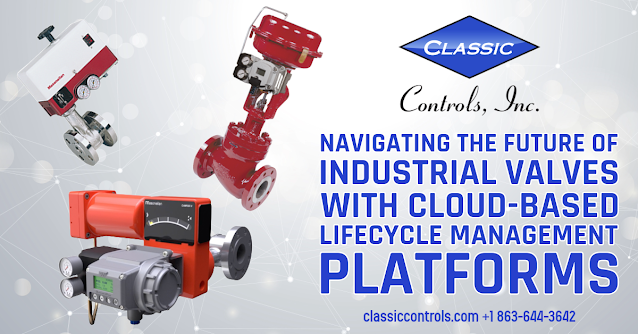
Navigating the Future of Industrial Valves with Cloud-Based Lifecycle Management Platforms

Navigating the Future of Industrial Valves with Cloud-Based Lifecycle Management Platforms

Cloud-based industrial valve lifecycle management (VLM) systems significantly advance the maintenance and operation of industrial valves. These digital platforms offer an integrated solution for tracking, managing, and optimizing valve performance and maintenance throughout their entire lifecycle. By leveraging cloud technology, these systems ensure real-time data accessibility, advanced analytics, and remote monitoring capabilities, transforming the traditional approach to valve management.

The application of cloud-based VLM systems spans various industries, including oil and gas, power generation, chemical manufacturing, and water treatment. In these sectors, valves are critical in controlling the flow and pressure of various mediums, such as oil, gas, water, and chemicals. Effective valve management ensures operational efficiency, safety, and regulatory compliance. Cloud-based VLM systems enable organizations to achieve these objectives by providing a comprehensive overview of valve status, history, and performance across multiple facilities.

The use of cloud-based VLM systems brings numerous benefits to end users. First and foremost, these systems offer enhanced data visibility and analytics. Users can track the health and performance of each valve in real time, receive predictive maintenance alerts, and identify trends that may indicate potential issues. This level of insight helps make informed decisions, prevent unscheduled downtime, and extend valves' lifespan. Furthermore, cloud-based systems facilitate better inventory management and procurement processes by maintaining accurate records of valve specifications, maintenance history, and replacement parts.

Another significant advantage is the ability to access the system remotely. Maintenance personnel and decision-makers can view valve data and analytics from anywhere, anytime, using a web browser or mobile device. This remote accessibility is particularly beneficial for companies operating in multiple locations or harsh environments, as it reduces the need for on-site inspections and travel, thereby saving time and reducing operational costs.

Baker Hughes, a leading provider of energy technology services and solutions, offers an exemplary program in this domain known as VLM Cloud. This innovative platform exemplifies the potential of cloud-based valve lifecycle management. VLM Cloud by Baker Hughes integrates all aspects of valve management into a unified digital environment. It monitors and analyzes valve performance and includes features for documentation management, workflow automation, and compliance tracking.

The program stands out for its user-friendly interface and customizable dashboards, allowing users to tailor the system to their needs and priorities. VLM Cloud supports various valve types and brands, making it a versatile solution for multiple industries. Additionally, Baker Hughes leverages its deep domain expertise to provide advanced analytics and insights, helping users predict failures before they occur and optimize maintenance schedules based on actual valve conditions rather than fixed intervals.

Cloud-based industrial valve lifecycle management systems, particularly the VLM Cloud offered by Baker Hughes, provide substantial value to end users. They enhance operational efficiency, safety, and compliance while reducing costs and extending valves' service lives. As industries continue to embrace digital transformation, the adoption of such systems is set to rise, revolutionizing how companies manage their valve assets.

Classic Controls
+1 863-644-3642
https://classiccontrols.com
Unveiling the Technology and Advantages of Yokogawa's DTSX Distributed Fiber Optic Temperature Sensor

DTSX Distributed Fiber Optic Temperature Sensor

In industrial monitoring and control, the emergence of Distributed Fiber Optic Temperature Sensors (DTSX) marks a significant technological leap, and Yokogawa stands at the forefront of this innovation. The DTSX system harnesses the power of Raman scattering, a principle rooted in the interaction of light and matter, to offer precise temperature measurements across vast distances. 

At the core of Yokogawa's DTSX technology lies the sophisticated use of fiber optics as a medium for temperature sensing. Unlike traditional sensors that measure temperature at specific points, the DTSX system transforms the entire length of an optical fiber into a continuous temperature sensor. This transformation occurs through the exploitation of the Raman scatter principle. When a laser pulse travels through the optical fiber, it interacts with the fiber molecules, causing light scattering. This scattered light, consisting of both Stokes and anti-Stokes components, carries critical information about the temperature along the fiber's path.

Yokogawa's engineers have mastered the art of decoding this information. By analyzing the intensity ratio of the Raman scatter components, the DTSX system accurately determines temperature changes with remarkable precision. This capability allows for real-time monitoring over lengths of up to 50 kilometers, a feat unattainable by conventional sensors.

The DTSX's design integrates seamlessly with existing fiber optic infrastructure, making it a cost-effective solution for wide-scale temperature monitoring. This compatibility reduces installation costs and minimizes the need for extensive cabling, a common hurdle in large-scale industrial setups.

One of the standout features of the DTSX system is its spatial resolution. The ability to pinpoint temperature variations within a meter offers unparalleled accuracy in detecting hotspots or potential faults. This precision proves invaluable in industries such as power transmission, where early detection of overheating can prevent catastrophic failures and ensure uninterrupted power supply.

Moreover, the DTSX system boasts an impressive response time. In situations where rapid temperature changes can have dire consequences, such as in chemical processing plants, the DTSX's swift detection and reporting capabilities allow for timely interventions, thus averting potential hazards.

The versatility of the DTSX system extends to its application in diverse environments. Whether monitoring pipeline integrity in the harsh conditions of oil and gas fields or ensuring optimal conditions in delicate greenhouse operations, the DTSX adapts effortlessly. Its robust design withstands extreme temperatures and environmental conditions, ensuring reliable performance in even the most challenging scenarios.

In addition to its technical prowess, the DTSX system offers significant environmental benefits. By enabling efficient monitoring and control, it aids in reducing energy consumption and minimizing waste, contributing to more sustainable industrial practices.

Yokogawa's DTSX Distributed Fiber Optic Temperature Sensor stands as a testament to the power of innovation in industrial monitoring. Combining the principles of Raman scattering with advanced fiber optic technology provides a precise, reliable, versatile, and environmentally friendly solution. As industries continue to evolve towards more innovative and efficient operations, the DTSX is poised to play a pivotal role in shaping the future of temperature monitoring.

To learn more about the Yokogawa's DTSX, contact Classic Controls Corp. Call +1 863-644-3642.

Merry Christmas and Happy New Year from Classic Controls!

 Merry Christmas and Happy New Year from Classic Controls!

With the holiday season near, everyone at Classic Controls extends their warmest regards. This festive period allows us to ponder the significant achievements we've realized together, and we're deeply grateful for your consistent support and teamwork. Your confidence in us has been pivotal to our shared success, and we genuinely appreciate it.

Looking ahead to 2024, we are brimming with hope and enthusiasm about its possibilities. Our commitment is unwavering in pursuing innovation, excellence, and strong partnerships, always aiming to offer top-notch technical solutions and services. We hope the new year is filled with abundant opportunities, prosperity, and happiness for you and your families.

Revolutionizing Process Management: The Role of Digitalization in Enhancing Industrial Valve and Instrumentation Operations

The Role of Digitalization in Enhancing Industrial Valve and Instrumentation Operations

Factory digitalization, or Industry 4.0 or the Fourth Industrial Revolution, is characterized by integrating digital technologies into manufacturing processes. Key technologies include:
  • Internet of Things (IoT): Sensors and devices interconnected over the internet, providing real-time data.
  • Big Data Analytics: Analyzing large volumes of data for insights to optimize processes.
  • Artificial Intelligence and Machine Learning: Intelligent systems that learn from data and improve decision-making.
  • Cloud Computing: Remote servers store and process data, providing scalability and flexibility.
  • Cyber-Physical Systems (CPS): Integration of physical processes with computer-based algorithms.
  • Additive Manufacturing: 3D printing technologies for creating components.

Impact on Industrial Valves

Industrial valves are critical for controlling the flow of liquids and gases in various industrial processes. Digitalization has led to the development of 'smart valves' with embedded sensors and actuators. These advancements allow for:
  • Real-time Monitoring: Enhanced capabilities for monitoring valve conditions, predicting maintenance needs, and avoiding unscheduled downtimes.
  • Automated Control: Valves can automatically adjust based on real-time data, optimizing flow and reducing human intervention.
  • Predictive Maintenance: AI algorithms analyze data to predict valve failures before they occur.
  • Energy Efficiency: Optimizing valve operations to reduce energy consumption in processes.

Changes in Process Control Instrumentation

Process control instrumentation has also undergone significant changes due to digitalization. Flow meters, pressure gauges, and temperature sensors are now smarter and more interconnected. The impacts include:
  • Enhanced Data Accuracy: Digital instruments provide more precise and reliable data.
  • Remote Monitoring and Control: Operators can monitor and adjust processes from remote locations, enhancing flexibility and safety.
  • Integration with Control Systems: Seamless integration with advanced control systems for more efficient process management.
  • Predictive Analytics: Use data analytics to foresee potential issues and optimize process parameters.

Challenges and Opportunities

While factory digitalization offers numerous benefits, it also presents challenges:
  • Cybersecurity: Increased digitalization heightens the risk of cyber attacks.
  • Skilled Workforce: There's a growing need for a workforce skilled in digital technologies.
  • Investment Costs: Initial investment in digital technologies can be high.
However, the opportunities are substantial:
  • Increased Efficiency and Productivity: Automation and data analytics lead to more efficient operations.
  • Enhanced Quality Control: Better monitoring and control improve product quality.
  • Sustainability: Digitalization can lead to more sustainable manufacturing practices.
Conclusion

Factory digitalization is reshaping the industrial landscape, including industrial valves and process control instrumentation. By embracing these changes, manufacturers can gain significant efficiency, quality, and competitiveness advantages. However, they must also navigate challenges such as cybersecurity and needing skilled personnel. The future of manufacturing lies in successfully integrating these digital technologies into everyday industrial practices.

Classic Controls
+1 863-644-3642
https://classiccontrols.com