Showing posts with label Yokogawa. Show all posts

Reducing Emissions and Boosting Efficiency with Tunable Diode Laser Spectrometers

Reducing Emissions and Boosting Efficiency with Tunable Diode Laser Spectrometers

Tunable Diode Laser Spectrometers (TDLS) play a pivotal role in modern industrial combustion processes by delivering precise, real-time measurements of critical gases such as oxygen (O₂) and carbon monoxide (CO). These measurements help operators optimize combustion efficiency, reduce harmful emissions, and improve operational safety. Unlike other gas analysis technologies, TDLS provides quick, in-situ analysis with high specificity to individual gases, which makes it an invaluable tool for facilities reliant on controlled combustion, including refineries, chemical plants, and power generation sites.

TDLS technology's heart lies using a tunable diode laser as the light source. The laser precisely targets specific gas molecules in the combustion stream, causing them to absorb the light at wavelengths unique to each gas. By carefully tuning the laser, TDLS can accurately measure gas concentrations without interference from other gases or particulates. This selectivity is essential for gases like O₂ and CO, where accurate readings can directly affect the efficiency and safety of a process. 

Oxygen levels serve as a primary indicator of fuel efficiency in a combustion process. Too much oxygen, or "excess air," results in energy wastage and increases operational costs, while too little can lead to incomplete combustion, producing high levels of CO and other toxic byproducts. TDLS systems continuously monitor O₂ levels, giving operators the data to make real-time adjustments that ensure an optimal air-to-fuel ratio. This precision improves energy efficiency and reduces the emission of pollutants, contributing to environmental sustainability.

Similarly, carbon monoxide monitoring plays a vital role in combustion optimization. High CO levels signal inefficient combustion, often stemming from poor burner performance, blockages, or incorrect airflow settings. By providing accurate CO readings, TDLS helps operators detect issues before they escalate into safety hazards or cause costly inefficiencies. Maintaining low CO levels enhances combustion quality and limits greenhouse gas emissions, a growing concern for industrial facilities facing stringent environmental regulations.

In addition to efficiency and emissions control, TDLS systems contribute significantly to safety within combustion environments. Furnaces and heaters are high-risk areas where an accumulation of combustible gases can lead to hazardous situations. By supplying continuous, real-time data on oxygen and CO levels, TDLS enables operators to act quickly when conditions deviate from safe operating ranges. This level of control is essential in furnaces and process heaters, where maintaining stable combustion parameters is crucial for preventing explosions or accidental shutdowns. For plants where downtime directly impacts profitability, TDLS provides the reliability needed to sustain uninterrupted operations safely.

TDLS technology's versatility extends beyond refineries and power plants. It has applications in industries where precise combustion control is necessary, such as steel production, glass manufacturing, and cement processing. Each of these industries benefits from the improved fuel efficiency and enhanced emissions control that TDLS provides, making it a versatile tool across various sectors focused on high-temperature processing.

Among the TDLS options available on the market, the Yokogawa TruePeak TDLS 8000 stands out for its cutting-edge features designed to address the specific needs of modern industrial environments. The TDLS 8000 offers a speedy response time, crucial for industries where real-time gas monitoring can determine the difference between optimal and inefficient combustion. Its design incorporates a highly robust, single-laser configuration that enables accurate gas measurements even in harsh environments, making it an ideal choice for high-stress applications. Yokogawa's TruePeak TDLS 8000 operates with an in-situ measurement system, eliminating the need for sample extraction or conditioning, allowing direct monitoring of gases in the process stream, and reducing maintenance requirements. This in-situ approach enhances measurement accuracy, making the TDLS 8000 a superior choice for operators seeking precise, hassle-free gas analysis.

Further, Yokogawa has equipped the TDLS 8000 with advanced diagnostic capabilities that support predictive maintenance strategies. The device continuously monitors its health status, alerting operators to potential issues before they disrupt operations. These diagnostics help maintain the system's performance, ensuring the continuous reliability of data and minimizing the need for manual checks. This feature reduces the overall maintenance costs and ensures uninterrupted operation, a valuable benefit for industries dependent on high process efficiency.

Yokogawa's TruePeak TDLS 8000 reflects the advancements in TDLS technology, offering a robust solution for industries needing accurate, real-time gas analysis. Its capabilities in optimizing combustion efficiency, lowering emissions, and enhancing safety make it a critical asset for facilities aiming to meet high environmental standards and achieve operational excellence.

Classic Controls
+1 863-644-3642
https://classiccontrols.com

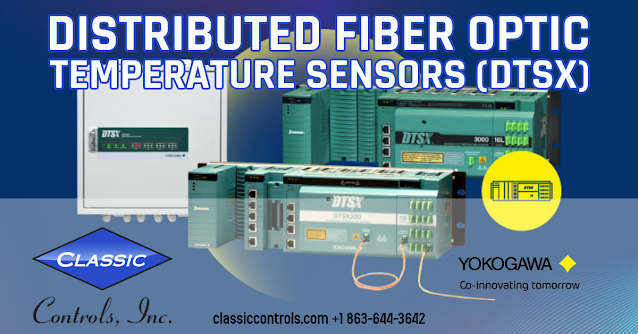
Unveiling the Technology and Advantages of Yokogawa's DTSX Distributed Fiber Optic Temperature Sensor

DTSX Distributed Fiber Optic Temperature Sensor

In industrial monitoring and control, the emergence of Distributed Fiber Optic Temperature Sensors (DTSX) marks a significant technological leap, and Yokogawa stands at the forefront of this innovation. The DTSX system harnesses the power of Raman scattering, a principle rooted in the interaction of light and matter, to offer precise temperature measurements across vast distances. 

At the core of Yokogawa's DTSX technology lies the sophisticated use of fiber optics as a medium for temperature sensing. Unlike traditional sensors that measure temperature at specific points, the DTSX system transforms the entire length of an optical fiber into a continuous temperature sensor. This transformation occurs through the exploitation of the Raman scatter principle. When a laser pulse travels through the optical fiber, it interacts with the fiber molecules, causing light scattering. This scattered light, consisting of both Stokes and anti-Stokes components, carries critical information about the temperature along the fiber's path.

Yokogawa's engineers have mastered the art of decoding this information. By analyzing the intensity ratio of the Raman scatter components, the DTSX system accurately determines temperature changes with remarkable precision. This capability allows for real-time monitoring over lengths of up to 50 kilometers, a feat unattainable by conventional sensors.

The DTSX's design integrates seamlessly with existing fiber optic infrastructure, making it a cost-effective solution for wide-scale temperature monitoring. This compatibility reduces installation costs and minimizes the need for extensive cabling, a common hurdle in large-scale industrial setups.

One of the standout features of the DTSX system is its spatial resolution. The ability to pinpoint temperature variations within a meter offers unparalleled accuracy in detecting hotspots or potential faults. This precision proves invaluable in industries such as power transmission, where early detection of overheating can prevent catastrophic failures and ensure uninterrupted power supply.

Moreover, the DTSX system boasts an impressive response time. In situations where rapid temperature changes can have dire consequences, such as in chemical processing plants, the DTSX's swift detection and reporting capabilities allow for timely interventions, thus averting potential hazards.

The versatility of the DTSX system extends to its application in diverse environments. Whether monitoring pipeline integrity in the harsh conditions of oil and gas fields or ensuring optimal conditions in delicate greenhouse operations, the DTSX adapts effortlessly. Its robust design withstands extreme temperatures and environmental conditions, ensuring reliable performance in even the most challenging scenarios.

In addition to its technical prowess, the DTSX system offers significant environmental benefits. By enabling efficient monitoring and control, it aids in reducing energy consumption and minimizing waste, contributing to more sustainable industrial practices.

Yokogawa's DTSX Distributed Fiber Optic Temperature Sensor stands as a testament to the power of innovation in industrial monitoring. Combining the principles of Raman scattering with advanced fiber optic technology provides a precise, reliable, versatile, and environmentally friendly solution. As industries continue to evolve towards more innovative and efficient operations, the DTSX is poised to play a pivotal role in shaping the future of temperature monitoring.

To learn more about the Yokogawa's DTSX, contact Classic Controls Corp. Call +1 863-644-3642.

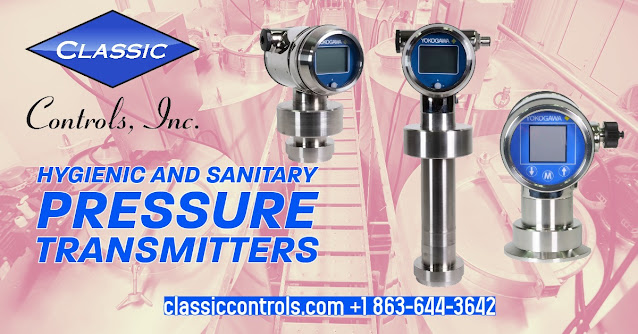
Hygienic and Sanitary Pressure Transmitters in Food, Beverage, and Pharmaceutical Industries

Hygienic and Sanitary Pressure Transmitters

A hygienic and sanitary pressure transmitter is a specific pressure sensor designed for demanding food, beverage, and pharmaceutical uses. Given the critical nature of these sectors, these transmitters adhere to strict standards of hygiene, cleanliness, and sterility. Their central role is to measure pressure and level to ensure processes' safety, quality, and efficiency.

Constructed from stainless steel or other corrosion-resistant materials, these transmitters can withstand chemical exposure and high-temperature processes. Their materials align with industry-specific standards and certifications. The surface finish of the material is vital to prevent areas where residue or microbes could gather. Their distinctive smooth, flush design reduces the risk of crevices, dead legs, or other zones where contaminants might collect.

These pressure transmitters utilize a diaphragm or sensor that deflects under fluid pressure. Such deflection changes internal electrical properties, like those in a strain gauge or capacitive element. The transmitter converts this change into an interpretable electrical signal, usually in current or voltage form. External systems read this signal to display or regulate the measured pressure.

These transmitters aid in tank level measurement in the food and beverage sector. Positioned at a tank's base, they gauge the levels of liquids such as milk, juice, wine, or beer. As the tank fills, the hydrostatic pressure on the transmitter rises, corresponding to the depth of the liquid.

They also serve in process pressure monitoring to oversee pressure in pipes and vessels, ensuring safe and efficient operation. For example, they regulate the proper pressure during milk pasteurization for the best outcomes. They find use in bioreactor monitoring in the pharmaceutical industry, keeping the correct pressure in bioreactors for processes like cell cultivation and drug manufacturing. Any deviation could compromise the final product's quality.

Designed for clean-in-place (CIP) and sterilize-in-place (SIP) procedures, these transmitters can be cleaned and sterilized without removal. Many hygienic and sanitary pressure transmitters integrate digital communication methods, such as HART or Profibus, ensuring smooth integration with control systems for real-time data and diagnostics. Regular calibration is crucial for their consistent accuracy and dependability.

Hygienic and sanitary pressure transmitters are vital in the food, beverage, and pharmaceutical sectors. Their unique design and capabilities provide precise and consistent pressure readings, earning trust among industry experts. By maintaining optimal processing conditions, these instruments play a pivotal role in ensuring the safety and quality of final products.

Classic Controls
(863) 644-3642
https://classiccontrols.com
Digitalization and Industrial Process Control

Digitalization and Industrial Process Control


The industrial sector is undergoing a digital transformation. Digitalization is converting data into a digital format and digitizing industrial processes. Human operators rely on automation systems to display the process's overall status and assist them in determining when and why problems are emerging. In its simplest form, automation is the ability of a machine to perform a task more efficiently and reliably than a human. In reality, the automation system presents operators with many process variables, permitting them to interpret them as they see fit. In the event of an issue, operators must act promptly and appropriately to prevent an incident. 


However, a much-preferred system is a system that can indicate the process's status and identify which sensor to focus on, and predict not only when an error occurs but if an error will occur. AI technologies can now specify the primary contributors to unusual situations and pinpoint the sensors indicating the causes. The digitalization process not only provides this accurate pinpointing but predictive analysis as well.


Industrial automation has been rising for decades, leading companies to invest in digital technology to streamline their processes. With so many companies integrating digitalization into their operations, it's no surprise that it has become an industry buzzword. Digitalization applies to any industry, but its application varies depending on what type of product or service the facility offers.


Digitalization Can Help Businesses Become More Productive And Efficient


The benefits of digitalization are manifold and include improved efficiency, more accurate measurements, and better control over production processes. For example, computers can calculate the production process more accurately and thoroughly than without them. Therefore, a computerized system will produce goods with less waste and provide higher quality control.


Digitalization has revolutionized industries such as oil & gas, manufacturing, utilities, and transportation. Implementation is now occurring in process industries such as water utilities and chemical plants. The difficulty of implementing digitalization depends on the maturity and efficiency level of the IT infrastructure and company culture. Mature organizations can leverage their existing systems to process data more efficiently. Younger organizations are more likely to identify system gaps and invest heavily in them before they become bottlenecks.


What Are the Major Concerns for Process Industries in Implementing Digitalization?


The first concern is the high cost of replacement instrumentation, communications systems, and employee training. The second concern is a lack of skilled workers to handle the new technologies. The third concern is the developing and changing communication standards for wireless networks and IIoT (Industrial Internet of Things) technology. The fourth concern is that process industries need to find legitimate partners with monitoring, control, and analytics products, plus software and the breadth of experience optimized for their industry needs.


What Is the Future for Digitalization in Process Automation and Industrial Manufacturing?


The future of digitalization in process automation and industrial manufacturing depends on developing technologies such as wireless instrumentation, cloud-based computing, IIoT, and AI. With the need to increase efficiency and reduce labor costs, we are seeing a trend in the industry where more and more companies are adopting digitalization in process automation and industrial manufacturing. 

Conversion from an analog to a digital system can be expensive and laborious, but the benefits of connecting devices with other devices safely, efficiently, and reliably are becoming apparent. Digitalization provides lower costs because there is less downtime and less need for complex wiring or regular on-site inspections. However, these benefits include new expenses such as software subscriptions, maintenance plans, and upgrades.


Yokogawa and Process Industry Digitalization


Yokogawa has over 100 years of industrial process experience and vast amounts of accumulated knowledge in process control. Their knowledge crosses all industrial sectors, and they have more than 20 years of deep investment in digitalization. They assist their customers with digital transformation using their pressure, temperature, flow, level, vibration monitoring, and analytical instrumentation expertise. With this expertise and their global experience in using information and control technology, Yokogawa is world renowned for improving the process industries' safety, sustainability, and efficiency.


For more information about Yokogawa process control systems and components in Florida, the Caribbean and Puerto Rico, contact Classic Controls. Call +1 863-644-3642 or visit https://classiccontrols.com.

The Yokogawa TDLS8100 Tunable Diode Laser Spectrometer

Yokogawa’s new TDLS8100 continues to house all of the industry’s leading features from the TDLS8000 but now only requiring a single-flange installation. An in-situ measurement with a probe removes sample extraction and conditioning requirements and is ideal for various aggressive process conditions.

Built upon Yokogawa’s second generation of TDLS analyzers, the platform still retains its improved reliability, ease of installation, and reduced maintenance requirements. Still, it now does so with a lower total installed cost for O2, CO/CH4, and NH3 measurements.

For more information contact Classic Controls. Call them at +1 863-644-3642 or visit their website at https://classiccontrols.com.

Yokogawa Controllers Supply Steam to USNS Mercy


On the United States Navy Hospital Ship Mercy, Yokogawa's Indicating Controllers are used to control two Foster Wheeler boilers supplying steam to 2 GE turbines to generate 18.3 MW of power.

Classic Controls, Inc.
https://classiccontrols.com

Take Advantage of These Upcoming Process Control Webinars


Yokogawa's "Back to Basics" webinar series provides you a great resource to learn and review different measurement technologies. These online webinars discuss recommended practices, application selection and sizing, and how to avoid common pitfalls. Gain insight directly from the Yokogawa experts!

WEBINAR SCHEDULE


Fundamentals of Fabulous Flow Measurement

Online Webinar
Thursday, April 16, 2020
11:00 AM Eastern / 8:00 AM Pacific

This webinar will explore the fundamentals of flow measurement technologies and how they stack up in different applications.

In this webinar we:
  • Review the theory behind flow measurement technologies
  • Discuss common flow application challenges
  • Evaluate the different technologies when selecting a flow meter
  • Illustrate installation practices for successful measurements
Register Here


Magical Mystery Tour of High Purity pH Measurement

Online Webinar
Thursday, April 23rd, 2020
8:00 AM Pacific / 11:00 AM Eastern

The presentation will explore the theory of pH and how it can be successfully applied in high purity applications, discuss both standard and solution temperature compensation, review installation requirements, and illustrate good calibration and maintenance procedures to facilitate satisfactory measurements.

In this webinar we:
  • Review the theory behind the measurement of pH
  • Discuss the issues surrounding high purity pH measurements
  • Illustrate the difference between standard and solution temperature compensation
  • Assess installation requirements for successful measurements
  • Clarify good calibration and maintenance procedures
Register Here


Vibrating Element Technology for Gas Density, Specific Gravity, and Hydrogen

Online Webinar
Thursday, April 30, 2020
8:00 AM Pacific / 11:00 AM Eastern

This presentation goes over the theory behind vibrating element technology and explores some of the applications in which it can be used.

In this webinar we will review:
  • The theory behind density and vibrating element technology
  • The importance of using compensated density
  • How to clean the detector
Register Here


Digitally Transform your Plant with Field Wireless and IIOT

Online Webinar
Thursday, May 7, 2020
11:00 AM Eastern / 8:00 AM Pacific

Wireless sensor networks can provide reliable and secure communications for applications including control, monitoring, safety, and reliability. Regardless of the application, wireless technology has opened the door for companies to pursue improvements that may have been impossible or uneconomical in the past. However, adopting a wireless strategy is more than just throwing a few radios out into the plant. A little planning can go a long way to ensure your future success.

Topics covered include:
  • Where you would use Field Wireless vs IIoT
  • The fundamentals of wireless sensor networks
  • Applications that illustrate how a wireless strategy can transform your operations, improve reliability, and increase safety
Register Here


Yokogawa SMARTDAC+ GX and GP Navigation Screen and User Interface


This video introduces the viewer to the Yokogawa SMARTDAC+ GX and GP navigation screen.

In the new Yokogawa SMARTDAC+ data acquisition and control product series, smart user interface, smart architecture and smart functionality are achieved. The Yokogawa SMARTDAC+ GX and GP are fully embedded platforms fitted with sophisticated touch screen operator interface for measurement, display and recording. The GX series is a panel mount design that can be used in severe industrial applications and environments. GP is the GX portable version intended for use in laboratory applications and test bench applications.

For more information contact Classic Controls. Call them at 863-644-3642 or visit their site at https://classiccontrols.com.

Basics of Rotameters

Rotameter operationRotameters, also referred to as variable area flow meters, have diverse industrial processing applications that range from simple to sophisticated. The devices are easy to install, require no electrical connection, and provide direct flow rate reading. They provide fail-safe flow rate readings in a wide array of industrial applications.

Rotameters: An Overview 

Developed by German inventor Karl Kueppers in 1908, Rotameters measure the volumetric flow rate of liquids and gases.

Important elements of a rotameter (variable area flow meter) include the tube and the float. Their operation is simple. The tube is fixed vertically and the fluid is fed from the bottom. It travels upward and exits from the top. The float remains at the bottom when no liquid is present and rises upward when fluid enters the tube.

The float inside the tube moves in proportion to the rate of fluid flow and the area between the tube wall and the float. When the float moves upward, the area increases while the differential pressure decreases. A stable position is reached when the upward force exerted by the fluid is equal to the weight of the float. A scale mounted on the tube records the flow rate of the liquid. Usually, the flow can be adjusted manually using a built-in valve.

Types of Rotameter 

Variable area flow meters can be categorized by the type of tube they use, which relates to their ability to withstands various pressures, temperatures, process media, and cost. Process connection size and wetted part materials vary as a function the rotameter type and construction.

Glass Tube Rotameter
(Yokogawa)
Glass Tube Rotameter - The basic glass variable area flow meter consists of borosilicate glass tube while the float is made of either glass, plastic, or stainless steel. The most common combination is a glass tube and metal float. This is suitable for a measure the flow rate of liquid of low to medium temperatures and pressures.

Applications:

  • Analytical instrumentation
  • Industrial processes
  • Chemical production
  • Pharmaceutical production
  • Oil & gas extraction
  • Refining processes
  • Fuel cell research
  • Water treatment systems

Metal Tube Rotameter
(Yokogawa)
Metal Tube Rotameter - Metal tube variable area flow meters are another type that is suitable for temperatures and pressures beyond the physical and mechanical limits of glass tube versions. They are generally manufactured of stainless steel, aluminum, or brass. The piston position is determined by the mechanical and magnetic followers that can be read from the outside of the tube. They are suitable in situations where applications conditions would damage the glass metering tubes, such as steam applications.

Applications:

  • Purge liquid/ gas metering
  • Liquid, oil, or gas flow measurement
  • Chemical injection
  • Rotating equipment flow measurement
  • High-pressure flow meters on offshore oil platforms
For more information, contact Classic Controls.
https://classiccontrols.com
863.644.3642

Industrial Flow Meter Selection

Industrial Flow Meter Selection
Flow meter selection chart. Click on image for larger view.

Many industrial process control operations require fluid flow measurement as an essential element in the design of the process. The proper application and installation of a flow meter as part of the fluid transfer system will provide accurate flow measurement.

Industrial flow meters use different technologies to measure fluid flow rates directly or indirectly. Some of the most common technologies for fluid flow measurement are vortex flow meters, magnetic flow meters, Coriolis flow meters and rotameters.

Each separate technology has attributes that can make it more suitable for certain applications. The selection of the most appropriate flow measurement technology for an application is an initial and crucial step in the design of a functioning fluid measurement system.

Selection criteria such as fluid temperature, pressure and velocity will be included in the selection process. Further considerations include whether the fluid may be abrasive, corrosive, clean or dirty. The state of the fluid, liquid or gas, must also be taken into account.

The table above provides general guidance on which technologies to consider, based on the above mentioned factors. This will help you to focus further research on product selection.

Contact Classic Controls with any industrial flow application you may have. Their application engineers will provide guidance and advice to assure the proper flow meter is chosen.

Classic Controls
https://classiccontrols.com
863-644-3642

Yokogawa SENCOM™ for SMART Liquid Analyzer Communications

SENCOM
SENCOM™ technology allows sensors to transmit and receive data when connected to a FLXA202 or FLXA21 transmitter or to any PC with the SPS24 software installed. Yokogawa SENCOM™ SMART is digital communication designed to optimize your process. Digital or SMART sensors maintain specific measurement and calibration data on an integrated chip and an integral part of the sensor. This data can be exchanged between the sensor and either a process transmitter or a laboratory PC using a data management software, like the SPS24.

For more information, contact Classic Controls by calling 863-644-3642 of visit https://classiccontrols.com.

Tunable Diode Laser Spectrometers Improve Combustion and Heating Process Performance

Yokogawa TDLS 8000
Manufacturing facilities continue to explore ways to optimize processes by saving energy, reducing CO2 emissions, and improving safety. An area of plant investment that generally pays great dividends is in the optimization of combustion. By precisely controlling the air-fuel ratio, positive outcomes in fuel savings, emissions, regulatory issues, and safety are realized.

The implementation of a process instrument called a "tunable diode laser spectrometer" (TDLS) gives plant operators an excellent advantage in the management of combustion gases.

Yokogawa TDLS 220
Tunable diode laser spectrometers are laser-based gas analyzer which provide a quickly updating optical analysis. The TDLS line offers measurements for process gas, flue gas, impurity analysis, custody transfer, and safety with in-situ and extractive methods supported. They utilize laser absorption spectroscopy to detect and measure the concentration of O2, CO, CH4, NH3, H2O (and many more NIR absorbing gases) in combustion and heating processes.

Tunable diode laser spectrometers non-contact sensors are are optimal for use in corrosive, abrasive and condensing applications in the oil, petrochemical, electric power, iron and steel, and other industries.

For more information on tunable diode laser spectrometers, contact Classic Controls by calling 863-644-3642 or visit https://classiccontrols.com.

Replacing the Obsolete Siemens 353 with the Yokogawa YS1000 Series

The Yokogawa YS1000 Series is a drop-in alternative to the obsolete Siemens/Moore 353. The video below provides details as to how and why. The video is composed of a series of presentation slides - if you need more time to focus and a single item, hit the pause button.

The Best Alternative for the Discontinued Moore / Siemens 353 SLC Controller

Siemens has discontinued their 353 SLC controller. The 353 was used in many process applications for many years. It's discontinuation leaves many companies without an alternative.

Don't worry - you don't have to turn to eBay looking for spare parts? There's a better solution - the Yokogawa YS1700 PID loop controller. The YS1700 is a drop-in SLC replacement for the Siemens 353 and will keep you off of eBay.

The YS1700’s powerful function block programming allows for custom strategies to control many demanding processes such as boilers and steam generators, PH control, dosing control, and many other demanding plant processes. For more information, visit this site.

Yokogawa TDLS8000 In-Situ Gas Analyzer

Yokogawa’s TDLS8000 houses all of the industry’s leading features in one robust device. The platform design is for in situ measurements which negate the need for sample extraction and conditioning. The non-contacting sensor allows for a variety of process types including corrosive, abrasive and condensing.

Features:
  • SIL2 TruePeak combined with smart laser Technology
  • Intuitive touchscreen HMI
  • HART and Modbus TCP communications standard
  • 8-stage auto-gain adapts to difficult applications
  • Fully field repairable with 50 days of data and spectra storage
  • Compact design for one-man installation without sacrificing ruggedness
  • Area classification Zone2/Div2 or Zone1/Div1
https://classiccontrols.com
863-644-3642

Process Instrumentation Selection Tool

company logo Yokogawa
Yokogawa's Process Instrumentation Selection
Tool saves time when searching for the right
process measurement instrument.
Image courtesy Yokogawa
Yokogawa Corporation of America, an industry recognized source for innovative process measurement and control products, has made available an easy to use product selection tool for those navigating through the company's extensive product offering. The Product Finder is a great time saver that enables a user to quickly locate product and technical information on Yokogawa products that meet the user's selected criteria.

Let's step through a quick example. You will see how this quick and easy to use tool saves time by navigating quickly to the website pages detailing products meeting your requirements.

The Product Finder is accessible through a number of links throughout Yokogawa's network of Reps. Clicking the link lands you on the start page of the Product Finder. For this example, I am going to search for a flow meter with the following characteristics:
  • Mass flow measurement 
  • Non-conductive liquid
  • Accuracy of 1%
  • Flow measurement device must have an integral transmitter
  • Tri-clamp connections

Above, I declared my location as United States. The next step, shown below, is to select "Flow" as the measurement parameter. You will see in the drop down menu that there are many measurement elements that can be selected, with Yokogawa products for each.

My selection of "Flow" returns a list of all the company's flow measurement devices, of which there are many (this cropped screenshot, shown below, only shows four, but there were many more) . This is where the selector really helps you. Instead of examining several or many different models, the user can focus the search by adding more product characteristics. You can see the list of prompting questions on the left side of the page. Answering these will narrow the search results to the show only the products meeting all the criteria specified by the user.


The next image (below) shows selections of all my sample product attributes entered on the left column. Note that there is now only a single product that matches all of my sample criteria. The whole process took less than two minutes. By clicking on the "View More Details" button below the product image, I gain access to all of the available technical, support, and product data for my selected flow measurement device.


The process instrumentation experts at Classic Controls are available to provide additional help in meeting your process measurement challenges in Florida, Puerto Rico and the Caribbean. Combine their product knowledge and expertise with your process know-how for the best solutions.

Methods of Continuous Level Measurement in Industrial Process Control

Fuel tanks at refinery
Information about liquid level in a tank is an integral part
of successful process operation and safety.
Many industrial processes require the accurate measurement of fluid or solid (powder, granule, etc.) height within a vessel. Some process vessels hold a stratified combination of fluids, naturally separated into different layers by virtue of differing densities, where the height of the interface point between liquid layers is of interest.

A wide variety of technologies exist to measure the level of substances in a vessel, each exploiting a different principle of physics. This chapter explores the major level-measurement technologies in current use.

Level gauges

Level gauges are perhaps the simplest indicating instrument for liquid level in a vessel. They are often found in industrial level-measurement applications, even when another level-measuring instrument is present, to serve as a direct indicator for an operator to monitor in case there is doubt about the accuracy of the other instrument.

Float

Perhaps the simplest form of solid or liquid level measurement is with a float: a device that rides on the surface of the fluid or solid within the storage vessel. The float itself must be of substantially lesser density than the substance of interest, and it must not corrode or otherwise react with the substance.

Hydrostatic pressure

A vertical column of fluid generates a pressure at the bottom of the column owing to the action of gravity on that fluid. The greater the vertical height of the fluid, the greater the pressure, all other factors being equal. This principle allows us to infer the level (height) of liquid in a vessel by pressure measurement.

Displacement

Displacer level instruments exploit Archimedes’ Principle to detect liquid level by continuously measuring the weight of an object (called the displacer) immersed in the process liquid. As liquid level increases, the displacer experiences a greater buoyant force, making it appear lighter to the sensing instrument, which interprets the loss of weight as an increase in level and transmits a proportional output signal.

Echo

A completely different way of measuring liquid level in vessels is to bounce a traveling wave off the surface of the liquid – typically from a location at the top of the vessel – using the time-of-flight for the waves as an indicator of distance, and therefore an indicator of liquid height inside the vessel. Echo-based level instruments enjoy the distinct advantage of immunity to changes in liquid density, a factor crucial to the accurate calibration of hydrostatic and displacement level instruments. In this regard, they are quite comparable with float-based level measurement systems. Liquid-liquid interfaces may also be measured with some types of echo-based level instruments, most commonly guided-wave radar. The single most important factor to the accuracy of any echo-based level instrument is the speed at which the wave travels en route to the liquid surface and back. This wave propagation speed is as fundamental to the accuracy of an echo instrument as liquid density is to the accuracy of a hydrostatic or displacer instrument.

Weight

Weight-based level instruments sense process level in a vessel by directly measuring the weight of the vessel. If the vessel’s empty weight (tare weight) is known, process weight becomes a simple calculation of total weight minus tare weight. Obviously, weight-based level sensors can measure both liquid and solid materials, and they have the benefit of providing inherently linear mass storage measurement. Load cells (strain gauges bonded to a steel element of precisely known modulus) are typically the primary sensing element of choice for detecting vessel weight. As the vessel’s weight changes, the load cells compress or relax on a microscopic scale, causing the strain gauges inside to change resistance. These small changes in electrical resistance become a direct indication of vessel weight.

Capacitance

Capacitive level instruments measure electrical capacitance of a conductive rod inserted vertically into a process vessel. As process level increases, capacitance increases between the rod and the vessel walls, causing the instrument to output a greater signal. Capacitive level probes come in two basic varieties: one for conductive liquids and one for non-conductive liquids. If the liquid in the vessel is conductive, it cannot be used as the dielectric (insulating) medium of a capacitor. Consequently, capacitive level probes designed for conductive liquids are coated with plastic or some other dielectric substance, so the metal probe forms one plate of the capacitor and the conductive liquid forms the other.

Radiation

Certain types of nuclear radiation easily penetrate the walls of industrial vessels, but are attenuated by traveling through the bulk of material stored within those vessels. By placing a radioactive source on one side of the vessel and measuring the radiation reaching the other side of the vessel, an approximate indication of level within that vessel may be obtained. Other types of radiation are scattered by process material in vessels, which means the level of process material may be sensed by sending radiation into the vessel through one wall and measuring back-scattered radiation returning through the same wall.

Laser

Lasers can be employed essentially as distance measuring instruments, emitting a beam from above the target material and measuring the elapsed time for the emission to return as a reflection from its surface. With no moving parts, this can be an attractive technology for some applications.

The sales and application engineers at Classic Controls are experts in industrial level control. Feel free to contact them with your level measurement and control challenges. Combine your own process knowledge and experience with their product application expertise to develop an effective solution.

Magnetic Flow Meters: Principles and Applications

magnetic flow meter, magmeter, or flowmeter
Magnetic flowmeters are well suited for flow measurement
with conductive fluids.
Image courtesy Yokogawa
Fluid process control operations rely on the operator's ability to accurately determine qualities and quantities of liquid or gaseous materials. In terms of appraising and working with fluids (such as liquids, steam, and gases) the flow meter is a staple tool, with the simple goal of expressing the delivery of a subject fluid in a quantified manner. Measurement of media flow velocity can be used, along with other inputs, to determine volumetric or mass flow. The magnetic flow meter, also called a magmeter, is one of several technologies used to measure fluid flow.

In general, magnetic flow meters are sturdy, reliable devices able to withstand hazardous environments while returning accurate measurements to operators of a wide variety of processes. The magnetic flow meter has no moving parts. The operational principle of the device is powered by Faraday’s Law, a fundamental scientific principle stating that a voltage will be induced across any conductor moving at a right angle through a magnetic field, with the voltage being proportional to the velocity of the conductor. The principle allows for an inherently hard-to-measure quality of a substance to be expressed via the magmeter. In a magmeter application, the meter produces the magnetic field referred to in Faraday’s Law. The conductor is the fluid. The actual measurement of a magnetic flow meter is the induced voltage corresponding to fluid velocity. This can be used to determine volumetric flow and mass flow when combined with other measurements.

The magnetic flow meter technology is not impacted by temperature, pressure, or density of the subject fluid. It is however, necessary to fill the entire cross section of the pipe in order to derive useful volumetric flow measurements. Faraday’s Law relies on conductivity, so the fluid being measured has to be electrically conductive. Many hydrocarbons are not sufficiently conductive for a flow measurement using this method, nor are gases. On the other hand, water and aqueous solutions tend to exhibit sufficient conductivity to apply magmeter technology.

Magmeters apply Faraday’s law by using two charged magnetic coils; fluid passes through the magnetic field produced by the coils. A precise measurement of the voltage generated in the fluid will be proportional to fluid velocity. The relationship between voltage and flow is theoretically a linear expression, yet some outside factors may present barriers and complications in the interaction of the instrument with the subject fluid. These complications include a higher amount of voltage in the liquid being processed, and coupling issues between the signal circuit, power source, and/or connective leads of both an inductive and capacitive nature.

In addition to salient factors such as price, accuracy, ease of use, and the size-scale of the flow meter in relation to the fluid system, there are multiple reasons why magmeters are the unit of choice for certain applications. They are resistant to corrosion, and can provide accurate measurement of dirty fluids – making them suitable for wastewater measurement. As mentioned, there are no moving parts in a magmeter, keeping maintenance to a minimum. Power requirements are also low. Instruments are available in a wide range of configurations, sizes, and construction materials to accommodate various process installation requirements.

As with all process measurement instruments, proper selection, configuration, and installation are the real keys to a successful project. Share your flow measurement challenges of all types with a process measurement specialist, combining your own process knowledge and experience with their product application expertise to develop an effective solution.

VigilantPlant Solutions Partner Program

control station for industrial process automation and control
Classic Controls - Authorized Systems Integrator
under Yokogawa VigilantPlant Solutions Partner Program
Image courtesy of Yokogawa  
Classic Controls is one of a very few Authorized Systems Integrators in the Yokogawa VigilantPlant Solutions Partner Program. Extensive and specialized capability is a core requirement of membership. Classic Controls, in addition to their provision of total solutions for process measurement, control, and automation challenges, provides special focus on the Yokogawa CENTUM VP, CENTUM CS 3000 R3, and CENTUM CS control platforms. Classic Controls has the experience, expertise, training, and resources to deliver consultation, installation, and support for these and other Yokogawa process measurement, control and automation products and systems.

Whether considering a new installation, or upgrading in-place systems, share your plans and challenges with process control and automation experts. Leverage your own experience and knowledge with their product application expertise to develop effective solutions.


Wireless Transmitters In Process Measurement and Control

wireless industrial temperature transmitter
Industrial wireless temperature transmitter, one
of many variants available for process measurement
Image courtesy Yokogawa
In process control, various devices produce signals which represent flow, temperature, pressure, and other measurable elements of the process. In delivering the process value from the measurement point to the point of decision, also known as the controller, systems have traditionally relied on wires. More recently, industrial wireless networks have evolved, though point-to-point wireless systems are still available and in use. A common operating protocol today is known as WirelessHARTTM, which features the same hallmarks of control and diagnostics featured in wired systems without any accompanying cables.

Wireless devices and wired devices can co-exist on the same network. The installation costs of wireless networks are decidedly lower than wired networks due to the reduction in labor and materials for the wireless arrangement. Wireless networks are also more efficient than their wired peers in regards to auxiliary measurements, involving measurement of substances at several points. Adding robustness to wireless, self-organizing networks is easy, because when new wireless components are introduced to a network, they can link to the existing network without needing to be reconfigured manually. Gateways can accommodate a large number of devices, allowing a very elastic range for expansion.

In a coal fired plant, plant operators walk a tightrope in monitoring multiple elements of the process. They calibrate limestone feed rates in conjunction with desulfurization systems, using target values determined experientially. A difficult process environment results from elevated slurry temperature, and the associated pH sensors can only last for a limited time under such conditions. Thanks to the expandability of wireless transmitters, the incremental cost is reduced thanks to the flexibility of installing new measurement loops. In regards to maintenance, the status of wireless devices is consistently transmitted alongside the process variable. Fewer manual checks are needed, and preventative measures may be reduced compared to wired networks.

Time Synchronized Mesh Protocol (TSMP) ensures correct timing for individual transmissions, which lets every transmitter’s radio and processor rest between either sending or receiving a transmission. To compensate for the lack of a physical wire, in terms of security, wireless networks are equipped with a combination of authentication, encryption, verification, and key management. The amalgamation of these security practices delivers wireless network security equal to that of a wired system. The multilayered approach, anchored by gateway key-management, presents a defense sequence. Thanks to the advancements in modern field networking technology, interference due to noise from other networks has been minimized to the point of being a rare concern. Even with the rarity, fail-safes are included in WirelessHART™.

All security functions are handled by the network autonomously, meaning manual configuration is unnecessary. In addition to process control environments, power plants will typically use two simultaneous wireless networks. Transmitters allow both safety showers and eyewash stations to trigger an alarm at the point of control when activated. Thanks to reduced cost, and their ease of applicability in environments challenging to wired systems, along with their developed performance and security, wireless industrial connectivity will continue to expand.

Share your connectivity challenges with process measurement specialists, leveraging your own process knowledge and experience with their product application expertise.