Showing posts with label Pressure Transmitter. Show all posts

Hygienic and Sanitary Pressure Transmitters in Food, Beverage, and Pharmaceutical Industries

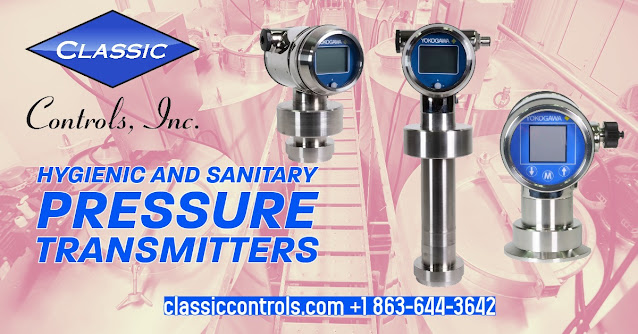
Hygienic and Sanitary Pressure Transmitters

A hygienic and sanitary pressure transmitter is a specific pressure sensor designed for demanding food, beverage, and pharmaceutical uses. Given the critical nature of these sectors, these transmitters adhere to strict standards of hygiene, cleanliness, and sterility. Their central role is to measure pressure and level to ensure processes' safety, quality, and efficiency.

Constructed from stainless steel or other corrosion-resistant materials, these transmitters can withstand chemical exposure and high-temperature processes. Their materials align with industry-specific standards and certifications. The surface finish of the material is vital to prevent areas where residue or microbes could gather. Their distinctive smooth, flush design reduces the risk of crevices, dead legs, or other zones where contaminants might collect.

These pressure transmitters utilize a diaphragm or sensor that deflects under fluid pressure. Such deflection changes internal electrical properties, like those in a strain gauge or capacitive element. The transmitter converts this change into an interpretable electrical signal, usually in current or voltage form. External systems read this signal to display or regulate the measured pressure.

These transmitters aid in tank level measurement in the food and beverage sector. Positioned at a tank's base, they gauge the levels of liquids such as milk, juice, wine, or beer. As the tank fills, the hydrostatic pressure on the transmitter rises, corresponding to the depth of the liquid.

They also serve in process pressure monitoring to oversee pressure in pipes and vessels, ensuring safe and efficient operation. For example, they regulate the proper pressure during milk pasteurization for the best outcomes. They find use in bioreactor monitoring in the pharmaceutical industry, keeping the correct pressure in bioreactors for processes like cell cultivation and drug manufacturing. Any deviation could compromise the final product's quality.

Designed for clean-in-place (CIP) and sterilize-in-place (SIP) procedures, these transmitters can be cleaned and sterilized without removal. Many hygienic and sanitary pressure transmitters integrate digital communication methods, such as HART or Profibus, ensuring smooth integration with control systems for real-time data and diagnostics. Regular calibration is crucial for their consistent accuracy and dependability.

Hygienic and sanitary pressure transmitters are vital in the food, beverage, and pharmaceutical sectors. Their unique design and capabilities provide precise and consistent pressure readings, earning trust among industry experts. By maintaining optimal processing conditions, these instruments play a pivotal role in ensuring the safety and quality of final products.

Classic Controls
(863) 644-3642
https://classiccontrols.com

Industrial Process Pressure Transmitters

industrial pressure transmitter or differential pressure transmitter
One of many variants of industrial pressure transmitters.
Image courtesy Yokogawa USA
The measurement and control of fluid pressure is ubiquitous throughout many industrial processes. Measurements of pressure, directly and indirectly, provide real time information about what is happening in places that cannot be seen, such as inside a pipe, tank, or machine. The very nature of “process” suggests movement and change, the control of which is necessary to produce a consistent desirable outcome. Industrial pressure transmitters employ specific technologies and physical principals to derive a measurement of process pressure, then deliver or transmit, the measured value to a controller or recording device.

Fluid pressure tells a process operator much about what is currently happening. The pressure variable can be used to determine, among many industrial process elements:
  • Degree to which the process is conforming to a recipe or specification
  • Whether machinery is performing within its specified operation range
  • If conditions of the process remain within the bounds established for safety
  • A quantity measurement of flow, mass, or volume
Global industrial processes have widely varying physical arrangements, operating environments, and measurement requirements. Manufacturers of industrial pressure transmitters have responded with an immense array of transmitter technologies, arrangements, and configurations. When selecting the best suited pressure transmitter for your application, consult a sales engineer and consider some of the following:
  • Signal requirements – Type, distance, possible sources of interference
  • Device environment – Hazards, extreme conditions of temperature or corrosion
  • Accuracy and stability of measurement
  • Response time to changes in the process condition
  • Ratings and certifications required for the device
  • Configuration, arrangement, and mounting aspects of the transmitter device
Explore the differing technologies and how they can be best applied to implement or improve your process. Experienced sales engineers are a useful sounding board for discussing your needs. Share you process measurement challenges with them and leverage your own knowledge and experience into an effective solution.

Explanation of Overpressure and Overpressure Protection for Yokogawa DPharp EJX/EJA-E Series Transmitters


This video demonstrates what overpressure is, how it effects pressure transmitters, and the mechanism Yokogawa deploys for overpressure protection for on their DPharp EJX/EJA-E series.

For more information on Yokogawa in Florida, Puerto Rico, or the Caribbean contact Classic Controls. Share your process measurement and control challenges and leverage your own knowledge and experience with their product application expertise.

Filled Impulse Lines With Pressure Sensors or Gauges

industrial pressure transmitter
Pressure transmitters and gauges are often installed
with impulse lines.
Image courtesy Yokogawa
Pressure sensors intended for use in industrial process measurement and control applications are designed to be robust, dependable, and precise. Sometimes, though, it is necessary or beneficial to incorporate accessories in an installation which augment the performance of pressure sensors in difficult or hazardous environments. There are some scenarios where the sensor must be isolated from the process fluid, such as when the substance is highly corrosive.

A way to aid pressure sensing instruments in situations where direct contact must be avoided is by using a filled impulse line. An impulse line extends from a process pipe of vessel to a pressure measurement instrument or sensor. The line can have a diaphragm barrier that isolates the process fluid from the line, or the line can be open to the process. There are best practices that should be followed in the design and installation of an impulse line to assure that the line provides a useful transmission of the process pressure to the sensor and whatever degree of isolation or protection is needed remains in effect.

The filled impulse line functions via the addition of a non-harmful, neutral fluid to the impulse line. The neutral fluid acts as a barrier and a bridge, allowing the pressure sensing instrument to measure the pressure of the potentially harmful process fluid without direct contact. An example of this technique being employed is adding glycerin as a neutral fluid to an impulse line below a water pipe.

Glycerin’s freeze point is lower than water’s, meaning glycerin can withstand lower temperatures before freezing. The impulse line connected to the water pipe may freeze in process environments where the weather is exceptionally cold, since the impulse line will not be flowing in the same way as the water pipe. Since glycerin has a greater density and a lower freezing point, the glycerin will remain static inside the impulse line and protect the line from hazardous conditions.

The use of an isolating diaphragm negates the need for certain considerations of fill fluid density, piping layout, and the need to create an arrangement that holds the fill fluid in place within the impulse line. System pressure will be transferred across the diaphragm from the process fluid to the fill fluid, then to the pressure sensor. It is important to utilize fluids and piping arrangements that do not affect the accurate transference of the process pressure. Any impact related to the impulse line assembly must be determined, and appropriate calibration offset applied to the pressure sensor reading.

An essential design element of a filled impulse line without an isolating diaphragm is that the fill fluid must be compatible with the process fluid, meaning there can be no chemical reactivity between the two. Additionally, the two fluids should be incapable of mixing no matter how much of each fluid is involved in the combination. Even with isolating diaphragms employed, fluid harmony should still be considered because a diaphragm could potentially loose its seal. If such a break were to occur, the fluids used in filled impulse lines may contact the process fluid, with an impact that should be clearly understood through a careful evaluation.

Share your pressure measurement requirements and challenges with experienced application specialists, combining your own process knowledge and experience with their technical expertise to develop an effective solution.

Pressure Measurement Handbook From Yokogawa

industrial process control pressure transmitter
Pressure Transmitter
Courtesy Yokogawa
The impact of pressure on industrial processes would be difficult to understate. Pressure is an element of process control that can affect performance and safety. Understanding pressure concepts and how to effectively measure pressure within a process are key to any operator's success.

Yokogawa, a globally recognized leader in process measurement and control, has made available a handbook on pressure that covers a range of useful topics. The content starts with the very basic concepts and moves quickly to practical subjects related to process measurement and control.

The handbook will prove useful to readers at all levels of expertise. Share your process measurement challenges with application specialists, combining your process knowledge with their product application expertise to develop effective solutions.


Level Measurement - Simple Accurate Bubbler Method

diagram of instrument arrangement to measure level using bubbler method
Instrument layout for level
measurement
Measuring liquid level in a tank or vessel can be accomplished in a number of ways, all of which require some arrangement of instrumentation to either infer the liquid level from the measurement of a related physical property, or directly deliver the liquid level visually using a scaled gauge arrangement. One indirect method of level measurement is often referred to as the bubbler method, so named because it employs a purging gas that continually vents from the bottom of a tube extending into a tank of liquid. Through a simple apparatus, the level of a liquid can be inferred by the amount a back pressure exerted upon the gas flowing through the tube.

Probably the greatest advantage of this method of liquid level measurement is that the liquid does not contact the sensing instrumentation. The only portion of the apparatus in contact with the liquid is a tube immersed into the tank. Basically, a purge gas flows through the immersion tube and may bubble out the immersed end of the tube, which is open to allow the contained liquid to exert a hydrostatic pressure on the purge gas. The back pressure on the gas that is exerted by the liquid contained within the tank will vary directly with the depth of the liquid. The back pressure can be correlated to a liquid level. The accuracy of the measurement is related to the proper regulation of the purge gas (explained in the application note below) and the measurement capability of the pressure transmitter. Once the depth of the liquid is derived, further calculations, employing tank shape, dimensions, and the liquid density can provide an indication of the volume and mass of the liquid. Here is an illustration of the setup, provided courtesy of Yokogawa, a recognized leader in flow and pressure measurement with a global presence. Included below, an application note from Yokogawa on applying rotameters to the setup, as well as data sheets for the instruments employed in the illustrated apparatus.

Share your level measurement challenges of all types with the application specialists at Classic Controls. Combining your process expertise with their product application knowledge will yield the best process measurement and control solutions.


Capabilities of the Yokogawa DPharp Pressure Transmitter

DPharp Pressure Transmitter
(courtesy of Yokogawa)
The Yokogawa DPharp digital sensor uses two single crystal silicon resonators vibrating at their natural frequencies. When pressure is applied, one of the resonators goes into tension, while the other goes into compression mode.  The CPU directly counts the sensor output frequencies without any additional A/D conversion. Due to the excellent elastic properties of silicon material, the DPharp sensor exhibits greater linearity and repeatability, with no inherent hysteresis. The resonant sensors also provides a large output signal resulting in greater sensitivity and higher turndown. 

Long term, accurate and stable measurement in real world conditions is fundamental to realize reliable and efficient plant operation. Transmitters in the field are subjected to continuous variations of ambient and process temperature, static and overpressure conditions affecting their accuracy. The long term stability of the transmitter is a measure of performance drift and dependent on the sensor technology. Total accuracy and long term stability determine the recalibration interval for the devices according to the acceptable performance levels. 

Additionally, the DPharp digital sensor has the unique ability to simultaneously measure static pressure and differential pressure. The multi-sensing platform enables real-time dynamic compensation for unmatched precision and forms the basis for implementation of advanced diagnostics. The information is available through various digital communication protocols, providing additional knowledge about your process. The multi-sensing functionality, with guaranteed accuracy of static pressure signal, allows the process to operate with fewer devices and delivering reduced lifecycle costs.


For more information on the Yokogawa DPharp, contact:
Classic Controls, Inc.
5095 South Lakeland Drive
Lakeland, Florida 33813
Phone: 863.644.3642
Fax: 863.648.0484
Email: sales@classiccontrols.com